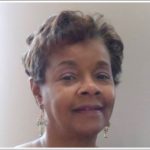
Interviewee: Beverly Frierson
Interviewer: Andrew Chen
Location: Remote interview (Columbia, SC and Columbia, SC)
Date: October 8, 2020
Accession #: ELEC 014
Length of Recording: 69:55
Summary
Beverly D. Frierson, born in1951 in Spartanburg, South Carolina, lived in several communities in South Carolina, including Spartanburg, Cheraw, Charleston, Florence, and Sumter. She currently lives in Columbia, South Carolina with her sister Delaine. The interview discusses her childhood, her father’s work as an itinerate minister in the United Methodist Church, her experiences with the integration of schools in Florence, SC, her higher education experiences at Clark College in Atlanta, and her career as a teacher, writer, member of the Democratic Party, and social activist. Born at the epicenter of the civil rights movement, she discusses various challenges she has faced through her life, and how she came to find meaning in civic engagement.
In the interview, Ms. Frierson reflects on how her father inspired her from a young age to be politically active and work for social justice. She recalls many rich stories from her childhood, and how her parents’ attitudes and decisions shaped who she is today. She discusses her experiences across the country with teachers’ labor unions, and how she came to hold her notable chair positions within the Sumter and South Carolina Democratic Party. Ms. Frierson emphasizes how civic engagement and social activism have driven her passions in life, and how she continues to stay involved today.
Keywords
South Carolina | Florence | Sumter | Cheraw | Social and Political Activism | Clark College | Democratic Party | United Methodist Church | Itinerant Ministry | Election | Teacher | Prince George’s County, Maryland | School Integration | Democratic National Convention | Civil Rights Movement
Recording
Transcript
Andrew Chen: This is an oral history interview for the 2020 Election: Sharing Stories of Civic Engagement oral history project, part of coursework for Honors College class SCHC 326, documenting the perspectives and experiences of those who are engaged in some way in the 2020 election. This is Andrew Chen, and the date is October 8th, 2020 and today I’m interviewing Ms. Beverly Frierson remotely. I’m in Columbia, South Carolina and Ms. Beverly Frierson, where are you?
Beverly D. Frierson: I am in Columbia, South Carolina as well.
AC: Would you start by giving me your full name and spelling it?
BF: My full name is Beverly Diane Frierson. Beverly is B-E-V-E-R-L-Y, Diane D-I-A-N-E, and Frierson F-R-I-E-R-S-O-N.
AC: Do you have a maiden name?
BF: No, I am not married.
AC: Where and when were you born?
BF: I was born in Spartanburg, South Carolina. In August 26th of 1951.
AC: And is that where you grew up?
BF: No it is not. As I mentioned, my father was a United Methodist minister, and it is an itinerant ministry. So we lived there for about 6 years, and back then, in the Methodist Church, ministers stayed about 5 or 6 years. So I grew up in Spartanburg, and then we moved on to Sumter, South Carolina, which is my father’s home, and we lived there for about 6 years. And then, to Florence, where we stayed about 7 years. And then Charleston; and when we lived in Charleston, I had already finished high school and was preparing to go to college: Clark in Atlanta. That’s where my father went to school. My father was kind of sick at time. My sister, who is just 19 months younger than I am, finished high school in Charleston, and my father got sick and he died, in my sophomore year in college. After I finished college a year early, I went back home to Sumter, and taught there for 17 years, and stayed with my mother. It was just my mother and my sister.
Then, later on in my life, I lived in Stockton, California for a little while, because I had an internship with the National Education Association. They were trying to get more women and minorities involved in labor relations with the teachers’ union. And then after that I got my first job working for a teachers’ union in Prince George’s County, Maryland. It was the second largest teachers’ association in the nation at that time. I stayed there for a few years until I was laid off, and then I started teaching in Maryland for a while, until my mother got sick. She got a stroke, and since I only have a sister and, you know, no one else — I mean just some other relatives, but not sisters and brothers — I returned to South Carolina to help take care of my mother. She didn’t die immediately. She lived for a number of years. In fact, her stroke was not that debilitating, but it was just best to come home and help take care of her.
At the time, my sister was working for the South Carolina Human Affairs Commission as an investigator of housing and employment discrimination. She had a tiny apartment, but my mother had built her home in Cheraw, which was very close to the North Carolina line, and we didn’t want her to be there by herself, even though it was a brand new home. So we tricked her to get her back in Columbia. We pretended as if we were going to get some ice cream, and we just brought her back to Columbia. We all crowded in my sister’s tiny apartment so we could take care of her. And then my sister and I built a home here in Columbia, and of course, we made sure we had a nice bedroom for my mother on the first floor, because she had osteoarthritis, and she had had both her knees replaced. And so we lived as a happy little family here in Columbia for a number of years.
And then, later on, she was dizzy — I think she had had a series of mini-strokes — she was dizzy and asked me to help her to the bathroom and I did. And she just kind of leaned over, and tilted, and hit her head on the door jamb of the bathroom. And she went to sleep, and when she woke up she had a knot on her head. Called the doctor, and they told us not to worry about it, but I didn’t believe that foolishness. So, we took her to the emergency room. And she was able to walk to the car, but when she got to the hospital, she went downhill, and she went into a coma. And she had a brain aneurism, and they had to do brain surgery. And, again, she didn’t die immediately or anything of that nature, she made it for a while. But she eventually died. So now it’s just me and my sister. We have, as I said, other relatives, but we just are very very close.
AC: Thank you for sharing that. Can you talk to me about your parents, and your grandparents? What were their names, and where were they from?
BF: Okay, on my father’s side, my grandmother’s name was Roma. And, I don’t know, I think she had some relatives in Columbia, but I wasn’t big into tracing family history. But, my grand-daddy on my father’s side was named Herman Frierson, and was a Methodist minister. And my grandparents on my mother’s side? I really didn’t know my grandfather because he died when I was very young, but I do have a picture of him however, holding me in his arms when I was a baby. And my grandmother’s name was Mommy Mack, and she lived in Cheraw. And on my mother’s side, a lot of the family members are part — I think they were Cherokee Indians — and we called her “Big Mama”. And she helped rear many many of the relatives in the family. Because back then it was often the case wherein the younger people in the family would move away and maybe go to a Northern state for work. And the grandmother would help rear the children. And so, my grandmother, the one we call “Big Mama”, was the major matriarch of the family. And what else did you ask me?
AC: I was just saying, sorry I asked too many questions at once…
BF: Oh that’s okay! No its me, running off this mouth!
AC: Where were your grandparents from?
BF: I don’t really know. I mean, I know my granddaddy on my daddy’s side was from Sumter County. And my grandmother on my mother’s side was from Cheraw, which is in Chesterfield County. And I think you asked me about my parents and what they did? My mother —
AC: Yes! I’d love to hear about your parents.
BF: … My mother taught English and history, and my father was a United Methodist minister. And my mother’s side of the family, she had a number of sisters and brothers, and she was the baby of the family. And they sacrificed to help pay for her college education. The others were not college educated. But on my father’s side, my father was. And, as I said, my mother taught school, well I didn’t say that, but she taught English and history. And ultimately, later on in life, I majored in English, and my sister majored in History! My father was not a hoot-n-holler type minister. He was the type of minister that spoke with great substance and eloquence. And some of his friends included Dr. Lowery [Joseph Echols Lowery], the gentleman that recently died, who was instrumental — was really one of the founders of SCLC [the Southern Christian Leadership Conference]. Dr. Lowery’s daughter, Karen, and I were in college together at Clark. And when I was at Clark, my father would frequently come to Atlanta for various meetings. And (laughs) when ministers would come by and visit, they would often give you a little piece of change, you know, and if people didn’t give me a nice amount of money, you know, just to say hello, I’d say “Daddy, so-and-so was cheap!”
(laughter)
BF: When I was in college, I went to Central United Methodist in Atlanta, and at that time, the pastor there was Reverend. Joseph Lowery! And, I was active in the young adult fellowship even when I was in college, and that helped keep me grounded. And uh… yeah that’s that story!
AC: Could you tell me your mother’s and father’s names?
BF: Yes, I’m sorry. My father’s name was Theodore Roosevelt Frierson. And my mother’s name, Rosena Marilyn Mack Frierson.
AC: And may I ask how to spell your mother’s name?
BF: Yes, Rosena is spelled R-O-S-E-N-A, Marilyn M-A-R-I-L-Y-N, Mack regular M-A-C-K.
AC: Because we are on the topic of your family, before we move on to later in your life, what were the family traditions you experienced growing up?
BF: Well, being a minister’s daughter, my sister and I— let’s see… It was just a part of who we were, we had to learn how to make friends and adjust quickly, because as, I mentioned, we had an itinerant ministry in the Methodist Church. A lot of people might find it upsetting to move frequently; for my sister and me, it was an adventure, and so, when the annual conference was held, and that’s the meeting wherein the Methodists get together, they do their business, and it’s determined whether or not a minister would move on to another appointment, that’s what they’re called, appointments. After those meetings, and they would be, I think back then in late May, maybe early June, but anyway, we’d always ask Daddy after the conference “are we moving?”, because we thought it was an adventure. And in terms of traditions…no matter if we had a special set of friends, when I had a birthday party, we were not allowed to exclude folks. We just couldn’t invite our little clique group to the party, we had to invite everybody, and treat people nicely.
Let’s see what else… There was a young lady who went to elementary school with me, and her name’s Pamela. Her birthday was one day, I think, after mine. Mine’s August 26th, and hers is August 27th! So when we lived in Florence, Pamela and I used to have a joint birthday party together.
Other traditions… our parents — now, my daddy was liberal, in terms of what he allowed us to do. You might think “Oh it’s not fun being a minister’s daughter”, but my daddy delighted in me and my sister, we were just, as they say, the apple of his eye. And so, he didn’t put restrictions on us dancing and things like that. In fact, we had a beautiful parsonage in Florence. It had hardwood floors; it was a 2-story house, and when it was time to clean those floors, we would put some kind of little cloth on our shoes, and my daddy, my sister, and I would dance across the floors, and polish those floors with our shoes! He just delighted in us, and he would buy us all sorts of music, so we had a great appreciation of all types of music. My sister and I… back then they used to have something called “the Top Ten” or something like that, and it wasn’t all black music, it was just the popular music — “American Bandstand” or something like that, that type of music… and if my mother wanted to punish us for being bad, and I was the ringleader of being bad, she wouldn’t allow us to listen to the music when we washed our dishes. So we had to take turns, one would wash, one would dry, and we loved to listen to the Top Ten as we washed dishes.
On Fridays, we would always have fish dinners, fish and grits, and my sister, poor little thing, thought it was some type of religious imperative that we had to have fish on Fridays. And it wasn’t, it’s just something that we did!
(laughter)
BF: And the other tradition we had, even though my sister’s not my twin, when people in the church would buy us gifts for my birthday, they’d also get Delaine a gift, and same thing for her. So we get double gifts (laughs). We liked that a lot. Oh, another thing, you know, how, when there are football games… oh, you know, everybody loves football season. We were allowed to go to football games, but everything we did was chaperoned. The way our parents did it, one set of adults maybe would take us to the game and they’d allow to walk around. Like we were regular teenagers, or regular preteens, I should say. But then another set of parents, another trusted person in the little clique (unintelligible, audio corrupted at 15:13) … so to speak …and we didn’t have an opportunity to really…too bad and wild… (laughs)… everything we did was chaperoned!
[When] we lived in Florence, and those were the formative years of late elementary school, all of middle school, and for me, all of high school, the parties we attended frequently were… at church! And you might say, well, parties at church… Our church was a beautiful, it still is, it’s a beautiful church in downtown Florence called Cumberland United Methodist. And it has beautiful stained glass windows. And it has a pipe organ, but in the back on the property, there was something called a hut. And it was just more like an assembly place, like where maybe Boy Scouts could meet and people could have social gatherings. So in the summertime, especially when we’d have MYF meetings, and that’s Methodist Youth Fellowship, one of the highlights of the summer was the annual hayride. And young people from all over town, whether they were Methodist or Baptist, it didn’t matter, would come to our church for the hayride. And then you’d go back to the church for, you know, your little dance and your hot dogs and your food and all like that. But we had a grand time! And we also, one of the things I remember from childhood as we became older teens, a little clique of us, would go to Cheraw, to something called (unintelligible, audio corrupted at 16:46). We don’t have that Lake anymore. Back then there was a segregated (unintelligible, audio corrupted at 16:50)…
AC: I think I’m losing you a little bit.
BF: …was one lake…but there was one for the… (unintelligible at 16:56) Oh my voice?
AC: Can you still hear me?
BF: Uh huh. Can you hear me?
AC: Yes, I can hear you now. Would you mind going back just a few sentences? You were talking about…
BF: The lake?
AC: Yes. Can you hear me?
BF: Uh huh. I think my ear must have been pressed against the mute button by mistake.
AC: That’s okay! Let’s go back a few sentences — That would be perfect.
BF: Okay. Um, I’ll talk about the Lake. When we were older teens, we had a special group of friends and I don’t know who would do the driving, cause I know it wasn’t us! But anyhow, we go to Campbell Lake in the summertime and just have a good time, but just, you know, decent, clean, fun.
Oh, I know something else. I know something else. And this sounds nerdy, but it’s the truth. When we would have birthday parties, the favorite gift in our little circle of friends to give each other was a nice pen and pencil set, or an ink pen set. And also, my parents used to take us to the library frequently and my sister and I used to read, read all the time and she still does that. She doesn’t go any place without a book. She calls me ignorant because I don’t read as much now, but I write…
(laughter)
[Beverly’s sister, Delaine, is in the next room]
BF: She’s in the background, she’s saying “you are!”… But maybe it’s because I like to listen. And my eyes bother me a lot, but anyhow, she reads all the time.
AC: Well, those were amazing stories.
BF: (laughs)
AC: May I ask, who did you look up to, growing up?
BF: My daddy. Back when I was growing up, my mother was considered to be a beautiful lady. And when she was in college, she was, you know, in a sorority and, you know, a beauty queen type person. And it irked me when people would tell me that I looked like my mother, and I talked like my mother. I didn’t mind people saying that I talk like her — our voices sound about the same. And even sometimes, especially after my mother first died, when I would talk, it kind of startled my sister, because my voice sounds just like hers. But, the reason I said my daddy…
I didn’t want to be like my mother — I mean, nothing negative against her, but my father was a social activist and very fair to people, and into political activism and I want to be just like my daddy. My mother was not the type of person who was not involved. It’s just that she was on the quiet side. She supported what we did, but I want it to be just like my daddy (laughs).
However, when I went to college, I would be chosen to be in the various parades and things as one of the little queens, but I was still politically active. I still was politically active. We participated in marches and so forth. And one thing I really admired about my mother, some of the things my sister and I did, I guess — well, not I guess, would be considered dangerous…
AC: (laughs)
BF: No, I’m serious. No, this is what I mean: later on as young adults, we went to Forsyth, Georgia to participate in some type of protest. And my sister and a gentlemen led the march. And when I was in college, there was the hospital workers strike and I participated, and I think people were shooting at us. And I didn’t, oh I didn’t tell my parents that part. But, when my sister and I would go off and participate in various things of that nature, I often wondered why my mother did not object. And she just said, that she…she had faith that God would watch over us. And he did. And so it was just a part of who we were to be involved politically, and we still are.
Oh, oh, oh, I remember what story we told you all when my sister and I participated in your class early and it’s the truth, but my sister remembers it better. As I mentioned, my father was a social activist, and I don’t know what he did to upset the Klan. I guess— (laughs heavily) I don’t know! But anyhow, they threatened him, and the ministers came to our home to protect us. They had rifles and I think they were on the front porch, and we were real young then, but my sister remembers that. And so, you know, it’s just who we are, you know.
AC: That’s a very amazing experience to have at such a young age.
BF: (pauses quietly, snipping vegetables with a pair of scissors) Yeah.
AC: I think it must have impacted you in ways that you didn’t even realize.
BF: Probably. (laughs)
AC: Before we move on, I wanted to clarify, what was the name of your church in Florence?
BF: Cumberland United Methodist.
AC: Then you mentioned, Cheralt [sic]?
BF: Cheraw.
AC: That’s the city that was near the border, right?
BF: Yeah, and it is not a city, it’s as a town, it’s tiny. And my mother technically was from a place called Four Mile Branch. And it was four miles from the little town of Cheraw.
AC: May I ask how to spell Cheraw?
BF: Certainly. C-H-E-R-A-W. Now one thing that’s really interesting about Cheraw, it’s near the Peedee River. And there was a lady who was a member of my grandmother’s church. My grandmother was AME Zion [a member of the African Methodist Episcopal Zion Church] by denomination. And this lady was a domestic worker, and she worked in a beautiful home. They had some beautiful old homes that date back, I guess… well, many, many, many years. And in one of those homes, there was actually a tunnel under the house that led to the Peedee River. And my sister was smart enough to go and, you know, see the entrance to the tunnel. But that’s where it was said that runaway slaves would use that as an escape route. So apparently it was part of the Underground Railroad, I guess! But if you ever go to Cheraw, you’ll see gorgeous ole homes. And it’s just a gorgeous place, tiny, but it’s gorgeous, in my opinion.
AC: I’ll definitely add it to my list!
BF: Oh, we have a home there too. So as I tell you, my mother built her home there. So maybe, I don’t know how many years, but we will probably eventually move back to Cheraw. I said back to — move to Cheraw. I started saying when we retire, when we retired — we are retired, but maybe we if we feel like doing absolutely nothing!
(laughter)
AC: So you mentioned that you are a writer. Can you tell me about your experiences as a writer?
BF: Okay, sure. When I went to college, I didn’t know what to major in. I really would have loved to major in journalism, but at my college at the time we didn’t have that as a major. So I majored in English. However… (unintelligible speech at 24:32)… I wrote for the paper in college and that kind of thing. But when I started working as an English teacher in Sumter, we had a newspaper, a local newspaper called the Sumter Daily Item. But they had so many errors in the thing, I would call up and complain. And so one day they told me, “Well, you think you can do so much better, you come and work for us.” I said, “I will!”. When they did give me that opportunity, and I didn’t realize at the time when I said “I will”, they gave me a paid internship.
And so I started, even though I teaching English, I was writing articles for that paper. And they also taught me a little bit about photography. And I’ve heard it said that when you start off in journalism, in a newspaper business, they always make you write obits. Never in my life have I ever had to write an obit.
(laughter)
BF: And, I loved the variety of things that I was asked to cover. I do remember one major mistake I made. The day that the tobacco market opens is a big deal. And they sent me to, I don’t know if it was Bishopville, or somewhere, and I went to the wrong location (laughs) but I never will forget that. I loved it, loved it, loved it. And through the years I maintained good relationships with the Osteen family. Cause they — I don’t know if they still own that paper or not.
And then later on in life, when I moved to various places, I still kept up my writing. And when I was in Maryland, working for the teacher’s union, and then later on, as a teacher, I was given the opportunity to have my own column for the Prince George’s Journal. And in that… (unintelligible speech at 26:30) — it’s just right outside of DC. I loved that…
When I returned to South Carolina and I started working, doing editorial writing, well not just editorial writing, but writing for the First Carolina Panorama. And then sometimes I’d write articles, especially articles for the State Paper. And then later on, when I was teaching in Winnsboro, I had a column in the Winnsboro paper. I can’t think of the name of it right now. And then later a paper called the Country Chronicle, another paper called the Voice. So I just love, love, love writing, especially editorial writing.
AC: I accidentally skipped a couple of questions. So I’m going to go back in time a little bit.
BF: That’s okay!
AC: So, can you tell me about your time in college? And I know you mentioned Clark College, you did some writing there…Could you just tell me about your time at Clark College?
BF: Sure… I guess they still do this now, but after I was accepted into college, in preparation for your freshman year, they’ve sent us a reading list and we were supposed to read a number of books during the summer. And during freshmen orientation, we’d go into the auditorium and they would actually ask us questions about the books that we were supposed to have read. Well, I was a nerd, so when they sent the books, I actually read them. And when they’d ask the questions in the auditorium, I’d raise my hand and answer. And other students would look at me, you know, like I was a space cadet. And so I got the nickname, I think that maybe my freshman year, as “Dr. Frierson”. But I mean, I just took school seriously.
And when Delaine and I were in Florence, we helped integrate the schools there. We had the Freedom of Choice Plan, and we were at Poynor Junior High School, which is now an adult education center. And we were not forced to go there. My sister and I was sick and tired of raggedy, hand-me-down books that the Black schools were given. It wasn’t that our teachers were bad. It’s just that we were tired of hand-me-down stuff. And so we went to our daddy and we told him that we wanted to transfer to the predominantly White school. And so my daddy allowed it. But what he did, was he helped prepare us—
I’m sorry, I dropped the phone. Can you hear me?
AC: Yes. I can hear you.
BF: I don’t know who he got in touch with, but they had something called Harmony School in the summer. Some folks from the northern states came down, and they were teaching us about “nonviolence” and all this stuff like Dr. King, and what to do if we were (unintelligble audio at 29:42) or if people attacked us and all that kind of foolishness. And, my sister said (laughs) she, you know, she was a fan of Dr. King, but her attitude was if anyone to put his or her hands on her, she was going to knock the hell out of them.
(laughter)
BF: And she meant it. She meant it!
AC: I believe it.
BF: And so this is a psychological scar that I think I bore, or it’s stupid, but it’s the truth. My sister’s chocolate in skin tone. My skin tone is kind of like honey, more so. When we were at Poynor, she caught more hell, overtly, than I did. And folks, sometimes would try to push her down the steps, all kinds of crap like that. And so she had that fighting spirit, and if anybody’d mess with her, she wasn’t a hood rat, but Delaine just didn’t take any foolishness. And so my poor daddy had to live in the principal’s office because she would get into something. If people messed with her, she was going to get back at ‘em, you know.
And as for me, I wasn’t picked on as much, except I remember when I was in chorus, in the auditorium and it was, you know, that slanted design and I must been singing a second soprano. But I remember spitballs on the back of my neck. And I, oh my gosh. I can just remember that. And so, when I was in middle school at Poynor, I think I developed, I’m sure I developed an inferiority attitude and I thought I wasn’t good enough. My sister and I had been involved in so much speech and dramatics and all kinds of things when we were at a predominantly black school. And it wasn’t forbidden to be a part of certain activities, but you could feel you were not welcome and I remember I had a good friend, Eleanor. And she and I decided we were going to go out for cheerleader at the predominantly white school. And my parents didn’t try to stop us initially. You know how you have to have first round, second round, see if you make it. But they were fearful for us because, I know you’ve seen stories of people in Alabama, where in African American children try to go to school and have maybe police dogs and all kinds of stuff, having to protect them, not trying to protect them, you know, trying to stop it… It was not like that in Florence. It truly was not. And I think one of the reasons it was not like that: they had ministerial alliances. People tried to work together. It was not perfect, but it was not horrendous. However, you could feel the air of not being accepted, not being wanted, not fitting in, that kind of thing. And I remember the white children had these clubs called the Gold and the Green Key Club. And all kinds of little niceties… things that I’m sure we would’ve been part of, if things had been different. But our yearbooks, I never will forget, were so magnificent. And they had like the type of lifestyle that you would see on a Lifetime movie. The popular girls had the pretty blonde hair and the, you know, the little country club-type life setting. And we were outside of all of that. Now in our French Club, I took French for four years and did well, you know we were accepted in certain things, but again, you can tell when you’re not really wanted.
And so when I was in high school, I was very, very quiet, very quiet. In fact, they wrote in my yearbook, you know the little epithets they give to the seniors, for mine they wrote “the silence that is the starry sky”. Now I was smart, but I was doubting myself. And I remember I had an English teacher. I even remember his name is Paul Ivan Skoko. And he saw my potential, and maybe when we were studying Shakespeare or something. I was given the opportunity to read some part, which was near the end. It was something like the most important part was at the end. You know, you have some teachers that see the pain that students are dealing with and they do something to uplift your spirit. And that’s the kind of teacher he was. So when it was time to apply for college, I thought, oh I said that no college would accept me, because I just didn’t have faith in myself anymore. I had struggled in math. And so I applied at various, really good African American schools and was accepted at all of them.
But when I went to college, I didn’t want to embarrass my parents. So I studied real hard. And I think the first semester I must’ve made all A’s. And as I mentioned, I ended up graduating from college in just three years, magna cum laude. And then after I left Clark, I guess my confidence had been restored. So I applied to graduate school at various places and I was accepted. I had a scholarship to Emory University, and it was an interesting experience there. Again, at that time, very, very, very, very, very few African American students in the graduate program. And I didn’t do exceptionally well, but I remember there was an effort made to include the African American people. And so they actually had a personal staff, and we had various activities. We had plays and things of that nature, you know, drama and what have you. And I remember I was in the drama, it was something called Day of Abstinence, was the name of the play. And I had the lead role. And we had a tight knit community and I enjoyed that experience, but it was also (sighs) an experience that made yourself feel “I’m not quite good enough”, that kind of thing.
Then later on in life, confidence grew and grew and grew. And as I mentioned, I had my Master of Science degree in curriculum and instruction. That school was predominantly white too, but I loved, loved, loved that experience. I didn’t go to the main campus in Westminster, except for the graduation ceremony, but they had many branches available at different counties in the state of Maryland. And I loved it, I think because the master of science degree program had practicums, and you didn’t just study the book work, you did the research, and the projects that were really based on what a real life classroom was like. Because at that time I was teaching and doing the graduate work during the fall and the spring while I lived in Maryland. And then when I returned to South Carolina after my mother died, I’d go back in the summertime. Because I had aunts that lived in DC and I’d stay with them. And I loved, loved, loved that program… really did. So I discovered later on in life, that I was not inferior. But when you are made to feel less-than, you doubt yourself, and when you doubt yourself, you don’t do well. So it’s important to have your psyche nurtured and nourished, and it is important to be affirmed in whatever you are doing.
AC: Thank you. That was very great to hear.
BF: Thank you.
AC: So you mentioned that you spent many years as a teacher. Uh, can you tell me about a little bit about that?
BF: Well, as I mentioned, I wanted to major in journalism and didn’t have it available, so I majored in English. So I taught. And I enjoyed teaching. I still enjoy teaching young people, my sister and I tutored before the COVID-19. But the thing that I don’t like about the education system is crap like lesson plans and micromanagement and that kind of stuff. I like to be creative, but anyway, I enjoyed it for a while and I was always active in the teacher’s association. But, again, that activism part of me really wanted to get into the labor relations side of it. And as a part of the teachers’— I don’t want to say “union” because it’s not called a union in South Carolina — the Teacher’s Association called the South Carolina Education Association. Say if a teacher had a grievance, and if you were a member, and if your grievance was excepted and legal would help you with it, the person that assisted you with your paperwork, and with organizing was called the UniServ Director [Unified Service Director]. And that simply means that the person had a specific geographical area of the state when he or she was responsible for the teachers that were in the union. And I just loved, loved, loved that work. It looked exciting to me, and I had friends that helped nurture me in the teacher’s association who were UniServ Directors. And I wanted to be one too. So when they had a program, an affirmative action program, for women and minorities, I applied and at that time they would choose one person per state to participate. And in the year I was in it, they actually chose two of us and they gave us intensive training in Alexandria, Virginia in all kinds of aspects of organizing and labor relations, and that type of thing. And while we were in the program, they observed us, and they had psychologists and folks like that, observing us. And then they would assign us for more training in another state. And what I found that they did, they tried to give us a broad range of experiences. So since I was from a non-bargaining state, they sent me to a bargaining state. They sent me all the way out to California to be mentored by a very, very highly respected person in Stockton. And, oh my gosh, talking about loving, loving, loving it. It was Northern California, near the Napa Valley. Oh my gosh, I loved it. And after that, as I mentioned, you had to find your own job. And I was fortunate enough to find one in Maryland. And I loved, loved, loved, loved, loved, loved, loved it (laughs).
AC: And what job was that?
BF: Working for the teachers’ union in Prince George’s County, Maryland as a labor relations consultant, but we called it UniServ director.
AC: Right. Right. You mentioned, um, the social activism and you was itching to get out.
BF: (laughs)
AC: So can you tell me how you came from there to your involvement as a social activist?
BF: Okay. Well, after I have finished college early and came home… The basic involvement level is at the precinct. So in Sumter, I was active in the precinct. And from there, all this was in the eighties, well, it was in the late—wait a minute, middle seventies when I was back home. But you know, we just loved Reverend Jesse Jackson and my sister and I were fortunate to be elected as delegates or alternates to go to the Democratic National Convention. Long story short, we were so inspired by him.
There was a tradition basically in Sumter, that the chairperson of the Democratic Party was a rather wealthy, white man, generally an attorney. And the rules of the party were back then, whoever the chair was, the First Vice had to be a person of a different color. Second Vice had to be a person of a different gender. So it was intentionally structured that way to try to be more inclusive. So I had been First Vice chair of the county party for a while. And then after having been involved with the Reverend Jackson, I said, wait a minute, Black people don’t have to always be the second in command or whatever. So I’m going to run for chair. So when I did, I won, but it was a thing wherein… back then, the primaries were run by the county parties, and we had to actually raise the money to put on the elections. And folks would think “okay, Black folk can’t raise money,” but we do what we had to do to raise the money. And when I started as chair of the party, we had less than a dollar in our balance. But we left the party in good shape financially. And I discovered that the way the white folks were financed in the party, when it was time for the primary, they could just go to the bank and get, I think they called a “good faith loan” or something. The banks would just give them the money and they could pay it back when wanted to— not when they wanted to, but when they had it. You know, they were not going to do that with a Black person.
But I did serve two terms, and then I ran for First Vice of the state party, with the help of Jim Clyburn. And the reason I said the help of Jim: at that time, my sister was working for him at SHAC, that’s the South Carolina Human Affairs Commission, and his family has Sumter connections. And when I told him I wanted to run, when he sat me down and told me what to do in terms of the political strategy, and I did win. And, I didn’t know it at the time, but because I was First Vice Chair of the State Party, that gave me an automatic seat on the Democratic National Committee. So I did serve for a short time. And the only reason it was a short time was I had applied for that internship with the National Education Association, that took me to California. And so I thought it was only fair, as I was leaving the state, to resign. And I found out later, I didn’t have to, but I thought I was doing the right thing (laughs). But they gave me a lot of great experience. And so I just stayed involved, always involved, because I know it makes a difference. And I’m still involved.
AC: You mentioned that you were a delegate to the Democratic National Convention in 2016 (sic). Could you tell me what that was like?
BF: Well, I’m not sure… we’ve been delegates for more than one time. Where was it in 2016? Is that the Hillary one?
AC: Yes it is.
BF: Oh yes, yes, yes. I personally love Hillary and I always thought, you know I like Bill too, but she’s smarter than he is. And so I was just so excited about the opportunity to go to that convention because I thought she was win. And I just have a great deal of faith in women. Her helping to crack that glass ceiling made a difference. And we know about Trump… (sighs) I don’t even want to mention his name… but, it was just an awesome experience.
But in terms of conventions, my favorite convention was back in 1984. [speaking to her sister, Delaine, in the next room] It was ’84 we went to San Francisco, right Delaine?
Because back then, oh my gosh, the parties were so awesome. And Willie Brown had something called “Old Winter Night”, where they transformed an old warehouse from the war to look like a replica of the city. And they had the gay men’s chorus there. They had any kind of food you can think of. The entertainment was just awesome. Awesome. Awesome. And back then we had celebrities that would entertain us. And so many receptions that you’d go to throughout the city, and they treated us just ro-yal-ly! Royally! And I don’t care what anybody tells you, the parties, oh they were just off. the. chain! You hear me? It was so much fun! Oh my goodness.
(laughter)
BF: Oh my goodness, it was magnificent. When, the very few times, we had Democrats in charge… When we had Governor Riley, then the party helped people raise the money that we needed to go to the conventions. But [with] Republicans in charge, it’s horrible (laughs). You know, it’s just so different now. Conventions are becoming far less fun (laughs). And I think it was a virtual one they’ve had this year. I mean, it’s really not necessary to have a convention for an entire week. We knew that all along, but I think things would be different because of COVID-19 forevermore, forevermore. So I’m glad we had the experiences that we had way back when things were, just off the chain (laughs). But we had a grand time…
Oh, I know another story I’ll tell you. Back when Reverend Jackson ran for president and when Senator Hollings, of course from South Carolina was in our delegation. And what have you. I remember he said something at one of our breakfast meetings, our breakfast caucuses, about his being the brain trust for Reverend Jackson. It’s something about “a ‘blackbow’ and there was no rainbow,”… He said something, and I was just so insulted by what he said, and I was relatively young, but I challenged him, you know, stood up and just challenged him, “Senator from the State,” because I just couldn’t stand it. And I just, oh I don’t even remember all I said to him, but what happened is, when we have the caucus meetings, we have press following everybody around. And whatever I said to him made it home to the papers in South Carolina.
So I became a little minor celebrity then by blessing out a Senator, but I meant every word I said (laughs). I wasn’t super radical, but I just didn’t take insults. And I thought he was being insulting to Reverend Jackson. So I blessed him out. I mean I didn’t cuss at him or anything like that, but I challenged him boldly and I had no regrets. And it just made our papers back home (laughs).
Oh, the other thing is when we went to convention in San Francisco, we were living in Sumter at the time. And the Item, the Sumter Daily Item, sent a reporter with us and his name was Trip, Tripp DeBoyd (unsure about spelling). And I think later on, he started working for the Associated Press. But Delaine and Tripp and I would have such good fun. You’d have a badge to allow you access to wherever you were supposed to be. And so sometimes what we would do, we would give Tripp our badges, so he could go on the floor. And then sometimes we take his badge… we had a grand time, so [he] would follow us around and write stories and send them home, back to South Carolina. And then later on, like even in 2016 or whatever, I’m almost sure Delaine and I did stories for the State Paper, and they were on the online edition. So it was just really, really great, a lot of fun, because there’s so many things going on at convention. Caucuses and so forth… it’s just very enjoyable,
AC: Moving even more close to the present. How are you involved with civic engagement these days?
BF: Well, I’m the executive committeewoman for the Richland County Democratic Party. I am an active member of our Northeast Democratic Club breakfast meetings.
[and aside]
BF: [speaking about SC Rides-to-the-Polls] Just trying to make sure that people throughout the state have a way to get to the polls. It is our goal, or our desire really, that folks not wait until election day. So we’re saying “election season”, not “election day”, but you know, some people insist on waiting until November the fourth. We, as a part of the coordinated campaign, we’ve been in touch with county chairs throughout the state, trying to find out what programs they have in place to get voters to the polls. And we’re not saying they have to do it our way, we are just trying to coordinate things. So we’ll have a dedicated number so that people can call our number, and if they need a ride, we’ll have hopefully our system, whereby folks will take them. Because we’ve already had lots of drivers sign up. And hopefully on Monday we’ll be signing a contract with Lyft, to help us in various locations throughout the state. And also the various branches of NAACP will help transport people. So, we just want to make sure it’s done safely. And we also are encouraging people to have a voting plan, so that they won’t go to a polling place and discover “oh my gosh, my name’s mixed-fudged,” or “oh my goodness, I’m in the wrong place. So have everything planned ahead of time, so that every vote will count.
AC: You mentioned that election day is only 26 days away, but it is election season. So I know this is not your first election season. So, what has it been like to see the lead up to the 2020 election? In what ways has it been different from previous elections?
BF: Well, the stakes are much, much higher because in my opinion, the person that we have in the White House now is a danger, really a major danger to decency and democracy. And I don’t mean any harm, but it seems as if his moral compass is broken. And so if we don’t make a change, we will be suffering for many, many years. You see how the courts are being packed with many, many conservative people. I’m not saying that is wrong to be conservative, but it seems that he has surrounded himself by corrupt people who will do his bidding, including our Attorney General. And so, you know, we always hear that “this is a crucial election”, but I think you’d have to be living in a cave somewhere, that’s hermetically sealed, not to understand that the situation is dire. And because the current president has been footloose with the truth and he’s really caused, in my opinion, some people to lose their lives prematurely because he has not been honest about the virus and so forth. So it’s crucial that I do my part to help make a difference. And it’s different, because of the virus, we cannot campaign in the way that we used to. But I’m gonna give you an advantage though! When I go to meetings, it forces folks to plan carefully. So they’re very timely and it also allows you, so you can be in a meeting from 9 to 10 at your dining room table in one part of Columbia, and then jump on from 10 to 11 and be in Sumter, or another part of the state, in another meeting. And I like that, I like that very much. So, that aspect is really, really good.
Oh, another thing I wanted to mention, my sister’s working as an organizer and many of the people who volunteer for Jaime [Harrison] are from out of state. Many of them are from California, and my sister and I used to wonder, why it is. Because this is not our first campaign, of course, why is it that people from other states will get involved? But now we kind of understand, and I think most people— well, not most people, but many people in the nation are aware of the alignment of Trump and Lindsey Graham and that indecency. And you would be amazed at the enthusiasm of many of those California folks for Jamie, and it’s great!
I had a lady who got in touch with me, who is from California, and she plans to actually, she has asked permission of course, to come and be with us for two weeks. When I say us, she is going to be in the Charleston area, just to help drive people to the polls, because she wants to do that part. And she does have relatives in the area, but I think within a few weeks we are going to be inundated with other folks coming in to help. And that is magnificent. That’s magnificent.
Jaime, in my opinion, is real. He’s a man of integrity. I don’t know if you’ve what his latest commercials, the one with his wife and the little children and the older boy, his nickname is ‘B’ (unsure about spelling). And I said, “If he just shows that a couple of times he’ll win that election!” (laughs) I just love that commercial. (laughs) It’s precious! [mimics the commercial script briefly] (laughs) It is just magnificent.
AC: So I have a few more questions, is that okay?
BF: Yeah, that’s okay.
AC: In 2020, we’ve seen a nationwide mobilization of calls for justice in regards to the pervasive racial inequality that exists in this country. What has it been like for you to see this and be part of this in 2020?
BF: Well, I’m delighted that many people who are not my color seeming to be catching on. This is really real. These are human beings. And lives matter. And so that’s a great thing…My concern is that even though the cause is awesome, some people are still forgetting about social distancing and the masks and so forth. The other thing that just comes with experience, some people think that seemingly all that is required is to go to a march and hold a sign, and “I done something”. Yeah, you’ve done something but that’s only a tiny step in the process. There are many other steps that have to take place. Also… that’s really true. There’s nothing new out of this sign. Sometimes, young people get very, very impatient. Sometimes, they think they know it all. Sometimes, older people are guilty of the same thing — thinking they know it all. In my opinion, the most successful programs, situations, movements include both. I will say this, you remember after that debacle of a debate between Biden and Trump, I heard a commentator say that some young people, very young people were watching and they said to their parents something like, “is this really what a debate is supposed to look like?” The lady concluded by saying, in essence it’s incumbent upon the younger generations, your generation, to change things, to make things better.
I disagree. See when there’s a lack of character, that’s when you have a problem. And the lack of character can be evident in people that are young or people that are old. I don’t think that I know…we should not wait around for you to do it. It’s gotta be partnership where we decide. Just like Michelle said, — when they go low, we go high. That sounds like a cliché, and it is a cliche to a degree, but there’s truth behind that. You really should not allow people to take you down to the lowest denominator. That’s the easy thing to do. Another thing people often say, “to get respect you have to give respect.”
I disagree again. Human beings deserve respect. The other night when Trump and Biden were debating…even though I’m not a fan of Trump, I didn’t like it when Biden said, “shut up, man”. It just kind of made me cringe. You remember when Biden called him a clown. I mean it’s understandable to get frustrated and I’m not saying I’m perfect, but we have to be careful and understand we are on a world stage. People are watching us. We have to also understand that… a person with whatever Trump’s problem is would love to pull you down too. So you have to go into the situation understanding that. Allow them to act a fool. Just go ahead and allow them to act a fool!
You know when the moderator just seemingly lost control. It’s not that hard to correct that kind of crap. Some people say, “well, they need kill buttons on the mic”. You know what I think I would’ve done if I were the moderator…I would’ve just stopped. Now, they hate, hate, hate silence in a radio or television studio. I would’ve been silent. I would have stared at them. Then when they looked at me, I would’ve said, “Now, this is a debate. The American people deserve better. You have a choice…either abide by the rules or this is over.” I probably would’ve been fired but if they did not abide by the rules, I probably would have walked off the stage. I would not let people walk over me like that. When there was still the primary season, my sister and I had the opportunity to actually be present in the audience at the debate in Charleston. When Norah O’Donnell and Gayle King moderated. Those women allowed those folks to run all over them. Now, I understand that stakes were high. People were shouting and carrying on like… worse than children but again when you are the moderator of something, you need to at least put forth the effort to gain control, because it’s just ridiculous. It was a clown show and people say that’s an insult to clowns. You have to understand that we’re talking about leading a nation that’s supposed to be so great and looked up to. We have got to start demonstrating that we are people of integrity and character, because it really makes a difference. It really does. Words matter. Actions matter. Demeanor matters. All that matters.
I can’t hear you.
AC: Thank you for sharing those powerful messages. We’ve talked about a lot that concerns you these days. I want to ask, what gives you hope these days?
BF: What gives me hope?
AC: Yes.
BF: People. Thanking God. I remember being very upset after an election was over…a national election and then I think a minister said, “remember, God is still in control and sometimes, Andrew, things that we as human beings don’t understand…are perhaps being used by God for a greater purpose. My sister and I were part of a group called Just Democrats. It was after Trump was elected and people were just like, “I cannot believe this”. Maybe part of the good of his having been elected is it forced people who did not vote, people who took political and civic engagement and social engagement as a joke. They were forced to realize they were part of the problem by doing nothing and saying nothing and by allowing crap to go on. It forced them to reexamine what they did and what they didn’t do. And so it gives me hope to know that so many people realized this time I just can’t sit down on my butt, and it’s really more than just the voting. People often forget that once we elect whomever, you have to hold whomever accountable. It’s public service. Yeah, people are given certain honor. They have those pretty little license tags, names, and stuff, but we the people really have the power if we take control — if we understand that we have a great deal of power.
When we speak up, expect certain things of our representatives, and hold their feet to the fire. And then if they don’t do that which is correct, if they don’t represent all of us, then we have the responsibility to step in and run for something or support other people — we can do it. You as a student can do it. I remember some of those questions you all asked about. My friends and I are not involved in, they won’t listen…you start at your local level, at your college level, do what you are doing. Proud of you…proud of you like I told you.
You guys should be invited to that breakfast meeting, Saturday morning at nine. It’s virtual so you can invite all your friends and those meetings are good, good, good, good, good. You have the speakers. You have questions and answers. You are going to enjoy it. You’re going to enjoy it. It’s the Northeast Democrats Breakfast Crew. Saturday at nine. I’ll send you the link.
AC: Thank you. Thank you.
BF: You are welcome.
AC: Well, that was the last question I had as a part of the formal interview. Is there anything you would like to add before I end the formal part of the interview?
BF: Yeah. You know Delaine would be delighted if you and some of your classmates and friends would sign up to either phone, (Unintelligible 69:30) or text Jamie and if you have time at the very end I’ll let you speak to her. She can tell you how to get involved.
AC: Sure. I love to get that information and pass it on.
BF: Okay. I’ll give you the phone number in just a moment. Do you have any other questions for me?
AC: I don’t have anything else. I’m gonna go ahead and end the recording for the oral history interview.
BF: Okay.