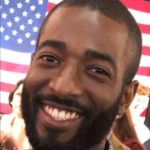
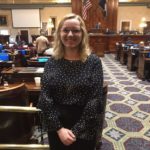
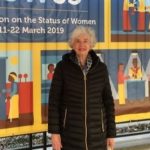
These seventeen interviews offer a snapshot of Americans civically engaged in their communities and in politics during the 2020 election season while navigating the COVID-19 pandemic. All interviewees were conducted using remote technology. To read or listen to an interview, click on their name or photograph.
|
|
Travon AdamsBernie Sanders campaign “I think that the biggest thing that started to pull me into activism was, I’ve always been a kid who, like my father he raised me to like history, so I was always watching the History channel and trying to figure out why the things I see today are the way the are. I was always a curious person, and as I started to dig more and more, I think the 2009 financial crisis is what really made me very, very interested in wondering why Wall Street gets to make all these risky bets and we ended up bailing out Wall Street. But we never bail out Main Street. We never take care of everyone who’s really hurting, you know, and I think that’s what, I saw that as being unjust.” |
|
|
Morgan BakerLindsey Graham and Nancy Mace campaigns “I worked for Nancy Mace over the summer; she’s running for Congress in the first district of South Carolina. She’s awesome [ ]. So I went to the Law Center, you do these externships, but they’re internships. So you work with a lawyer for one part of the year and the latter part you work with someone in government. So I wanted to work with Nancy Mace then. I went to work with her in the State House. And I got to [send] constituent emails, emailing all of them, responding to her emails in a totally legal way.’
|
|
|
Keller BarronLeague of Women Voters “I went to Roosevelt’s third inauguration, and this was January [1941], and I was nine years old. They put me on the train in Atlanta by myself, in the care of the conductor, and I rode from Atlanta to D.C. in the care of the conductor …. my aunt met me, and I remember the crowd, and then they took me around to see all of the different embassies with the flags, and we wrote them all down. When I went back to school, mother made me a little report, and I told about all the things that I had done.” |
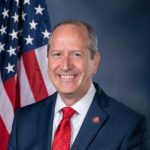 |
Dan BishopU.S. House of Representatives, North Carolina “I used to follow [politics] and read about it. And then after my freshman year in college, I went and served an internship in Senator Helms’s office in Washington ….I did that, I did some other volunteer work when I was in college and I intensified that after law school. I did a lot of local civic City Council volunteering for Pat McCrory when he was a city councilor.”
|
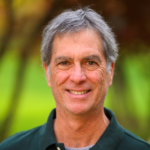 |
Bill BlancatoCitizens’ Climate Lobby …”In late May of 2013, there was a really good piece in the Times called Lobbying for the Greater Good. It was about the Citizen’s Climate Lobby. There were two things that struck me. One, the proposal of the revenue neutral carbon tax, and making it revenue neutral by providing dividends on a per capita basis. And again, I was an economics major, and I thought for a long time that we need a carbon tax. This is the most efficient way to reduce fossil fuel use, to reduce emissions…” |
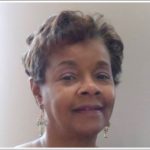 |
Beverly FriersonActivism and support of Democratic politics “Some of the things my sister and I did… would be considered dangerous… later on as young adults we went to Forsyth, Georgia to participate in some type of protest. And my sister and a gentlemen led the march. And when I was in college, there was the hospital workers strike and I participated, and I think people were shooting at us. And I didn’t, oh I didn’t tell my parents that part… When my sister and I would go off and participate in various things of that nature, I often wondered why my mother did not object. And she just said that she had faith that God would watch over us. And he did. And so it was just a part of who we were to be involved politically, and we still are.” |
 |
Will GallowaySouth Carolina Federation of College Republicans “So, if you as a young Republican think that Donald Trump is the best person to lead this country, think about that and if you think that is the case, don’t hide from that. And, if the converse is true, if you as a young Republican look at things the way I am and say that you would rather have Joe Biden as president than Donald Trump, then don’t hide from that. Don’t be afraid to use your voice. Don’t be afraid to articulate what you believe, as long as you’re doing so in a thoughtful and kind manner. So, ultimately, just remember that there’s things bigger than politics, but remember that politics does matter, and we have to live in a country where everyone’s voice has equal weight. So, don’t be afraid to think, and then act on how you think.”
|
 |
Emily GibsonCollege student and new voter “Issues of race and gender inequality are always most important to me, of course. And then besides that, the climate, I think, just has to be the most important issue. And because it’s one of those things that’s it’s not very tangible in the current moment, how big of an issue it is, but it will become really tangible within the next, 50 years even or maybe within the next 10, 20 years. And we’re already behind on, you know, if we want to keep our earth livable, we’re kind of already behind where we need to be in terms of the goals that we need to meet. And so, the climate policies need to be pretty hard-hitting and impactful, and I think that would probably be the most important issue to me at the moment.”
|

|
Dick HarpootlianLawyer, South Carolina state legislator “Helping Barack in ’08 is something – electing Barack Obama president is something I think – I don’t know how you get any better than that. I was with him both here a lot during the primary process and then I saw him in Virginia Beach…. two nights before the election, and we talked. The guy’s just such a good guy. Joe Biden – he’s been my friend for 30 years. I talked to him a couple weeks ago and he’s a good guy. They’re decent people. They want to do the right thing and to the extent that I can help somebody like that achieve greatness in this country, there’s nothing better than that.” |
 |
Eunice “Tootsie” HollandNational Organization for Women (NOW) “In 1972, February, the two women here in Columbia started a NOW chapter, ran an ad in the paper, and several of us went, and I was elected vice president. At the time, I was working as a manager of something called Dot Girls. And they sent a person from New York to get me to resign, because they had seen my picture in the paper as a NOW person, seriously. And, the way they got me to do it, I did resign, because the way they got me to do it was the woman told me that “I am not going to fire you,” because she knew I’d sue if she did. And she says, “But I will fire the-” her name was Ethel and she answered the phone and that kind of thing. And I knew she had a small baby and her husband had been killed in an accident and so she needed the job. So, I said, “Give me the paper. I’ll sign it.” I left, and ever since I’ve been sorry I didn’t go ahead and sue the whole blooming batch of them.” |
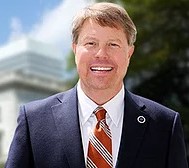 |
Chip HugginsSouth Carolina Republican state legislator Political antics from his first campaign: “And I got in the runoff with the gentleman and [the opposing campaign sent] a postcard out the Saturday before the runoff election on Tuesday, stating that I’m for video poker. And of course, I’ve never been in politics….I was absolutely not for video poker, and it was a big lie which they had intended to go out because they never intended for me to be….in the runoff, so it was going to go against the other guy. Well, we had to get on the phones the day before the primary and I can’t tell you how much it helped me to hear a lot of people at least realize that that was not me. Even though the postcard worried me to death, and it was one of those things you just can’t believe, you realize that people really do pay attention to what you’re all about and who you are and what you are. And it was refreshing for that.” |
 |
Walter IvanjackElection poll manager, military veteran “My wife and I, as we traveled throughout our military career, we were away from Chicago, which we kept as our as our legal residence. We always voted absentee because we felt it was our duty, the number one duty as an American citizen is to vote to keep our Democratic Republic strong, and without that individual vote we don’t have much of a hope. So initially when we moved to South Carolina we were both volunteers… at the food bank for a few years and then in the 2016 election we became interested [in volunteering to be poll managers].” |
|
|
April JonesFounder of the Pinehurst Farmer’s Market in Columbia “I have the Pinehurst Farmer’s Market, which is an organic and local small market in my neighborhood, Pinehurst, which is in downtown Columbia. And so, I started the market in my family legacy of starting something and helping the community… We had two grocery stores that had closed and so we were in a food apartheid area. And so we came together as a community and were able to fight that inequity by starting a market. And it’s been a big success! It’s been very, very fruitful.” |
 |
Kyle MooresTeacher “So [my grandparents] had really the biggest impact on my formative years. And they influenced a lot about my beliefs in terms of, I always want to be self-sufficient to the best of my ability. They instilled the importance of always voting, no matter what. They instilled the importance of standing up for the things that you think are right and that, you know, there is such a thing as “good trouble”. And so they had probably the biggest impact on me there.” |
 |
Bailey WallaceUofSC student “When I heard the news of RBG’s [Ruth Bader Ginsburg] death, I immediately thought right away how this is going to be a political issue now with it being an election year. I think she was a great role model for little girls and women to look up to and with all her work in women’s rights and basic human rights.” |
 |
Christa WilliamsI Vote Too campaign “Well we help them from start to finish…we will provide the voter’s registration form, we provide the pens, we provide the clipboards, we provide hand sanitizer, we provide masks. If someone cannot fill out the form due to being illiterate, we will help them fill out. But we ask that they sign and provide a date on that, because we don’t sign for anyone, but we will fill out their basic information that they need to register. If they have any questions, a lot of times we will answer them on site. But if it’s something that requires a printer, or more research or follow-up with the election office, we will get their name and number, and we’ll follow back up with them…..We not only do voter’s registration, we also do community outreach mainly through the form of food donations. So we ask everyone, whether they’re registered or not, would they like a care package. And within that care package is normally four to five items of dry foods, and if someone really needs assistance they can take two bags.” |
 |
Laura WoliverLeague of Women Voters “What [the League of Women Voters] does traditionally is register people to vote, and help them with voting questions, and encourage them to go out and vote. We monitor legislation at the state and national level that would impede voting or enhance it. Like the motor voter law, or extensions of absentee voting. We make sure that voting is accessible to everyone, no matter what their languages, their primary language, or their physical abilities. And we make… we are very concerned about making sure in this day and age that the computer systems that often are used to tabulate the vote are accurate and verifiable. Because the integrity of the democracy depends a lot on the integrity of the election. “ |