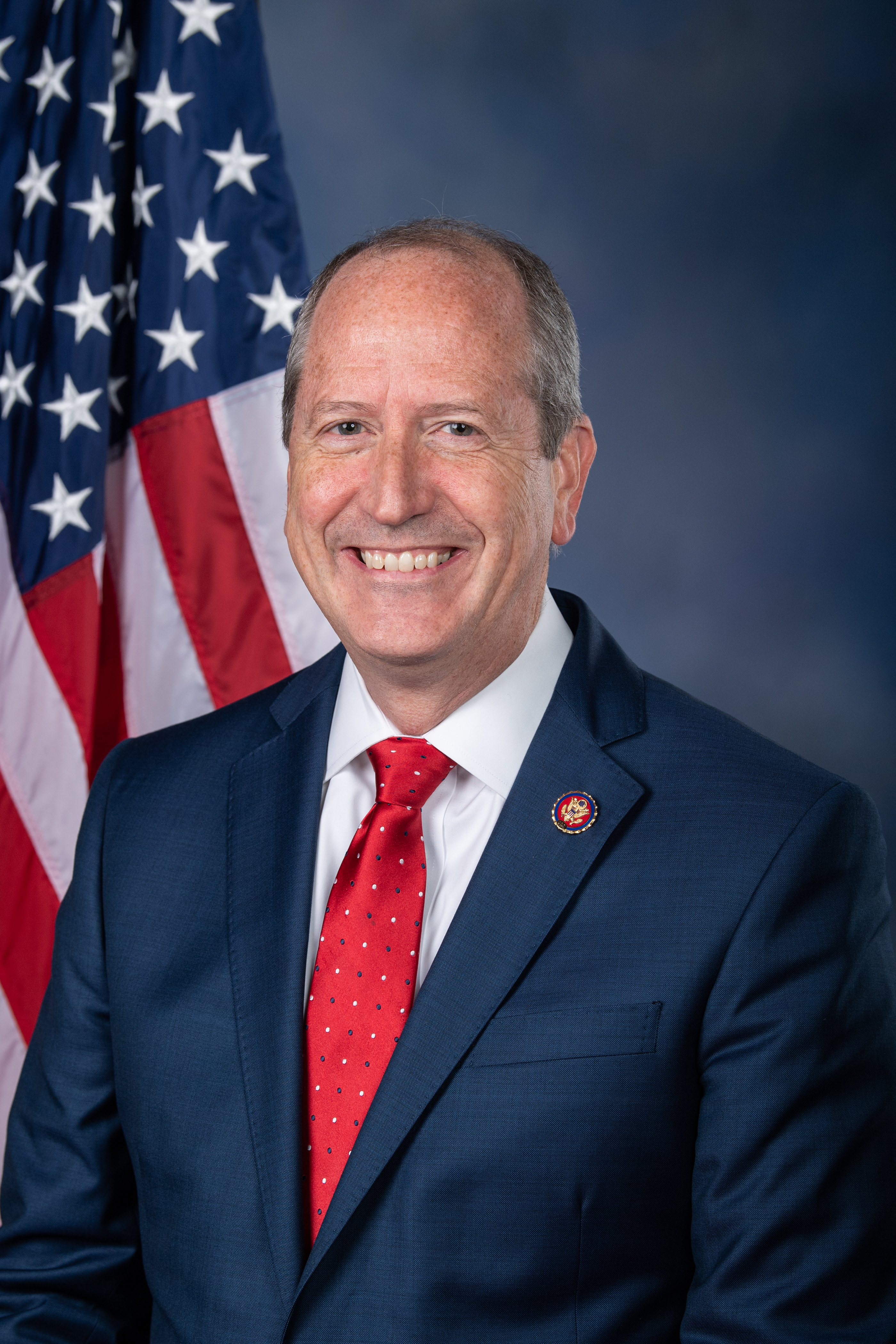
Interviewee: Dan Bishop
Interviewer: Collin Ladue
Location: Remote interview (Columbia, SC and Charlotte, NC)
Date: October 5, 2020
Accession #: ELEC 013
Length of Recording: 60:00
Summary
Congressman Dan Bishop was born in Charlotte, North Carolina in 1964 and grew up in Charlotte. Dan Bishop (at the time of this interview) serves as the Representative of the 9th district of North Carolina in the U.S. House of Representatives. This interview contains information about Bishop’s family life, his time in the private sector, what got him interested in politics, and his time in local, state, and national government. This interview also touches on what it means to lead a political campaign in the COVID-19 era, the unique circumstances of his political election, his experiences on the floor during the drafting of the massive 2.9 Trillion dollar CARES act, as well as his experience on the floor during the recent impeachment of President Donald Trump. During this interview, Bishop addresses the bureaucracy and how they threaten the people, problems with the modern media state, radical left extremism, and finally closes with a message to politicians.
Keywords
Civic Engagement | COVID-19 | Impeachment | Republican | North Carolina | Small Business | U.S. House of Representatives
Recording
Transcript
Collin Ladue Jr.: This is an oral history interview for the 2020 Election: Sharing Stories of Civic Engagement oral history project, part of coursework for Honors College class SCHC 326, documenting the perspectives and experiences of those who are engaged in some way in the 2020 election. This is Collin Ladue Jr., the date is October 5th, 2020 and today I’m interviewing Congressman Dan Bishop remotely. I’m in Columbia, South Carolina and Dan Bishop is in Charlotte, North Carolina. So, can you start by giving your full morning and spelling it out?
Dan Bishop: Yes, Good Morning Collin. I’m Dan Bishop. D-A-N B-I-S-H-O-P
CL: Alright, and when and where were you born?
DB: I was born July 1, 1964 in Charlotte, North Carolina
CL: (an aside) Is that where you grew up?
DB: I did, and I’ve lived there basically for my entire life, right after graduating from UNC in 1986, I spent about a year in Washington, not even with the government, but in the financial industry and then returned to law school as a student. So basically, except for that one year my residency has always been in Charlotte.
CL: That’s great! So, can you talk to me about the community of Charlotte at the time, like when you spent time in the 60s and 70s, what was Charlotte like during that period of time?
DB: I can’t say that I have a tremendous amount of recall of the 70s when I was a small kid, but I do remember a little bit about the South Park area where we still live. South Park mall, which is now densifying a lot and becoming a bit similar to Atlanta’s Buckhead in terms of the nature of densified development going in, and even South Park mall has been densified rather intensely. It was a regional mall stuck in the middle of pastureland, really. So, the road network has expanded a great deal, and just development of every kind. I can also remember as a reasonably young kid going into Uptown Charlotte, driving down third or fourth street, which if you live in Southeast Charlotte, certainly you know that route.
CL: Yes sir!
DB: And you could go in, I remember seeing the ACC, I think it was the American Credit Corporation, that they had one building in the sky that was prominent, I remember when the first skyscraper appeared, which is now, well, I guess it’s called Bank of America Plaza now I think. It was, at least for a time, but it’s now the older skyscraper and dominated by a skyline near many others. Charlotte’s grown a great deal over the 56 years that I’ve been a resident.
CL: Well that’s great. In the city, have you noticed any shifts in things like economics, or religion?
DB: You know, it’s interesting, Collin. I’ve been watching politics and interested in politics since I was a fairly young person. And one of the things that I see a lot of, and we see it particularly this summer in the effects of it, is that it seems that every large city loses any kind of balance in its politics. It becomes hard left. And there are many out there maybe who would celebrate that, but I don’t think it’s a good thing to have one side rule all of politics. And they sort of lose common sense and perspective. And where we’re seeing that in this summer is that local authorities have sort of abandoned their core responsibilities, our first responsibility of government, which is to keep people safe and not allow riots and destruction to run amuck. And I think that’s a biproduct of far-left politics. So, charlotte has seen that far left ism. There’s no Republican has been elected city-wide in quite some time, and really you have a couple of people, Republicans, who have remained on city council, and I think none on country commission if I’m not mistaken
CL: I think you’re right about that.
DB: I think that Charlotte is following the track that American cities seemed to follow, and I think the destination is not always what any reasonable person or rational person would want it to be, even if you’re a person on the left. If you see the track that Detroit is followed, for example and there are many others. So that’s kind of one change I guess that is present in my mind in Charlotte’s politics right.
CL: So, moving away from that, we’ll get back to the politics stuff later. Can you tell me a bit about your parents and grandparents? What were their names?
DB: My dad was nicknamed Bud Bishop, he actually had another name, Elmo, and then he didn’t like that name, but he was a dentist, and he was from Guilford County in Greensboro, NC. My mom was from Bladen County, North Carolina, far east. In fact, until now when I got elected to Congress last year, I represented the County where she was born. I still do right this minute, but of course within these two weeks there has been a change in the districts following litigation, so I lost Bladen Country in terms of running for reelection. But Blaine County is still a very rural county. My parents both grew up very poor. And Dad was in the military in World War Two, he was a gunner on a B29 on the island of Saipan in the Pacific, and then went back to Greensboro. He and my mom met each other and together they found kind of a path to a different life for their children. That is to say, we were we were better off than they were, but they accomplished a great deal and I have high respect for that.
CL: Well that’s great! What were some of the family traditions that you experienced?
DB: Well, I was the last of five children, and I’ve always, we have one son, my wife and I do, so it’s a perspective for me, our path in life didn’t lead to a large family but growing up as the last child in a large family. I have, first of all, a great deal of admiration and a real affection for people who have large families. I think it represents a sort-of boldness, really, in the world which is a complicated place, and difficult at times to have a livelihood that will provide for everybody, ability to keep everybody safe and give them everything they need. So, I’m an appreciator of large families. Mine was a large and boisterous family, we were always entertaining the people who would come in, some people who would experience it would be stunned and shocked a bit, but that was my memory growing up is the large family with lots of brothers and sisters.
CL: That’s great, thanks. So, who had an influence on you? Or who did you look up to?
DB: Oh, I certainly looked up to my folks and they were both. Essentially, they were not climbers, or they didn’t seek status. They were they sort of did things their own way. They were very driven in their own way. But they were very family oriented. Dad was home every night. They and my mother was an unusual person and I think she rode hard on the kids and she had an enormous capacity to push all of us. And I think she did that for her own good, but it was also good relationships. So, I think most folks look up to their parents. Older siblings also. Now, one in particular I was very close to and probably was accounted for in. People sometimes ask how you became interested in politics or how you came a conservative and press will get to some of that. But but in my case, I had two older brothers who were both interested in politics and I don’t know where their interest came from, because my parents were not extraordinarily interested or active in politics. Uh, but one older brother in particular, David, is 6 years older than me. He is someone I consider having mentored me and still mentors me in a lot of ways.
CL: That’s awesome. Alright, so moving away from some of that, I want to hear more about your road to the House of Representatives. So, I understand that you worked in the private sector before becoming a politician. Can you tell me a little bit more about what you were involved with and what your kind of were doing day-to-day?
DB: Yep, I sure can and I would say that one of my views about politics and civic involvement is that many people set out for a life of politics, and I personally believe that you have to bring something else to it. And we are better off if there’s a predominance of people who have had non-political life experience because our political, our public sector rides on the back of productivity from men and women of every kind in a private economy.
CL: Right!
DB: We’ve got too many folks who lived in government and they really don’t have the perspective that I would say actually, I was in the private sector and I was for 29 years a practicing lawyer and my legal practice was for almost all of that time starting in a fine, large firm. When I began, I spent six years there and then left to join, actually my brother David, who I mentioned earlier and we had a practice serving small entrepreneurs. Businesses, small businesses. And in my case, I was a litigator. I tried cases that were disputes. It could be anything from a contract dispute gone awry, or unemployment dispute, or disputes between owners of businesses and it was in usually, and I enjoyed it for this reason, it was usually highly consequential for those people. I mean it was not just a run of the mill transactional practice, I helped with situations where they desperately needed effective help and I tried to provide it to them. So that’s how I spent 29 years including the time you know the last several years I was doing at the same time I was in government as a member of the state legislature.
CL: Wow! So, you’ve already danced around this a little bit, but a big emphasis of the class is civic and being involved in the civic process and all of that. So how did you decide to get involved in, and eventually continue on, in politics?
DB: As I said, I developed an interest in it when I was a teenager.
CL: Right.
DB: And I used to follow it and read about it. And then after my freshman year in college, I went and served an internship in Senator Helms’s office in Washington. Uh, and that was really for like, a lot of people did that and then sort of it was their process or their entree into a career on the Hill that just was not the direction I was inclined to go. But I did that, I did some other volunteer work. I think when I was in college and I intensified that after law school I did a lot of local Civic City Council volunteering for Pat McCrory when he was a city Councilor…
CL: Wow!
DB: Running on the slogan of a safe and affordable City -this takes me back- putting up yard signs, making telephone calls for Richard Ben Rude or writing what they had what they call the neighbors program where they used to write correspondence, where neighbors organized to send out letters to their friends asking them to vote for Richard
CL: Wow.
DB: I actually worked a lot with Don Reid who was a city councilman in his campaigns. He was a bold conservative, one of the maybe the boldest, so I did a lot of local politics that way as a volunteer and gradually came to do more and eventually ran for local office.
CL: Alright. So, my next question is, so can you just tell me all of the positions that you’ve served in, just for the listeners to hear as well? Just to hear a little bit more about your background.
DB: In 2004 I was elected to County Commission in Mecklenburg County that has Charlotte, for those who are outside Charlotte, listening. And I served two terms there – two two-year terms- so I left there in 2008 and frankly, I thought I’d had my fill.
(Laughter)
DB: Had my fill with politics and I was out for awhile and boy was I out. I mean I thought there was a period that was a little cynical about it, and then saw some of the changes I’ve described having happening Charlotte and I didn’t think there was much role for a conservative in governance here, and I think that’s probably true. There wasn’t, but as such, six years later, in 2014, I ran for State House and won, and served one term there. Then, at the urging of Bob Rucho, who had been a state senator, I ran for his seat as he was retiring. And I served, well, I was elected in 2016, elected again in 2018 to state Senate and then did not serve out that complete last term because what happened in terms of the special election last year. So, in 2018 the election for the ninth Congressional District. For many who would be aware of it. The race was not certified because of an absentee balloting scandal I guess down in Bladen County that I mentioned earlier, and there was a special election called and it just appeared to me that the 9th Congressional District, in which I now serve, had been a Republican conservative district for my entire life. And there was an enormously highly financed, you know, big spending effort to flip it blue as they say, and I thought, that based on what I was seeing in that special election that someone had to step forward with a robust effort and a good strategy to keep that seat. And so, I did that, I resigned from the state Senate and ran for Congress and I was fortunate enough to be elected last September, September 2019.
CL: Yeah, I was hoping I could hear a little more about that in a second, but you’re someone who served in many different levels of government. So, what were some of the differences and similarities between the various chambers that you served in? Like were there any that were especially like efficient or inefficient, frustrating or refreshing?
DB: You get a very, very different perspective from each one. And I think there’s great value in having done it in multiple ways and all of them have their own virtues or benefits. At local government, your perspective is awfully narrow. You are aware of your county, your city, but there’s a whole lot more going on that you don’t have. Many times, I remember as a member of the County Commission up in North Carolina, as in likely every state, the states are the original sovereigns under our constitutional system in the United States.
CL: Right.
DB: Localities don’t really have any independent existence in North Carolina, they exist by Grace or leave of the legislatures the way it was. And I think local folks say I like I like the principle of subsidiarity. They like most government to be done at the local level, and I think that works fine in many cases. But people, sometimes who haven’t really dug into it or looked into it, don’t really think about the fact that municipalities exist as agents or arms of the state government in order to provide local services.
CL: Right
DB: But I remember being feeling constrained as a member of local government by state government. And yet one thing that I recognized in going to state government is. my first experience with bicameralism, right? The idea that both our state and federal government involve a legislative body. The federal government involves a legislative body that is split into three branches of government. The executive, legislative, and judicial, and then the legislative body is broken further into 2 chambers of government, the Senate, and the house and each one has a committee system. There’s a large number of people relatively speaking and moving ideas into law requires a lot of work, a lot of maneuvering, and I came to recognize the virtues of that in dealing with it, because in a local government, you may have a 5 number board that agrees to agree, and boom that’s law.
CL: (Laughter) You can just call it good!
DB: It made it clear to me why it may be better in certain in many circumstances, for it to be the case that state government is really where the power is. And Localities, although you think about them being close to home, but they really can be the source of a sort of tyrannical or even irrational decision making at some points in time. And the notion that well, this is just local folk making decisions that you can see tyranny kind of rise in in in a way just because it is so easy to make rules.
CL: Sure.
DB: And so, I would say that’s been the experience between local and state and then going to Congress. There’s much to say… but the sheer magnitude of it all is far bigger, the flow of resources through Washington frankly is something that I think aught, it’s become sort of accepted and nobody even thinks about it very much anymore, but it’s really not the limited government that was envisioned by the founders and in this for lots of reasons, lots of changes including constitutional changes, overtime. But there is a tremendous amount, obviously of power concentrated in Washington. And in many ways Washington is very much removed from the real life that I described earlier.
CL: Sure.
DB: Well, you question whether people have who spent a lot of time in Washington as members of Congress or other positions up there. Are so removed from the day-to-day efforts and travails and difficulties of life out in the private sector (unintelligible 21:27).
CL: Well I’m glad you can add that perspective, I’m glad you can be out there for us. So, I was hoping I could next hear more about your campaign experience for the special election. So, I imagine that running for such a large seat is a pretty involved process, especially with North Carolina’s race historically being as competitive as it has, especially recently. So, can you tell me what it was like to lead a campaign of that size? Like what did a typical day consist of for you?
DB: Well, Collin that was a remarkable experience. Every bit of my political experience, looking back on it, has been interesting. And that was certainly the pinnacle of it, not only because of running for Congress, which is something I didn’t really have a plan to do. But more because of the particular circumstances of that race were so unusual. It was an election out of the regular two-year cycle. As I mentioned before, it arose out of a controversy or scandal involving the race. That was conducted in the regular calendar, and in some ways, it looked like a very daunting challenge. There were 10 republicans in the primary for the race and I had to prevail there, and then in a very short calendar defeat this candidate who is massively financed right by the Democratic machine from across the country. There were tons of money coming in from California and New York, with this race, and there was a lot of help from outside, so it was it was a subject of some national attention. The White House and the President Trump, and Vice President Pence Both devoted time and effort to the race at the National Republican Congressional Committee, NRCC.
CL: Wow.
DB: And other outside sources put a large amount of money into my race as well. It was the second most expensive congressional race, a congressional special election in history.
CL: Wow!
DB: And for a moment there It was a bellwether that was to say, national media were looking to see what the result was. (unintelligible 24:02) If there had been a loss, they would have used it to say this is a sign that president Trump is headed into difficult territory the victory, because media so antagonistic, hostile to Republicans these days, once we won they had less to say (laughter)
CL: (laughter)
DB: But it was really was. I mean, it was a whirlwind experience and one that you know, I will say this about every political campaign I’ve ever run. And they sort of achieve that they come to a moment when they are way beyond the individual candidates. And that was the case here. I mean you have thousands of people that provide financial support or logistical support or volunteer you have outside political forces on both sides who are involved and it was a thrilling thing to be in the middle of. But at the end, you know that you as a candidate, you need to be disciplined and thoughtful, and at the top of your game so that you can do your part, but it really is a much bigger thing than just one person. And so, in the congressional race I think that was true more than in any of my previous races, but it has always been true.
CL: And especially with the race that got that politicized, I imagined it was definitely interesting to be in the whirlwind of all that. One of that, wow, that’s really interesting. And just some conjecture from your end, so you’re some who’s pretty experienced in leading and organizing campaigns, as you have a pretty long history of it. And I saw when I was doing research for the interview, and I saw that. Mr. Trump, you spoke with him directly about campaign strategy. And this was obviously before the COVID-19 virus. But how do you think the COVID-19 virus is affecting the presidential candidates campaign strategy on both sides of the coin?
DB: COVID-19 is a very interesting and troubling significant challenge for the country. But one of the things that’s very interesting about it. When you look at it from political POV. (an aside) If you look at it from the point of view of politics and campaigning, I think it is interesting how the nation has reacted to the Covid pandemic. That is, the pandemic itself is not really, is certainly not unprecedented, and it really isn’t all that unusual. We had a pandemic; we’ve all heard everybody’s heard about in 1918 Spanish flu 1919. And that killed 50 million people worldwide: very severe, severe in the United States as well. This is nothing like that in terms of scale of the deaths involved, but we also had pandemics ‘57, ’58, ’68, ‘69. I can’t tell you which one was which right now, but it was the Hong Kong Flu. But it’s interesting to go back in and we’ll see how the nation reacted differently. I’d look for example at the proceedings in Congress during ’69 and ’69, there’s no record of, there’s no shutdown or significant suspension of the activities of Congress in that pandemic, even though people were dying at, if you adjusted for population size, the scale of that pandemic would be similar.
CL: Hmm.
DB: This one would be bigger, but not much bigger on an adjusted basis. And yeah, in the in the reaction the public sector reaction was dramatically different. You didn’t have the economy shutdown, people told to stay in their homes and so, I think that has a certain significance to it, and I think it is about our politics and about the state of the nation right now. COVID is something I think any pandemic or something that you public officials ought to speak with one voice about. People trying to adopt more safer practices, and particularly where you’ve got the harm in the loss concentrated in a particular part of the population as we do with COVID. In North Carolina, I think it’s interesting, let me make sure I remember the numbers correctly. 25% or 26% I think of the cases are among those age 24 or younger, and zero percent of the deaths.
CL: Wow.
DB: I mean it rounds down to 4 deaths in that age category. But about 13% of the cases are among those older than 65 or older, but they account for 81% of all deaths. So, it’s all concentrated in one population.
CL: Wow. Wow!
DB: And yet our public response has not been, if you think about the things that might have been justified, an extraordinary intensity on protecting older folks would be appropriate, and yet we really haven’t done that. It has been a generalized shut down the entire world.
CL: Right.
DB: And so, I’m not sure our public policy has reacted properly to it, and I think even now. So, you mentioned presidential politics. How’s it affecting that? And then I’m finally wandering back to the question that you asked. But I think President Trump, I don’t know if he’s always the most articulate person out there, but he has an instinctive recognition that part of governments’ role is to maintain confidence and courage of the population. That the country needs for the sake of everybody, to keep his confidence up, to face this and to soldier on with courage, and that he needs to project strength and inspire that in the country.
CL: Right.
DB: Whereas much of the response that sees out there, and you know the other side would characterize President Trump as being cavalier or understating the risk or minimizing it. We’ve heard all those and these, you know even to the point… the former Vice President Biden, in his custom, built his campaign around saying that if President Trump had done something different, then nobody would have died from COVID, which everybody I think you hear that is a fair person would recognize that it’s irrational. But with the Democratic party in this presidential election and across the political landscape is that we should hunker down and be paralyzed by fear.
CL: Right.
DB: And I just think that’s a very stark contrast and you know, when this election comes down in that respect and many others, to being very fundamental. But it’s confidence and courage and strength, on the one hand, versus fear, doubt and weakness. And yeah, I just think that rarely has the American public been presented a choice quite that stark and clear.
CL: Sure, and I’m curious to see how the media is going to portray that choice between the two candidates. And that’s going to, I don’t know, I’m not sure where the average American stands as far as Coronavirus goes, it’s a really interesting thing. Just because of the amount of information we have access to.
DB: Yeah, well let me just add there. I think two things about it: one of the things that’s unusual when I mentioned how unprecedented the response has been to coronavirus, I think one of the reasons for that is the state of our media. And media in America is very different right now than it has ever been in some ways, and it’s hard to, it’s not very reliable and it is extraordinarily biased. And almost all Americans think that’s true.
CL: Right.
DB: Frankly, even the ones on the left recognize that. Um, I was going to say something else based on what you just said, but I lost my train of thought.
CL: That’s totally okay, but it’s interesting for me because I don’t remember a non-politicized media. It’s always just been that way. So yeah.
DB: And I can’t say that I remember one that was totally unbiased, but it was sort of a gentle bias. It was, it was on things we used to complain about where the editorial departments and how in the tank they were in my youth. But news writing was markedly different. You could see that there is a not only a pretense of objectivity and neutrality, but a commitment sort of a a pride of professionalism that reflected a commitment to being unbiased and then gradually became more and more of a pretense until the last, well certainly since Trump, but even before Trump, just it just throwing that to the wind and even CNN at one point time was kind of the neutral. You know, player in, certainly not now.
CL: Sure. So, moving away from all of that, I wanted to congratulate you again on your 2019 election. That’s a huge accomplishment and I’m really interested in talking to you in a little bit about your experience, sitting in that seat since it’s been a very, very, very interesting year to have for you, I imagine. So, the first thing I wanted to kind of talk to you about were some of your initiatives to protect small businesses in the COVID era. So, I wanted to on a more personal note, I come from a family of entrepreneurs and everything, so we really appreciate all that you’ve done. So, thank you.
DB: I appreciate that, but you know that was, as I said a moment ago, and in you know, of course, I know your folks, I met them and I think it’s beneficial for people who have lived and sort of worked with folks who were in the private sector figuring out how to make things work, how to how to how to have a job of maybe having a job. And maybe if you have a job for a long term, maybe you go from employer to employer. If I mean, if you’re an entrepreneur, you know building a business, maybe building it to sell. It may be building it just to have a a place where you can count on a source of livelihood, so you can take care of your family and pay taxes and so, but whatever that is, I think you’re better off if you have people who have understood that it takes…. You gotta figure out how to be responsible for generating some revenue you gotta. Some people say, well, I don’t want to think about life in terms of in those economic terms, but it’s how we’ve been able to flourish as a country and build things better for our children and grandchildren than we had it for ourselves and so forth. And so when the covert thing erupted and even to this moment, one of the really most troubling aspects of it, for the reason I just said, and the fact that government rests on the top of it, is that is how it was going to damage or destroy businesses, especially very small businesses who don’t have don’t have tremendous reservoirs of wealth to sit upon as some of the great corporations do so.
CL: Right.
DB: One of the things I was interested in, pursued with colleagues and on the Hill from the very beginning is what we ended up calling the paycheck protection program and I think it was well conceived. You know, one of the tricks for government is it, unlike small business, unlike entrepreneurship, it is not very nimble, doesn’t move very fast, but the folks who figured out how to put, the total was, I don’t want to get my numbers confused, but I think we put about 650 billion dollars, 660-70 billion dollars into that program. We pushed it into the economy in a period of 3 or 4 months.
CL: Wow!
DB: It was really an extraordinary thing, and federal government could never have done that but for the fact that we structured them as loans, and we pushed that with guarantees from the Small Business Administration through private for private lenders, banks and other forms of lenders. And folks were getting the money they could if the money was going to be paid out anyway, as unemployment for all the job losses that would have occurred with the paycheck protection program. It allowed business owners to hold it together, maintain their employment based largely, and sort of hold the fort while everybody adapted to COVID. And the hope, the desire at the time was it would be back in the game at the end of that, but it has drug on longer in terms of the play out of how COVID is working. But it has been enormously significant to save the business base of the country.
CL: Right, so this is obviously, is this not the largest public expenditure of all time? I think it’s 2.2 trillion dollars in the entire CARES act.
DB: And CARES actually, we supplemented it within several weeks after the first money expired for the Paycheck Protection Act, you’re only talking about one portion of that I think the number is like 2.9 trillion, something in that order.
CL: Wow, thank you for correcting me.
DB: As a conservative, someone who’s been working to figure out how to how to limit government spending and the burden on the private sector of taxation all my career for someone to tell me I would it go up and vote for three trillion dollars or more additional spending in my first year? You wouldn’t have predicted it, but that, Government, particularly the government of the most powerful nation on Earth. Does have a- despite the fact that we’re sort of debt strapped and we face I think a future catastrophe from debt unless we can figure out a way to kind of change our path. But all that said, emergencies are one of the most important functions of government to do.
CL: I totally agree.
DB: And we have done that, and I feel we have more to do.
CL: Right. So can you tell me about… well obviously you were involved with basically putting the entire economy on pause, and they asked you to allocate this much money in a really quick turn-around, and I feel like this is probably one of the few times that Congress was moving as a well-oiled machine, I have to imagine. And there wasn’t as much of the pol- I hate to say politics because that’s the entire game, but like the politics and the fluff and stuff so can you tell me a little bit about the experience of being on the floor and planning and making and promoting such massive financial policy? What was that like.
DB: Well a couple of things that I would say is that it is with the speed with which things came to pass. When law is being made that way, power does tend to get concentrated in a relatively small amount of people.
CL: Hmm.
DB: So you your committee chairmen, ranking members and the administration’s top dogs become very important and a lot of the big and so potentially that the question becomes, for someone who is a new member of Congress, at a rank and file member at a fairly low level of seniority, how do you make things? How do you be involved in that? And the answer is, you know, just like I think it’s at least I… Sympathize with people out there in the world who are asking the same thing. How does my vote matter? It really is another version of the same thing and you have to be pretty creative about it. I’ll be honest with you, there are ways, but we have meeting, you know, conference meetings of the Republicans on the Hill. There are, as I said, there, even though we’re in the minority on every committee of jurisdiction there’s a ranking member. So, and of course you’ve got the Senate and the house going at it. So, in some ways the broad outlines are negotiated by Secretary of the Treasury Steve Mnuchin and Nancy Pelosi, the speaker, and Chuck Schumer, And the senator McConnell, the Majority Leader among Republicans in the Senate. But what you do find is that you can make… You can make suggestions and they weed their way through the process and sometimes get in there.
CL: Hmm.
DB: So, one of the things is that sometimes it doesn’t get done first and it gets done later. So, I was concerned about frankly whether the paycheck protection program money. Uh, was was it that (unintelligible 42:24) Each company would qualify or was sufficient given the way they measured…(an aside).
DB: And also, whether we were being sufficiently flexible about the use that the money could be used as it could be made of that money, because it was very restrictive. It was not as much as I thought it should be and it was too risky and more restrictive in terms of the uses than I thought it should be as we passed it in the end of March. Interestingly enough, we pass, submit legislation adding more flexibility in the use of the money. And we for added additional money. We still have some problems in terms of whether every business I think got and not just in the paycheck protection program but from what we call the Economic Injury Disaster loans which are direct loans from the Small Business Administration. So there there are refinements that you can kind of have an impact on as you go, and it does reinforce the sense that government is a big ship, and its hard for one person to have a dramatic effect, but you can have little effects, and those end up making a difference.
CL: You can rock that boat!
DB: That’s right, you get it, and you do get a vote at the end of the day. But the work is really a human enterprise. It requires a consistent effort. It requires continuous making and nurturing of relationships with other people and I think to the point you made. I think it’s disheartening to the American people that partisanship so often blunts the ability to get something like that done. It is when the necessity emerges. It’s quite that dramatic though. We can accomplish legislation legislative progress very rapidly and…
CL: Right.
DB: But there are many of us who sort of. Are surprised when it begins to break down, so we really do need another – we need what I would call a recovery package to sort of facilitate the survival of businesses as we move from lockdowns back into more of an active economy and actively begin moving around. And the politics that have frozen that are really inexcusable. But you gotta keep working, can’t can’t that’s the big thing. I think Collin, I think it applies to so much in life, but at times in my life I’ve had to get this reinforced in my own head, but. You can’t be focused on a short term or immediate success and decide if you don’t get that you’re gonna bail. You just gotta keep you just gotta dig in and work harder every time you meet an obstacle. And there’s a lot of obstacles in Washington.
(Laughter)
CL: (Laughter) It’s probably one of the more concentrated places for obstacles.
DB: The City of Obstacles.
CL: That’s funny, (laughter) Alright so moving away just onto the common news thing so you were also present in the house for the impeachment of Donald Trump, correct, right?
DB: Right.
CL: So that is only the third time in American history the president has ever been impeached. So, what was it like to be in the floor and witness and participate with the trial, especially as a member of the minority party there?
DB: And let me say because it it prompted to say something that you sort of made reference to report. I probably didn’t answer directly. As I thought that running for state legislature was interesting and being involved, there was an active life, but for the since March of 2019 my life has been moving at a speed that sometimes takes my breath away, but not only that election that we made reference to, but. But this first year in office, so now October 2020 I’ve been in office. Coming up on 13 months, so the first 12 months in Congress has been maybe as extraordinary a period of time as any new member could face.
CL: Right!
DB: So, when we walked, I walked in the door. It was in September of 2017. September 17, 2019. Impeachment picked up within about a week or two,
CL: Wow!
DB: And I mean that was when the perfect call happened with the Ukrainian thing. Is the president called it right? The fodder for the kind of ridiculous impeachment proceedings that Democrats decided to pursue, and of course following that immediately there was I almost -This almost fades from view- but then we had the president had the strike that killed general Solomani the Iranian, head of the Iranian Revolutionary Guard.
CL: Right.
DB: And there was a Great War Powers controversy that erupted right then and all. And then of course, immediately as that faded and the Senate wrapped up the impeachment that we were in the coronavirus pandemic, which has seen much of the time. The House has been kept in recess or otherwise, you know, very limited activities in Washington. I’ve been going to Washington because I believe like I said before, courage and confidence that there’s a responsibility there to keep pursuing that and even at some risk. But it was, it’s been a very odd time in terms of what the typical experience with that… but impeachment, I think what was interesting about it, the Republicans were 100% together. Democrats were almost 100% together, but it was not. I don’t think. I think there’s maybe 1 one Democrat there who became a Republican after that process.
CL: Right.
DB: But I think that’s an indication just how absurd the abuse of the impeachment process was in that case. I think we will look back on the impeachment of Donald Trump in future, in future presidencies, in future times, as, you know, doubly absurd. There was sort of a political payback for the impeachment of Bill Clinton that, of course, didn’t result in a conviction that was predicated on his personal conduct.
CL: Right.
DB: And my view, has evolved that. I mean, I think at the time I probably have made a lot of political errors in judgment over the course of my life, but I certainly look back on that one as one that probably didn’t make sense, but it made more sense because you had president lying under oath as president.
CL: Right
DB: So, this is a telephone call and it turned out (laughing) totally ridiculous. It does have something that’s very significant behind it, though.
CL: Hmm?
DB: The president has talked about the deep state in Washington being a swamp. That is very much, I think that is the single most significant phenomenon of our national politics today. Is the degree to which a professionalized and permanent bureaucracy of long term career employees in Washington, particularly at high levels, Have come to the view whether they really even articulated or not that, that you are not very important and that you and all other American voters are not really what it’s all about. The consent of the government is kind of an archaic, repasse idea, and that they run the government. That’s a really serious and deep problem and I think that’s what that was about. It was about the bureaucracy.
CL: Right.
DB: And this is happening ever since Donald Trump isn’t maybe the most out the most. Biggest outsider ever to occupy the White House. Maybe since least since Andrew Jackson probably, has faced from the beginning, a conspiracy by Obama and the FBI to take him out.
CL: Right.
DB: And subsequently the impeachment effort by Democrats in the House, and they’re really are quite related, and tied to one another. But it’s been, it’s been one thing after the other, and but impeachment was, it was a fascinating thing to walk in there honestly. Very first time, I’ve always felt when I’m driving to Washington to see the Dome, I mean all that moves me, but going walking on the floor of the house as a member and and then watching these things develop and participating in them as a voter, speaking against the president’s impeachment, going to the state of the Union address immediately after he was acquitted in this in the Senate, all that has been an extraordinary life experience.
CL: That Sounds amazing, especially witnessing that as the new kid on the block that must have been really, really interesting as well.
DB: So, you know I’ll be honest with you, there’s there’s a simultaneous delighted fascination with being involved in it. But there’s also a, uh, a recognition of smallness. I mean I, (laughs) I’m a very small cog in a very big machine and I think that’s probably a healthy view. I think folks who get too convinced of their significance are on the wrong path, so I feel both ways at the same time.
CL: Sure. So, you mentioned the bureaucracy and the dangers that could hold for everyday people. So, what’s the cure to that? What’s the best way to combat that?
DB: I think it is. I don’t know if I know because, all of this seems to me follows 100 years of Civil service reform. The idea that the progressivism that the Progressive Era which moved from the I mentioned Andrew Jackson before that was the spoils system where you know, whoever won the presidency got to fill all the government posts and there is there great value in the expertise and the professional competency of a professional class in in government.
CL: Sure.
DB: And I mean all the people serving every government agency. But if you want to think about the ones at the top of the picture, the foreign affairs officials in the Department of State and military. Uh experts in the Pentagon.
CL: Right.
DB: A Department of Justice that is independent and professional. All of that is very important and you want to preserve it, but I really think that it is that the what’s gone wrong is the mentality and it may be inevitable when you have those folks spending their careers there. It really is a very -What’s new is old and it’s and it’s a very classic problem. It is the problem. It is the most fundamental sin frankly, the sin of pride, ego. That the failure due to have a, genuine humility about what they’re doing. Humility would lead there to never be forgotten the fact that the professional class/the governmental class is subordinate to the people. Those elemental principles articulated for the first time in the Declaration of Independence, that government exists to secure the fundamental rights of people and is not legitimate unless it has the consent of the governed. People decide whether it’s time for a, seat change where Donald Trump is elected president to reorient government, or instead you’re continuing the path of the Obama administration into another administration-into another four years or eight years. That’s what the people decide. An if the people decide it there needs to be a healthy respect for that and there needs to be a care not to interfere with that. And boy, I’m telling you that’s been lost. So I don’t know Collin, what all the answers are, to some degree, I think it is necessary to clip the wings to reduce the power of agencies to actually make their own law and administrate their own law. There needs to be more transparency, so the public knows what’s going on, there needs to be more members of Congress who are who have a strong orientation to accountability. So, for example, the FBI has what they call FISA authority Foreign Intelligence Surveillance. You know power where they can. If somebody is there that they believe has some espionage or foreign influence activity going on, they can get power to conduct surveillance.
CL: Wow.
DB: And that stuff you know it’s an important authority. The experience of the Trump Administration of that being used, that being exploited by the Obama administration against the opposite party’s presidential campaign.
CL: Right.
DB: On what turns out to be an inadequately predicated inadequate factual predicate and using really crap as the basis to do it. So far, there’s been no accountability for that. That is very significant, and until that accountability -if those accountability tools don’t exist, we’re gonna have to build more. The authority is going to have to go away because it’s too dangerous to liberty.
CL: Wow.
DB: So, there are many well periods of examples there, but it takes. I think it takes members getting elected to Congress who are going to insist on it, and then the people are going to have to be pretty rough with their representatives if they’re not going to pursue keeping the bureaucracy in line, their members of Congress are gonna have to be removed from Congress button electing their representatives.
CL: Wow. That’s great, so we’re coming right up on an hour, so I just have a final closing question for you, and this is a bit fluffier. But what’s one thing that you think that more people should know about, like the life of politicians or just politicians in general?
DB: Um, you know, I think maybe, and I’m trying to think what’s unique that they don’t know. I, I will say if I can flip your question just a little bit.
CL: Please.
DB: What would I say politicians ought to do that they don’t frequently enough do.
CL: Sure!
DB: I think it harkens back to something I just said about the folks who are in the professional bureaucracy showing humility. I think politicians would be far better served if they woke up every morning and prayed for humility and forgiveness for their wrongs and for their mistakes. Uh, and I’m not sure that’s a very, very common thing to say, but one of the things that I’ve always found, is it some people find it to be sort of a thrilled to have a telephone conversation with their congressman. I get that, because I wouldn’t have probably picked up the phone and called my congressman. But every person that I am in contact with, I give my cell phone number if they want to call me. They have something they want to tell me; they have a problem they need to solve; they should call me. And I’ll do the best I can to solve it. I think it’s the same as what I said about all the power that is concentrated in Washington. We start to have you know, some people have an idea of them of their elected officials as being remote, and important, and something very significant. But in my view, and this comes from my life experience, but I’m just a servant, and so if I’ve- if someone has a notion that I’m too remote to be contacted or to be in touch with them or to help them with something then I’m failing in my task, my most fundamental task and that’s the heart of it. Humility serves us all very well, if we’ll pursue it with everything we got.
CL: And I think humility is something that people in 2020 kind of struggle with in general.
DB: I think humility and practically, obedience to something bigger is something that Americans really do by the nature of our culture, we have trouble with, but I think it’s something to work on.
CL: Well Congressman Dan Bishop, thank you so much for taking the time today, I’m going to stop the recording.
DB: Great to talk to you, thank you sir.