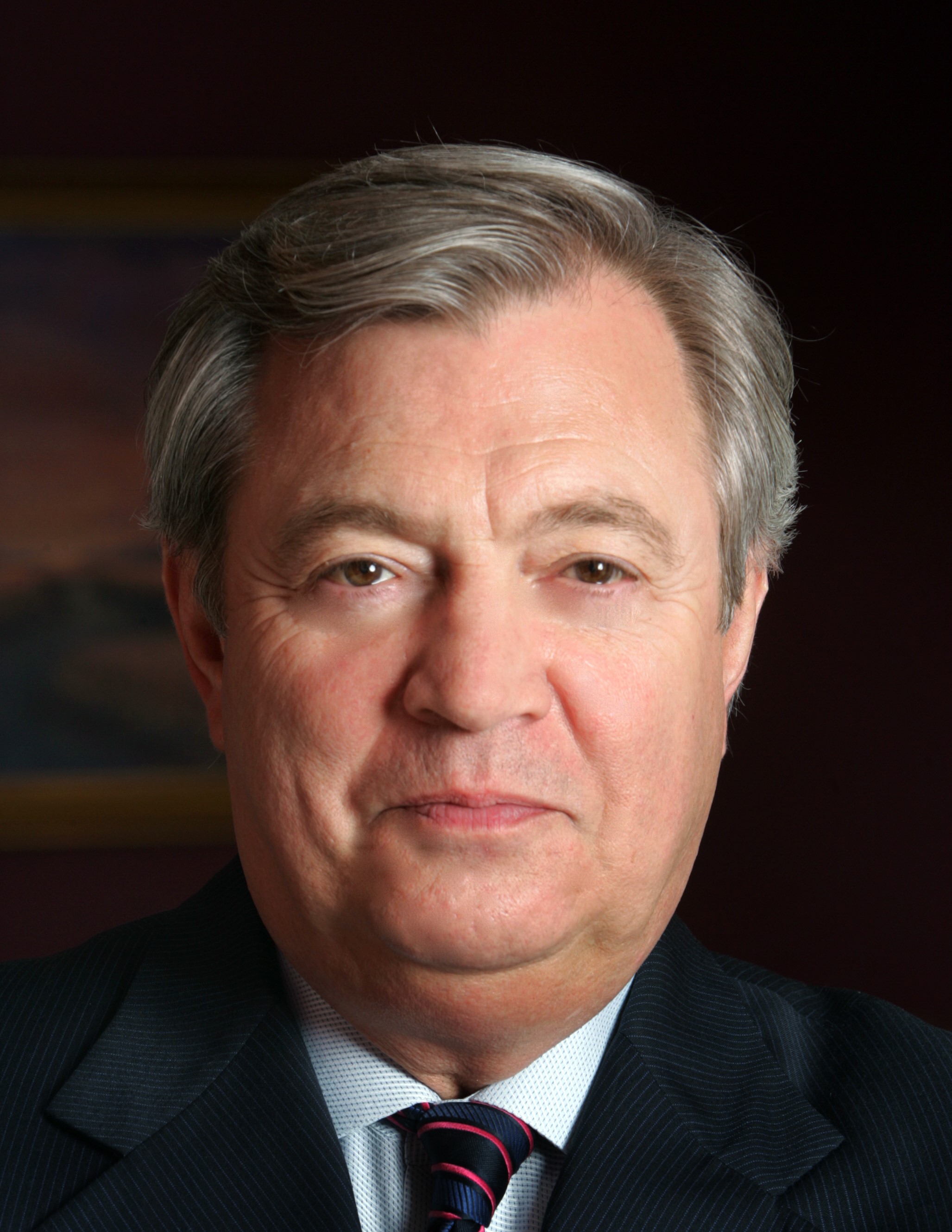
Interviewee: Dick Harpootlian
Interviewer: Madison Kelly
Location: Remote interview (Columbia, SC and Columbia, SC)
Date: September 28, 2020
Accession #: ELEC 005
Length of Recording: 49:43
Summary
Richard A. “Dick” Harpootlian was born January 23, 1949 in Brooklyn, New York and moved to a few more cities across the country before settling in Charlotte, North Carolina. Mr. Harpootlian went to Clemson University before attending the University of South Carolina Law School. After his schooling, he began working in the Solicitor’s Office and later went on to serve as Solicitor from 1991 to 1995. After losing a competitive attorney general race in 1994, Mr. Harpootlian opened his private practice, where he still represents clients today. Mr. Harpootlian has also been County Councilman for Richland County and Chairman of the Democratic Party. He has been involved in many national and local campaigns, both personally and through his position as party chair, including the campaigns for President Clinton, President Obama, and Senator Hollings. In 2018, Mr. Harpootlian ran for SC Senate and is currently running for reelection.
In the interview, Mr. Harpootlian recounts his time at Clemson University amidst the Civil Rights Movement and the Vietnam War, his early work with the Solicitor’s Office, his work in private practice, and his experiences with both political office and the political process.
Keywords
Law | South Carolina Politics | Richland County | Solicitor | Attorney General | South Carolina Democratic Party Chair | Orangeburg Massacre
Recording
Transcript
Madison Kelly: This is an oral history interview for the 2020 Election: Sharing Stories of Civic Engagement oral history project, part of coursework for Honors College class SCHC 326, documenting the perspectives and experiences of those who are engaged in some way in the 2020 election. This is Madison Kelly, the date is September 28th, 2020 and today I’m interviewing Dick Harpootlian remotely. I am in Columbia SC and Mr. Harpootlian is in his home in downtown Columbia, SC. Ok, could you start by giving me your full name and spelling it.
Dick Harpootlian: Richard A. Harpootlian. H-A-R-P as in Peter-O-O-T as in Thomas-L-I-A-N.
MK: Where and when were you born?
DH: I was born in Brooklyn, NY on January 23rd, 1949.
MK: Is that where you grew up for the majority of your life?
DH: No, I grew up in Charlotte, NC.
MK: When did you move to Charlotte?
DH: When I was like 9 or 10.
MK: Ok. Do you remember much of your time in Brooklyn?
DH: Well, we didn’t live in Brooklyn. We moved to Virginia when I was young, and we moved from Virginia to Boston and then Boston to North Carolina.
MK: Was that because one of your parents worked or just travelled a lot?
DH: Yeah my father – my father was at a company that was growing, and he got transferred as they opened up new territories.
MK: What was the community like when you were a child in Charlotte? In your community specifically.
DH: When I was growing up in Charlotte?
MK: Yes.
DH: Small town. Charlotte wasn’t much bigger than Columbia. There was no I-77, no South Park, no – they built the first mall, Cotswold Mall, when I was in high school. Very small town. Not very affluent but segregated. I went to an all-white high school because there were no integrated schools. Went to an all-white middle school because there were no integrated schools. So I grew up in the South before integration.
MK: When did you first start taking integrated classes? Would that have been college?
DH: Yes. I went to – Clemson, where I went to undergraduate school, was integrated the year before with Harvey Gantt.
MK: So that was a relatively new experience for that campus, being integrated at that time?
DH: Yes and you know the problem is that when you grow up in a segregated society, you believe that’s what everybody wants. That it’s, you know – it’s only when I got to college did I realized what had been going on was so wrong.
MK: Right. Why did you choose to stay in the South for college, specifically in Clemson?
DH: Well, I wanted to be a chemical engineer. I got accepted at Georgia Tech, NC State, Clemson where, everywhere – and in Chapel Hill – where I applied, and Clemson just seemed a better fit for me. Wasn’t in a big city like NC State and Georgia Tech were, and Chapel Hill was – everybody in my high school class went to Chapel Hill, so I didn’t want to go there. I wanted to go somewhere different and I liked the South. I wanted to stay in the South. So I was in chemical engineering for two years before I switched to history and political science.
MK: What made you switch majors?
DH: Wow, that’s an interesting question. I was very, very good at chemical engineering – had great grades, but I started college in 1966 when the Vietnam War was just cranking up. My father was a bomber pilot in World War II, I was in ROTC, I wanted to be an Air Force pilot. However, between 1966 when I got there and 1967, a year later, I began having a very difficult time with what we were doing in Vietnam and by ‘68 – 1968 was sort of a seminal year for all of us that were in college. It changed, the world changed, I changed. I decided I didn’t want to be in ROTC, I didn’t want to be a pilot, I didn’t want to an engineer. I wanted to do something more constructive. In 1968 at Clemson, in February – I was on my student newspaper there, The Tiger. I interviewed some kids in February ’68, some black kids that were coming back from Orangeburg, where there’d been a demonstration and three black kids had been shot and killed and fifteen more wounded trying to integrate a bowling alley in February. In April, I went to Atlanta and marched in Dr. Martin Luther King’s funeral cortege from Ebenezer Baptist Church to Morehouse. Saw that and saw Bobby Kennedy and then in June, he was killed. August was the Democratic Convention that turned into a riot. And so, ‘68 changed me and the world changed and so I decided to do something other than be an engineer. That’s a long answer to a very short question.
MK: Is that when you began to be more in politics, or have you always been more politically minded like that?
DH: Well, I mean it brought home that, you know, that politics were important. I don’t think I realized that until 1968 that if we were going to change the world, we had to change the leadership. But yeah, I became interested in it. I became interested in Bobby Kennedy’s campaign for all of 60 days before he was shot and killed and then, you know, I dabbled in politics until I got to law school down here at USC and got involved in a political campaign the summer after I graduated – or basically during that summer. A guy named Jim Anders was running for Solicitor against a 22-year, 25-year incumbent. I liked Anders – young lawyer – and I didn’t like the incumbent, so I worked for him and his campaign. He won, gave me a job as
Assistant Solicitor. So, although I was not looking, not really looking for a job to be a prosecutor – I know you’re gonna find this shocking, but I was a bit of a hippie back then. I had hair about your length – no, I’m not kidding – and I just smoked a little weed once in a while, every day. And so I wanted to be a public interest lawyer or something like that, but I felt like Anders offered me the opportunity to make change, so I went to work for him. Worked for the Solicitor’s Office for eight years. Became Deputy Solicitor during those eight years. Prosecuted primarily homicide cases including serial killers. A guy named Donald “Pee Wee” Gaskins was probably the last big case I did. He was South Carolina’s most notorious mass killer. Blew up a guy on death row on a hit. And then I left and went into private practice with a guy named Jack Swerling. He and I did primarily criminal defense work. When my old boss left in 1990, I ran for Solicitor, got elected, served four years and by the way, I skipped – in ’86, I ran for County Council and got elected so I was on Richland County Council from ‘86 to ’90, Solicitor ‘91 to ’95. Ran for Attorney General in ’94. Got beat. Went back into private practice. In ‘98 I became Chairman of the state Democratic Party over my objections. Didn’t want to be Chairman of the Party but Fritz Hollings insisted I do it – that’s what friendship will get you. Did that for five years, left, came back in 2012 for a year. And then in 2018, I ran for the [South Carolina State] Senate and here we are today.
MK: That’s a lot.
DH: Well, I left out a lot. There’s a lot in there. When you get to my age you just sort of look back on it and go “that went awful quick”.
MK: (laughs) Right. What made you want to get involved with so many of those things at the same time? You know, being a private practice lawyer is a lot but also being County Commissioner, I think you said, for Richland County . . ..
DH: Well, you know, I felt that I had something to add. That there were things that needed to get done that weren’t being done. I’m proud of the fact that we funded public education proportionately far in excess to what they’re doing today. I helped get the funding to build a new main library downtown and branches, and got the funding for the art museum downtown, and a bunch of other public works. And you know, steps to make this a better county, a more livable county. That was County Council. Solicitor – I’d done the job as Deputy, always wanted to be the Solicitor. I did it and we did some great things. I mean, not only prosecution, although I did indict and convict the President of the University South Carolina Jim Holderman within six months of being sworn in. That was a big step. Did a bunch of public corruption prosecution. Did some great things in terms of juvenile diversion programs. In other words, not just prosecuting bad guys, but trying to make sure kids didn’t get sucked into the system, into a life of crime, indoctrinated in the juvenile facilities into being criminals. So that was fun. I enjoy doing it. I think I would have made a great Attorney General. Unfortunately, the voters didn’t agree with me and did me a favor because when I went back into private practice, I began doing more civil cases. I still do a little bit of criminal because it’s where I come from and it’s fun. But, you know, settled or try – got verdicts, probably – I think we’re counting the other day. I tried or settled, in the last – since ’95 – what’s that, 2005 – 25 years, around 450 million dollars in settlements. So money doesn’t drive the train anymore.
MK: Why did you choose to do more civil cases than criminal? Was that . . ..
DH: Criminal cases are not as lucrative and when you’re in a criminal case representing somebody, one of two things is going to happen and one of them ain’t so good: your client goes to jail or gets executed or whatever. And the money is much, much better on the civil side and a lot less pressure. All – you’re just litigating over money. It’s just about the money. And the skills I’ve picked up as a criminal lawyer are very, very useful in a civil courtroom. I’m used to entertaining as a criminal lawyer. People want to be entertained and that’s what a lawyer should – a good lawyer does.
MK: Definitely. When you decided to open your private practice – why did you decide to do that? Just to get out of being in the Solicitor’s Office or . . ..
DH: I lost the AG’s race, so I didn’t run for Solicitor again. I ran for AG. So, I had to go do something and – no, I didn’t think a movie career was going to work. So I opened my own law office, which has proved to be one of the smartest things I’ve ever done because it allowed me to shape my practice the way I wanted it to work.
MK: Would you say that you enjoy private practice more or just in a different way maybe?
DH: There is – they’re different gigs. You don’t make any money being a prosecutor, but it’s – you feel like you’ve got more impact on the social fabric of your community. The flip side of that is I can be in private practice and have the financial wherewithal to run for the Senate and take time off my practice to do that, where I have some impact – not as direct – but some impact on the social fabric of our state.
MK: When did you first run for SC Senate?
DH: 2018. The guy that held the job, a guy named John Courson, got indicted for public corruption and when the seat became vacant mid-term, I decided that I’d had – I was very upset with government, frustrated with government, and I felt like maybe I could win and do something about it. I did win. Haven’t done that much about it but it’s – the Senate is not a body built for speed. The way you get power there is to live longer than everybody else. Seniority.
MK: Right. How have you liked your time in the Senate in terms of the process and . . .?
DH: Not so much. As a freshman senator, I’m not chairman of the committee, chairman of a subcommittee. I have no real authority. So what I can do is not pass things but ask questions and stop things. By way of example, I had grave questions about the Department of Commerce’s deal with the Panthers. Almost 200 million dollars in tax money to persuade them to move a practice facility to Rock Hill, outside of Rock Hill. It wasn’t transparent. We don’t know how much money we pay. We didn’t know what we were – how many jobs were getting for the for the bucks we were paying. Just seemed to me that it was it not transparent and taxpayers have a right to know where the money is going. So I held that up until we got answers. The answers proved to me that it’s still not a good deal. So while I voted against it – and I probably could have stopped it totally, but I don’t believe that one senator oughta kill something if the majority of them wanted something like that. Now what I have done is I’ve asked the Legislative Audit Council to audit the Department of Commerce and the report came out about two months ago and it is, I think, an agency ripe for change. It’s no accountability for how they spend literally billions of dollars. So yeah that’s an example of how one can do something constructive but in terms of introducing a bill and getting it passed, not as a backbencher. Not gonna happen.
MK: Do you see yourself having a lot more time in the Senate to work through these or maybe mentoring somebody else to continue that path?
DH: I’m running for reelection which is a four-year term. That’s about all I got left in me.
MK: You are a member of the Democratic Party, correct?
DH: Who says? (laughter)
MK: It’s – that’s the political party you run under.
DH: Yes, I am a Democrat. Yes.
(aside)
MK: (laughter) This question is about the Democratic Party. What does that mean to you or does it mean anything specifically to you, being a member of the . . .?
DH: The Democratic Party is more attuned to the needs of those who cannot help themselves. I don’t – I don’t think our society is going to be any better off in the least of us. Now Republicans give lip service to that, but they believe in a trickle-down system. That is, if you make people richer up here somehow that’ll trickle down to the people that really need the help and my experience has been that it doesn’t work. The world doesn’t work that way. So if government has a role it’s to make sure that folks that can’t help themselves get opportunity and by that I mean we have a program that feeds kids at school that can’t get fed anywhere else. A kid that’s got an empty stomach can’t study, can’t learn. So these are basic things. Somebody gotta have a good place, oughta have a safe place to sleep, oughta have a full belly. These are just basic human rights in my opinion. Democrats believe that and Republicans don’t.
MK: How long have you been a member of the Democratic Party?
DH: I’ve thought of myself – when I went to college, I was a member of the Young Republicans. So sometime between 1966 and 1972 I guess I decided I was a Democrat.
MK: What political issues are most important to you?
DH: I’m sorry, say that again.
MK: What political issues are most important to you? We talked about a few of them but . . ..
DH: In terms of the Senate or just generally?
MK: Generally. Let’s do generally.
DH: I think health care is very important, that we oughta make sure that – again, I think that’s a basic need. I think if people get adequate, not adequate but good health care that’s preventative, that we’re gonna to have a healthier society and a healthier society is a society that could work and educate better. So healthcare is extraordinarily important. You can’t deny people the right to have good health care. I think it’s a basic human right and to the extent that we can do something about that in the state legislature, I’m going to try to do that. The other is just a basic human dignity issue. The Black Lives Matter movement and what’s going on in this country right now made me recognize that I haven’t done everything I should have done. That doesn’t mean that that we regret and are dominated by guilt. It’s an affirmative statement that we’re going to do better and anybody that doesn’t believe that African Americans and women don’t fair as well because there’s discrimination – they deny that discrimination exists, they’re denying reality.
MK: Are there any different issues for you? Not just personal but for the Senate in general. Are those different issues for you?
DH: Not really.
MK: I think those are great issues.
(aside)
MK: What have been your biggest achievements working in the SC Senate so far? You can extend that to just being in politics in general.
DH: I think as a prosecutor, as a solicitor here – well, I was County Councilman. I’ve told you about the art museum and about the library system. I also was able to work with both Republicans and Democrats in doing some economic development projects. I think that benefited the county. As a Solicitor, I was able to create new programs that diverted first offenders out of the system as opposed to putting them, making them criminals. And as Senator, I think I’ve raised questions that have caused people to hesitate to do things like the Panthers deal and I think next year I’m going to have a little more credibility on that. But the Senate, again, is based on seniority and it’s a very slow-moving, ponderous body so I’m not sure. The reason I’m running for another term is maybe I can get something done.
MK: Let’s talk about campaigns. Can you take me through maybe a normal campaign cycle? Maybe not one that includes the Coronavirus challenges now, but just in a regular AG or Solicitor General election campaign.
DH: I’ve done that a number of times and typically I’d be knocking on doors right now, which we’re not doing. I do go on TV starting tomorrow, here. Everything is normal except there’s no personal – no door-knocking, there’s no Okra Strut parade, there’s no – when I ran for AG in ’94, I did 52 parades in 18 months.
MK: (laughter) Oh my goodness.
DH: This is what I did. It’s a different – politics has changed dramatically over the last 20 years with social media and digital and all that stuff mattering a lot more. It didn’t exist 20 years ago.
MK: We talked a little bit about doing face-to-face. Has anything else changed with Coronavirus that has affected your campaign or maybe this election in general?
DH: Since there is no face-to-face, no door-knocking, no – unlike President Trump, I don’t go to campaign rallies. That’s just asking for somebody to get sick, me for instance, and so everything has to be done by phone or Zoom. Doing a lot of Zoom meetings, doing a lot of Zoom calls. And it is not as much fun. I can tell you, there’s something to be said for an old campaign rally on a Saturday morning and then everybody goes out and knocks doors and you come back and get lunch and a beer. That excited kind of camaraderie and companionship is gone and I’m hoping and praying we get it back by this time next year. That we get the ability, maybe with the vaccine, to go out and about.
MK: Do you think maybe some of these – instead of doing face-to-face, people maybe focus more on social media. Do you think any of those will remain when the Coronavirus is no longer a problem?
DH: I think it’s – look, I’m operating from my home right now. I’m practicing law and politics. What I’ve discovered is that you can do pretty much both without being in an office somewhere and you can do pretty much both without having to go out and meet with people. So I think that this new paradigm is going to last in a number of different ways even after the virus is gone. I don’t think people are gonna feel compelled to come to an office every day for eight hours a day.
MK: What are the issues that are most important on the ballot, specifically for this election?
DH: Say that again. I’m sorry.
MK: For this election, what are the issues that are most important to you? Maybe specifically just for this election.
DH: Me. I’m on the ballot. The most important issue to me is getting me reelected. There are really no issues – there’s no questions on the ballot that I know of and it’s all about who wins and who loses. I do think that we’re going to see some interesting things happening. A lot of incumbents are being challenged, from Lindsey Graham to the president to a number of statehouse seats. So you may a seat change this year. Of course, you may not but there all kinds of things. Very volatile. It’s a very volatile election.
MK: Going back to your law school days, when did you know that you wanted to work in law and that you wanted to go to law school?
DH: The sort of the strange thing is when I got ready to graduate from college, at that point in time if you’re in law school you got a deferment to not go to Vietnam. So I applied for law school, got accepted to law school, and then they did away with the deferment. So I got drafted but I had developed an ulcer. I think I was smoking three packs of cigarettes a day and drinking nothing but coffee. I weighed 30 pounds less than I do right now. So as a result I developed an ulcer and was not allowed to serve. So I ended up accepted to law school and I guess I went ’cause I don’t have anything else to do.
MK: But you kept with it. Was that because of any interest in law or just you were already on that path?
DH: I’ve been interested in law for – you know, because I knew law affected politics and affected social policy. But not – did I want to be what I am today? Nah. Never even thought about being a trial lawyer.
(unintelligible) (30:50)
MK: Did you have any idea what you were going to do when you were done with law school throughout the process?
DH: Buy a motorcycle, ride around Europe maybe. I had long hair you know. (laughs) But I got this job with Anders and very quickly I had an opportunity to be in a courtroom having never been in a courtroom before and try a case. And it was the biggest rush in the world. I said, “God, I’m addicted to this. Twelve people that have to listen to me. Can’t get up and leave. Nothing better in the world.”
MK: You stayed in the Solicitor’s Office for, you said eight years.
DH: First time, yeah. Out of law school, I came in ‘75 and left in ’83.
MK: What were some of your big achievements as Solicitor in the Solicitor’s Office?
DH: When I was the Deputy Solicitor, I prosecuted a bunch of very high-profile homicide cases. I think we professionalized – when I started with the Solicitor’s Office in 1975, there were detectives of the City of Columbia that couldn’t read or write. Oh yeah, and you know there were remember now, no computers, no – everything was typed with carbon paper. It was not much change between the 20s and 1975. No copy machines, no computers, no faxes, no – so as technology came in, we began using it. Not like they do today. There was no DNA, no automatic fingerprint identification, none of that. But we became more sophisticated and I helped bring that sophistication, which got the police and the prosecutor working together early on in homicide cases.
MK: Do you have an achievement during your whole time in the Solicitor’s Office that you would say is maybe your biggest achievement or something you were most excited about or most proud of?
DH: It’s a very boring topic but making that case flow process where prosecutors and police officers work early on on big cases and make sure the evidence is gathered. And you direct it early on, understanding how that’s going to look in front of a jury a year or two years from then. That’s very important. In many, many jurisdictions around the country, the cops can’t go get a warrant without getting the DA, the prosecutors, the Solicitor to sign off. We don’t have that here so developing that kind of relationship was extremely important and I’m very proud of that. And that led to – as I said, I prosecuted the President of the University South Carolina Jim Holderman. I prosecuted the drunk driver that killed Strom Thurmond’s daughter. I prosecuted a public corruption case involving the ABC Commission. Convicted two out of the three commissioners. All kinds of violent crime, white-collar crime. But that process to get that case to court is more important than any individual case. So I’m proud of that while I was Solicitor.
MK: Is there anything you, maybe not regret, but you wish you could have done in the office that weren’t able to?
DH: Given the financial constraints and the times, not really. I think I had a really good run.
MK: And then you moved on to your Senate race correct after this?
DH: That was in 2018.
MK: No, sorry! Not your – sorry, your attorney general race.
DH: Yeah, in ’94. And that race, unfortunately, was doomed by circumstances beyond my control. Bill Clinton had been elected in ‘92 and did not do a very good job the first two years of trying to explain what he was trying to do. As a result, Newt Gingrich, who later became Speaker of the House, ran what’s called the Republican Revolution year and Democrats lost United States Senate seats, Congressional seats, governor seats, and attorney general races. I was one of those swept away in that ’94. But I point out, where I was known because of my Solicitor’s work here in Richland County, my election county, I carried those counties. I didn’t have enough money to do television to the extent that would be necessary to combat just the general pushback against Democrats that year. So I learned a lot and learned I never want to do that again. (laughs) And then of course, I didn’t run again. I was Chairman of the Party and for five years – ‘98 on for five years and then I did it again in ‘12. Chairman of the Party is a thankless, horrible job.
MK: Can you describe that job for me just a little bit? What you would do specifically as the party chair?
DH: The Chairman of the Party in an election year – ’98 was an election year. Fritz Hollings asked me to be chairman of the party because I’d helped him in ’92 in sort of an informal way. My initial reaction to him was “no, I don’t want to be chairman. Who wants to be chairman of a party?” I’d dreamt of doing a lot of things in my life but that wasn’t one of them. (laughter) Fritz – I’d gotten to know Bill Clinton back when he was governor of Arkansas before he was president. I’d campaigned with Clinton in New Hampshire in ‘92 door-to-door so I knew the president pretty well. My phone rang. It was Bill Clinton, the President of the United States saying, “Dick, Fritz Hollings would like you to be chairman of the party. I’d appreciate it if you’d help them out.” What do you do? So that’s how I became chairman of the party and we put together a great organization. I did some things there that had never been done before and as a result, not only did we reelect Fritz Hollings, we beat an incumbent governor, David Beasley, with a guy named Jim Hodges, who was like our tenth choice. We picked up three of the statewide constitutional officers, we picked up House seats and Senate seats. We had a great year and it worked. It worked very, very well and we ran a very sophisticated, modern campaign. Probably the first time the Democratic Party had every done that. And we won. Now in 2002, four years later we had a little thing called 9/11 the year before and as a result, the country pushed back solidly Republican. And Hodges lost, a number of other governors lost, and that was the end of my first term. I should have quit after Hodges got elected ’cause the next three years was just raising money and it was horrible. But I did that and then I quit and then I got asked to come back before Jaime Harrison was chairman to sort of in that cycle, get some money. That was Obama’s reelection campaign.
MK: Why did you decide to come back?
DH: Because I got asked to come back by people in the Obama Administration. I was the first statewide, in ’07, I was the first statewide Democrat to commit to Barack Obama and announce it. And you know who was the most skeptical of that support? Who said that would never happen? Black people. “We’re never going to elect an African American president.” They thought I needed to be drug tested but I met – by the way, very good friends with Bill and Hillary Clinton. Was in New Hampshire with Bill, been to the White House a number of times while Bill was president. Assumed I’d be supporting Hillary until one day I got a call from a friend of mine, Rick Wade. Said “I want you to meet this guy” – and I’d heard him speak at the ‘04 convention in Boston – “Senator Barack Obama from Illinois.” I said, “Look Rick, I’m committed to Hillary and I understand you got this Don Quixote campaign to run for president. No way that’s going to work.” So I went down and had a cup of coffee with him at the Marriott downtown. Took about an hour, just me and him. I walked out of there and endorsed him. I was so impressed. Knocked it out of the park. And all my friends thought, again, I needed drug testing but as a result of that early endorsement and being involved here in – remember now he won Iowa, lost New Hampshire, and South Carolina was a do-or-die for him. And we took South Carolina for him big time. I got my own chapter in Game Change, a book you probably never read but it’s about that ‘08 election, about my confrontations with Bill Clinton during that campaign. Anyway, long story short is yeah, I’ve been involved in a number of different elections: ‘92 with Clinton in New Hampshire, Barack Obama here and elsewhere in ’08; and when the White House wanted me to get involved here in ’12, I did.
MK: Going back for a second, you said you ran one of the first modern campaigns. What do you mean by that specifically?
DH: So there’s something that’s that called a coordinated campaign, which is now old hat but coordinated campaign means you get all your candidates in a statewide race. You have them raise money and then you do a mechanized effort. When I say mechanized, using telephones and mail to ID your vote and then to turn it out in a very focused way. It used to be that what would happen, for instance for African Americans, is that money would be paid to community leaders – preachers, else – and they would take care of getting their people out. And that not only is racially wrong, it doesn’t work. So what we did was we ID’d using voter files, which didn’t really – we didn’t have a computerized voter file so the first thing we had to do was take every registered voter in the state and digest what their voting history is. For instance if somebody voted in two consecutive Democratic primaries, we think they’re probably going to vote – and also general elections – they’re probably going to vote in a general election and they’re going to vote Democratic because they’ve got this history. So you ID those folks and the folks you can’t ID, you perhaps phone bank “who are going to vote for”, and then once you ID all those voters, you – that tend to vote for your Democratic candidates – you then use mail, phones, robocalls, you send people to knock on their door because everything comes down to Election Day. Not like now where all these – 90% of the people voted – 95% voted on Election Day back then. So you had to get them ready to go and then find a mechanism to get them there and so we would we would call them all day long on Election Day. But that takes – we had no computers. We had to build a computer system, build the software. I got a commitment from Fritz Hollings that he would get me the money and the person to do that. We hired a guy named Craig Schirmer from out of state, from California. He and a guy named Justin O’Brien put it together and it worked. It worked beyond anyone’s imagination.
MK: You talked about campaigns you’ve been involved with like Bill Clinton’s campaign. Were you more of a volunteer or were you . . .?
DH: I have always been a volunteer. I’ve never gotten paid a dime for political work ever.
MK: Do you enjoy volunteering with campaigns? Is that something you like to do a lot?
DH: Yeah. I went door-to-door for Barack Obama in North Carolina on ‘08 and ’12. There’s nothing like knocking on a door and trying to persuade somebody to vote for your candidate and especially if it’s you. (laughs) It’s fun. I enjoy it. I enjoy – what I don’t enjoy are the dinners and the cocktail parties that go with the political process.
MK: Very grassroots kind of . . ..
DH: Kind of grassroots. And again, as chairman of the party, I had to put on a bunch of major events including the Jefferson-Jackson Day Dinner every year and all that. Thousands of people and cocktail parties and all that. I’m not saying that – I’d just rather not do that. I like the sort of isolating of Coronavirus. I don’t like people. I’m kidding, I’m kidding.
(laughter)
MK: No, I understand.
DH: I’m sorry, what?
MK: I understand what you’re saying. Do you ever see yourself running for another political office besides SC Senate in the future? Anything?
DH: No! Never. Ok, let’s make that – is that unequivocal enough for you?
MK: Yes. No more attorney general races in your future?
DH: No. Did you figure out how old I am? How old do you think – how old am I? You know where I went to high school. How old am I? I was born in 1949. How old am I?
MK: Somewhere in the 70s . . ..
DH: Yes. Is this the way I want to go out? No, I don’t think so.
MK: Of all the political and law work you have done, is there something that stands out more than the others or something that would be more of a legacy for you? That you would want to be your legacy?
DH: Helping Barack in ’08 is something – electing Barack Obama president is something I think – I don’t know how you get any better than that. I was with him both here a lot during the primary process and then I saw him in Virginia Beach the night before or two nights before the election and we talked. The guy’s just such a good guy. Joe Biden – he’s been my friend for 30 years. I talked to him a couple weeks ago and he’s a good guy. They’re decent people. They want to do the right thing and to the extent that I can help somebody like that achieve greatness in this country, there’s nothing better than that.
MK: Could you see yourself volunteering in the future? Maybe not having a political office but continuing to volunteer for campaigns and work with . . ..
DH: If it was somebody I believed in, sure.
MK: Is there anything else you really wanted to talk about? Any moment of your life you thought was very integral?
DH: Having a daughter. That was a big moment for me. I think – no, that’s not something that influenced my politics. Now look, I’m 71 years old. It’s not like I’m this kid getting ready to run for some new office. I’ve done that as a kid. I’ve won, I’ve lost. I’ve lost big, won big. The key to all this is oftentimes you learn more by losing than you do by winning. You learn more watching how people behave during a loss. You learn more about them. If it’s all – it’s not all about winning and losing. It’s about, especially in politics, trying to advocate something. And by the way, getting elected and then their sole goal is to get reelected is horrible. You’ve got political capital. Spend it! Jim Hodges, when he was governor, he spent his political capital. He got teachers pay raises, he improved and built schools, and he put money where his mouth was and he didn’t get reelected, but he did great things. That’s what this is about. Politics is not about how much power can I gather, how many times can I get reelected. It’s about spending your political capital on good things.
(aside) (48:42)
MK: I think that is it.
DH: Well Madison, it’s been a pleasure.
(aside) (49:35)
DH: Thank you.
MK: Thank you so much.
DH: Take care. Goodnight.
MK: Goodbye. Thank you.