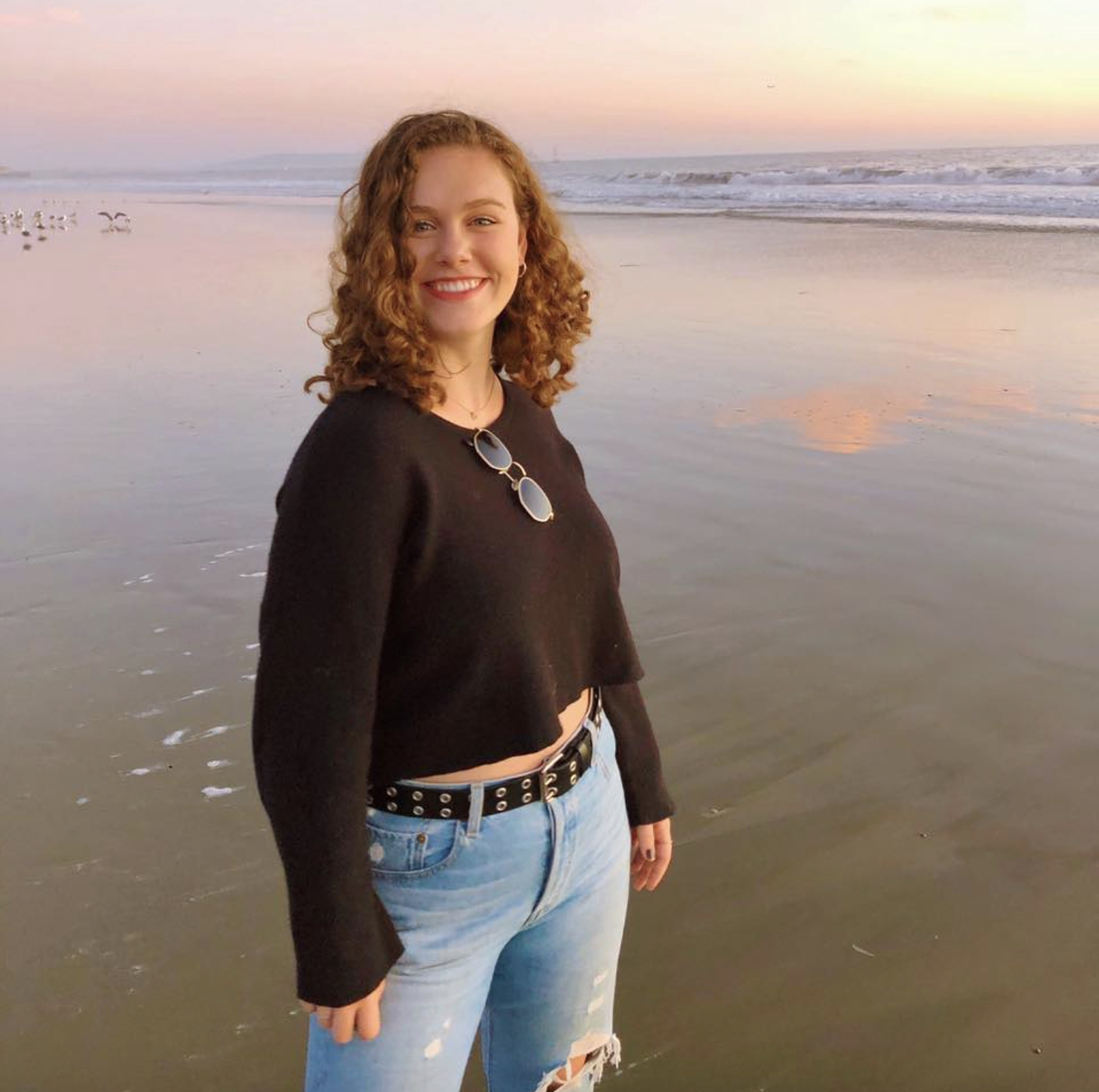
Interviewee: Emily Gibson
Interviewer: Emma Wallace
Location: Remote interview (Columbia, SC and Los Angeles, CA)
Date: October 5, 2020
Accession #: ELEC 011
Length of Recording: 22:00
Summary
Emily Gibson, born in December, 1999, grew up in Glen Ellyn, Illinois. She is currently a student at UCLA where she is involved with Greek life, the UC Women’s Leadership Conference, and serves as a campus tour guide. She also participates in student government on the Finance Support Commission of USAC (Undergraduate Student Association Council). The interview includes discussion about Emily’s family and their traditions, her life as a student at the University of California Los Angeles, and her perspective on the 2020 presidential election. Gibson discusses the election culture on her college campus and within her friends group. She reflects on COVID19’s impact on the election and| the importance of the upcoming election with the opening of a supreme court seat, what is important to her for the upcoming election, and how she will be voting. Gibson emphasizes the importance of voting in the election and suggests ways to encourage college students to vote.
Keywords
2020 Election | Politics | COVID19 | College Student Voting | U.S. Supreme Court
Recording
Transcript
Emma Wallace: This is an oral history interview for the 2020 Election: Sharing Stories of Civic Engagement oral history project, part of coursework for Honors College class SCHC 326, documenting the perspectives and experiences of those who are engaged in some way in the 2020 election. This is Emma Wallace, the date is October 5th, 2020 and I’m interviewing Emily Gibson remotely. I’m in Columbia, South Carolina and Emily is in Los Angeles, California. Would you start by giving me your full name and spelling it?
Emily Gibson: Yes, my name is Emily Gibson, E-M-I-L-Y G-I-B-S-O-N.
EW: Where and when were you born?
EG: I was born in the suburbs of Chicago on December 2nd, 1999.
EW: Is that where you grew up?
EG: Yes, I grew up in Glen Ellyn, Illinois.
EW: And what was that community like?
EG: That community was very typical suburban, I feel like, um, pretty comparable to a lot of other suburbs within the United States. Um generally in my experience, I felt like most people knew each other. It was a pretty connected community, a very religious community, and at that I would say it was very Christian. Um the majority people that I knew were and still are Christian and often went to church and that kind of seeped its way into the community. The different high schools and there definitely was, speaking of high schools, a lot of pride surrounding our town’s high school and people loved to go out to the football games and just kind of be connected to the community. So overall, I would say it’s just a very generally connected and supported suburban community.
EW: Very nice. So, talk to me about your parents and grandparents. What were their names?
EG: Yes so, my mom and dad’s names are, Jean and Keith Gibson. And my mom’s parents were Kenneth and Carol Mackenzie, and my dad’s parents were Hugh and Janet Gibson.
EW: And where were they from?
EG: So, both my mom’s parents were from the Chicago suburbs and my dad’s parents were from Indianapolis, Indiana. And then my parents, my mom was from the Chicago suburbs as well and my dad was also from Indianapolis.
EW: Okay, and what did they do for work?
EG: So, my dad is a lawyer and my mom started off in marketing in her career, and then she took some time off to raise me and my siblings, and now she works in energy efficiency. And my grandpa worked in business, I’m not exactly sure doing what, and my grandma, for most of her life, worked in a bank. So, that was actually my mom’s parents, and then my dad’s parents, his dad also worked in business and his mom worked in the schools. So, for a long time, she was an elementary school teacher, and then later in her life, she became a substitute teacher.
EW: Okay very cool. Do you have any siblings?
EG: I do. I’m the oldest of four siblings. So, I have three younger siblings, two sisters and one brother.
EW: And how was it being the oldest?
EG: It was fun. I mean, obviously, there’s a different dynamic being the oldest compared to the youngest. It’s interesting now seeing how Molly, my youngest sister, is being raised differently than I am. I feel like I was subject to a lot more rules and I got in trouble a lot more for sure. (laughter) But it was fun. I like, you know, being kind of like a mentor almost to my siblings, especially Molly. And, you know, being friends with Kenny and Melissa as well. I generally like to, you know, give advice and that kind of stuff, so feel like it was a cool relationship to have with them being the oldest sibling.
EW: Very nice. And what kinds of family traditions did you experience?
EG: So obviously my immediate family was pretty big, there are six of us, so there’s a strong sense of family, community, and both within my immediate family. And then with my extended family, holidays are and have always been a big deal. We always get together and have huge celebrations, and I think that’s to do one with just a very strong sense of family, but also especially the older members of my family are pretty religious, so religious holidays are important to them and then to our family as well. So, you know, we always have fun family parties with certain traditions like family parades and Jell-O slurping contests. I think just generally being a big family and spending time together has always been a tradition that’s been really important in my life.
EW: Jell-O slurping contest, that sounds like fun.
EG: Yes, oh, yes. It’s a crazy time.
EW: So, who had an influence on you or who did you look up to?
EG: That is a good question. I would say, just naturally, my mom, obviously, had a really big impact on me throughout my life. She is really smart. She always loves to be learning. She went back to work and I saw her kind of go through the process of going back to work when I was in middle school. And it was really cool to see her kind of rechannel her interests in her adult life. And, you know, kind of follow her passions. And it’s been really cool to see her go through a couple different jobs over the last, you know, since whenever she went back to work and just kind of getting closer and closer to what she is really passionate about, and just learning about this kind of new job that she’s doing. I mean, she didn’t go to school for energy efficiency work and the kind of stuff that she’s doing now, so it’s just been really inspiring to see her kind of reinvent her life and prioritize work and education. And also, she’s just, you know, a fun, ambitious woman. And I would definitely consider myself to be very ambitious as well. (laughter) And then another person that’s had a really strong, yes definitely very ambitious. (laughter)
Another person that’s had a strong impact on me in high school was a senior when I was a freshman and I met her through the speech team that I did in my high school. Her name’s Grace Houghton-Larsen. And kind of right off the bat, she just became one of my really good friends. And one, she just always, like, looked out for me and showed me a lot of love, despite being, you know, four years older than me. And then since, you know, she graduated, we were only at the same school for one year, she’s always been someone that I could turn to for advice. And she always asked me how I’m doing. And I just have a lot of respect for who she is as a person and what she stands for. And I’m always, you know, turning to her for advice and kind of just looking to her to see what she does in certain situations and then kind of trying to implement that within my own life, I guess. And she’s just so sweet and so fun, just love her.
EW: Well, that’s good. Okay…
EG: Yeah.
EW: So, let’s get into this election. Being a college student, what does the election culture like on your campus?
EG: Yeah so, I’m a student at UCLA so the culture is definitely way left-leaning. When I came to school, I definitely considered myself to be a Democrat and a liberal Democrat for sure. But then coming to campus, I met a lot of students who were as liberal, if not more liberal than I was, coming in. So, people are always talking about the election, especially within the classes that I’m taking, and the organizations that I’m involved in. There’s just a lot of inherently political, politically minded people. But, you know, there’s always campaigns going on on campus and people are really passionate about certain issues and just passionate about the election as a whole, like last year Josh Hutcherson came to our campus and campaigned on behalf of Bernie Sanders, which was cool so a lot of people went to talk to him. So, yes, I would say it’s definitely a very politically minded campus and definitely left leaning for sure. I mean, obviously, there, you know, everyone or every campus can expect some diverse views. But I would guess compared to a lot of other campuses, UCLA is very liberal.
EW: Okay, so then what is your major?
EG: So, I am double majoring in English and political science with a minor in film.
EW: Okay very cool. And are you involved in any campus activities?
EG: Yes. So, I am involved in Greek life. I’m a campus tour guide. I’m involved in the U.C. Women’s Leadership Conference. And then I’m also involved in student government, which at UCLA called USAC, which stands for Undergraduate Student Association Council. I think I got that right. And within USAC, I’m on the Financial Support Commission. I’m the written media director. So, as a whole, our commission just works to advocate for affordability on campus and the rights of students and kind of implementing certain initiatives relating to finances, specifically at UCLA.
Yeah, I think I got all… Those are all my involvements. (laughter)
EW: Okay very cool. So, you mentioned that you’re a political science major and you work in student government. How has that been during a heightened political climate?
EG: It’s been really cool, especially in the past quarter in the spring when the pandemic hit. And then also all of the racial movement or the Black Lives Matter movement was at its very height. It was really interesting to be in my poli sci classes and kind of talking about those things as it related to current events. And then also just within USAC I mean, the members of USAC are inherently more politically minded than the average student. So, everyone’s, you know, encouraging discussion and being very vocal about the current issues and obviously, of course, encouraging everyone to get out and vote, but also just generally kind of encouraging knowledge about certain issues. And then it’s hard to not kind of examine what we’re studying in class or, you know, examine the initiatives that we’re working on without looking at it through the lens of current events and kind of how even the things that we do and the things that we learn about relate to what’s going on on a more national level. So, it’s just kind of cool to see that everything kind of relates back to each other and we can still, you know, it impacts our lives, too, which is really interesting.
EW: Very interesting. So how will you be participating in the election this year?
EG: Yes. So, I will be voting absentee in Illinois from school, fill in my ballot and send it and vote in my home district.
EW: Okay, have you previously participated in the election?
EG: Yes, I voted in the primaries this year, in the spring, and then I voted in the midterm elections in 2018. Both absentee voting.
EW: Okay very cool, so you voted in the primaries, which candidate did you vote for?
EG: Yes. So, the presidential candidate that I voted for was Bernie Sanders.
EW: Okay, and who will you be voting for on November 3rd?
EG: On November 3rd I will be voting for Joe Biden.
EW: Okay, so how do you feel voting for a candidate that was not your first choice in the primary?
EG: It was definitely disappointing at first when Bernie did not get the nomination from the Democratic Party, obviously because I agree with his policies the most, and I would have loved to have seen him be the president or at the very least, the presidential nominee for the Democratic Party. But obviously, of the two candidates running, I much more agree with Biden’s policies, and they’re not quite as liberal as I would have wanted, but they’re a step in the right direction and a step in the right direction to me, obviously, is better than two steps backward. So, I will still be voting and putting on a happy face and showing up. (laughter)
EW: Well, there you go. What issues are the…
EG: Yeah.
EW: Most important to you during the election?
EG: So, I think all of the social issues are very important and those are the most prominent within, you know, the media and the, you know, current national conversation. So, issues of race and gender inequality are always most important to me, of course. And then besides that, the climate, I think, just has to be the most important issue. And because it’s one of those things that’s it’s not very tangible in the current moment, how big of an issue it is, but it will become really tangible within the next, you know, 50 years even or maybe within the next 10, 20 years. And we’re already behind on, you know, if we want to keep our earth livable, we’re kind of already behind where we need to be in terms of the goals that we need to meet. And so, the climate policies need to be pretty hard-hitting and impactful, and I think that would probably be the most important issue to me at the moment.
EW: So why do you think it’s important to vote in local, national and state elections?
EG: I would say I mean, obviously, I think the national election is very important and it’s kind of the most prevalent election in the national conversation, but I would say local elections are even the most important because, though they’re not talked about as much on a national scale because, you know, every district has different candidates, they will probably be the elections that end up having the biggest impact on people because they will be the candidates making the immediate changes in the community that you live in. So, I mean, it’s important because if you want the community to reflect what you need and the belief that you have, you have to vote. I mean, there’s no other way other than, you know, getting out there and speaking your mind and having conversations. The most tangible way to shape the community is by voting.
EW: I agree with that. Have you ever, like, participated locally?
EG: Yes. So, I voted locally and then I helped campaign with a local candidate, Terra Costa Howard, who’s currently a representative for Illinois, and she’s up for reelection this year. But I volunteered for her campaign in 2018 when she was first up to be elected.
EW: Okay that’s very cool. What did you help with?
EG: Yes. So, I helped her campaign door to door. I went with her directly, where some of her other volunteers would go with, you know, by themselves to other doors, and I would go with her from door to door and kind of just listen to the conversations that she would have with her constituents. And it was really interesting to hear the conversations that they had, one because some of them revolved around the big social issues that are really prevalent in the national conversation, but others were much more related to local issues or even kind of some more obscure issues that I, at the time, didn’t really know about or didn’t know were issues. And still don’t really know what’s it about, so it was really cool to see just how knowledgeable she was about those issues. Just kind of showed me that you really, you know, if you’re going to run for office or something like that, you really have to be knowledgeable and know what you’re talking about and have kind of a plan for everything. So, yes, I would go door to door with her. And then I also helped her record some robo calls, I guess, which go out into the community and leave a message, kind of just advocating for people to vote for her and educating on the different issues that she cares about and is pushing forward. So, yeah, that’s how I volunteered with her.
EW: Very cool, so you mentioned you would go door to door…
EG: Yeah.
EW: Which obviously during the pandemic right now, that is not something candidates can really do right now.
EG: Yeah.
EW: So how do you think COVID19 will affect this upcoming election?
EG: Hopefully, it will not have as big of an impact as, or a negative impact, I guess, as we are assuming. I think, if anything, it will energize people to get out and vote even more. I mean, voting absentee is really easy. I mean, college students do it every year. So if people are really concerned about going in person to vote, I think people can just, I mean, it’s literally you just a few clicks online to request an absentee ballot and then you just fill it in as you would in person and send it in the mail. So, it’s pretty easy to do that. So, I hopefully, I think people will still do that. And then I think it’s just amplified the issues on both sides of the ticket and made people more passionate. So, if anything, I think, and I hope the outcome of this election will truly be representative of what the majority of people want because voter turnout will increase. But again, you know, there’s really no way to know how that will go in the end and hopefully, the election will not be contested or will not need to be contested and hopefully, it will be a smooth transition as it is in normal years when there’s not a pandemic in (laughter) the national presidential election.
EW: Yes hopefully. So, there’s a Supreme Court seat that just opened, what are your thoughts on that?
EG: My thoughts are, obviously, I’m very sad about the passing of Ruth Bader Ginsburg, you know, personally, she was just a role model and an icon for me. But also, the implications of her seat opening up before an election are unfortunate. And I would say that the precedent in 2016 that Obama wasn’t allowed to fill the Supreme Court seat before, you know, the election year or before the election, he was not allowed to fill his seat. And I think that was an interesting precedent to set and to not follow the same precedent now in 2020 would be very hypocritical. And, you know, if Donald Trump were to win the election, then I definitely think that he should and obviously would be able to fill the seat at that point. But I think to follow the precedent of 2016 would be good. And then also, you know, again, on a personal political level, I’m not a fan of his nominee at the moment. So personally, I, you know, hope that that doesn’t go through. But on a political and kind of neutral level, I think it would just make sense to follow the precedent of 2016.
EW: So then my last question, do you have any advice for college students on how they can get their peers more involved in the election and how to get them out to vote?
EG: Yeah, absolutely. So I think, I guess, the first thing for a student to do would be to make a plan for how they’re going to vote and know for sure how they’re going to go about voting and if you feel passionately about getting other people to go out and vote then to just kind of asking the question, you know, do you have a plan to vote? Do you know who you’re going to vote for? And kind of encouraging that discussion and encouraging their friends to make a plan to get out vote, whether that’s voting by mail or going home and voting in their home district or voting in their college town. Just kind of making sure people are one registered and two kind of know exactly how they’re going to vote when it comes time. And then also just kind of get more people politically involved, I guess just have those conversations. I’m always talking about politics with my friends and asking people what they think about certain issues, certain events, certain candidates, and kind of just encouraging those conversations because I think people don’t have strong opinions about what they don’t think about often or what they don’t know about. So, getting people thinking about and talking about certain issues and events and candidates will encourage people to form strong opinions about them. And then if you have a strong opinion about something political, why wouldn’t you vote on it?
EW: Well, thank you so much for taking the time to talk to me today. I appreciate it.