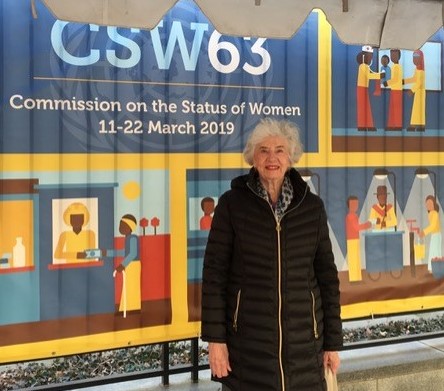
Interviewee: Keller Barron
Interviewer: Kasey Hansen
Location: Remote interview (Columbia, SC and Columbia, SC)
Date: September 25, 2020
Accession #: ELEC 002
Length of Recording: 70 minutes
Summary
Keller Barron was born in Newport News, Virginia, in 1932, and grew up primarily in Georgia. Interview includes discussion of Barron’s early family life, including the effect of the Great Depression on her family and childhood, memories of her parents and grandparents, educational experiences at Vanderbilt University and Agnes Scott College, post-graduate life, and opportunities in the League of Women Voters. Barron attended Vanderbilt University and graduated from Agnes Scott College with a degree in History and Political Science, an interest that stemmed from a young age. After graduating, Barron married and had four children. She joined the League of Women Voters while raising her family. She held numerous positions in the organization, was local and state president and served on the national board for five years. She is very passionate about women’s rights and democracy, which can be seen in her active role to promote the Equal Rights Amendment, as well as her continued fight for choice, democracy, and informed voters.
Keywords
League of Women Voters | Democracy | Georgia | South Carolina | Great Depression | Choice | Politics | Vote 411 | Equal Rights Amendment | COVID-19 | Election 2020 | Works Progress Administration | Ruth Bader Ginsburg
Recording
Transcript
Kasey Hansen: This is an oral history interview for the 2020 Election: Sharing Stories of Civic Engagement oral history project, part of coursework for Honors College class SCHC 326, documenting the perspectives and experiences of those who are engaged in some way in the 2020 Election. This is Kasey Hansen, the date is September 25, 2020, and today I’m interviewing Keller Barron remotely. I’m in Columbia, SC and Keller Barron is also in Columbia, SC. Would you start by giving me your full name, including your maiden name and spelling it?
Keller Barron: Ok. My first name is Keller, K-E-L-L-E-R, and that was my mother’s maiden name, although that was actually my middle name, and my maiden name was Henderson, and my married name is Barron. I was active in Columbia when I moved here in 1953, and I was married to Sherrod Bumgardner, so for many years my name was Bumgardner, B-U-M-G-A-R-D-N-E-R, and my last name now is Barron. But, historically with some of my papers and things it’s Bumgardner. But Keller is sort of unusual, so that helps to make sure it was me.
KH: Where and when were you born?
KB: I was born in Newport News, Virginia, in 1932, and I’ve become much more aware now of how that was affected by the Great Depression. But I was unaware of that, but now when I look back, I realize that that was a time when people were really struggling after the Depression.
KH: Is that where you grew up?
KB: No. We moved then, from there we moved to Savannah for a few months or years, and then we moved to Atlanta, and my father was working with the WPA. And umm, so I actually grew up in Atlanta until I was nine, and then we moved from Atlanta, out to the country, in Dunwoody, Georgia. And I went to a three-room school, first, second, third combination, fourth, fifth, and sixth, seventh. And the principal of the school was an Agnes Scott graduate, and so there were people that had moved to the country that were kind of town people, and then there were native people. And then, when I graduated from there in the seventh grade, there were only seven people in my class, I went to Chamblee, and they only had eleven grades. And so, my birthday was in February, I would’ve been fifteen/ sixteen, and so, my parents expected me to go to college and thought that I would be too young, so they made arrangements for me to go in town to school. And I went to a girl’s preparatory school called North Avenue Presbyterian School, which later joined with Washington Seminary, and is now Westminster in Atlanta, and has quite a good reputation as a great school. It was a great school when I was there, but it was a small girl’s school. But I had to commute eighteen miles, it seemed like a long way, but not anymore. And Dunwoody of course is just absolutely huge, and people don’t even consider it much of a suburb, it’s just a part of Columbia, I mean, part of Atlanta. Are you familiar with Atlanta at all?
KH: I’m not. I’m from Massachusetts.
KB: Alright, well, you need to visit. Have you visited Atlanta?
KH: I haven’t, I need to though.
KB: Well that will be a great opportunity. There are a lot of good things to see in Atlanta. That will be a good thing for you to do. Later of course.
KH: Can you tell me a little bit about your parents? What were their names?
KB: Well my father’s name was George Henderson, and he grew up in Pittsburgh, and Washington. And then my mother was Gertrude Keller Henderson, and I was named for her. And that was sort of a family story that they had expected a boy. They were going to name the boy after daddy, and so, when it wasn’t a boy, mother said “well what are we going to name her,” as if they had never even contemplated that. Daddy said, “oh well I’ve already named her,” and mother said, “well what’d you name her,” (Laughs) and he said I named her after you. And I thought, you know, way back when that was sort of an interesting thing that if it were going to be a boy, they were going to name it for daddy, and then if it were a girl, they were going to name it for mother. That had always been sort of tradition, you know, you name the first boy after the father. I think it’s unlikely, or I’m not aware, and I need to think about that with some of my friends, whether there was any consideration that if the boy were named after the father, the girl would be named after the mother. Sometimes the girl is named after the father, you know they have sort of strange names, or like Georgetta or Georgia, something like that.
Daddy had an interesting school experience, in that we saw later, a letter that a Methodist minister in Pittsburgh had written to a prep school called Blair Academy and said we have a worthy person who would like to come, and so they sent daddy to Blair Academy. And then he went to George Washington in Washington and also University of Maryland, and he was a great athlete, and he lettered in baseball and football. Unfortunately, he had an accident and broke his arm playing football, and he was not able to finish, financially he was not able to finish. And now I think it’s different, if you are on a football scholarship, and you’re injured, you’re kept on. But he was on a football scholarship and injured and not kept on, so that was unfortunate. And there was always that idea family wise that, if your father had gone, he would’ve probably gone into medicine, and all that kind of thing.
Then mother went to Virginia College, it was very popular. She was there, she was from Savannah, it was very popular for people in Savannah in that area to go to Virginia schools, and she went to Virginia College. But, then, unfortunately, her brother, who was only sixteen, died. Went to the Boy Scout Fair, died the next day. And that just affected everything in her family, so she came back home from school. Her sister had gone to Mary Baldwin, and she came home, and so that affected all of their um… and to have lost- and her parents just divorced, which was very unusual in 1938, but they say that a loss of a child in a family often, instead of bringing the parents together, they divide because they can’t support each other’s grief, you know. So that’s kind of a quick story about, (Laughs) about that. But then as another part of that, my grandmother, who’d had a lovely home and enjoyed friends and playing bridge and all this in Savannah, all the sudden didn’t have a home. So, she spent six months with my mother and our family in Atlanta, and then she went to her other daughter, Aunt Inez, in Miami, and that happened to people then.
We were talking about that yesterday, there weren’t a lot of retirement places, and I recalled that people in Columbia, that they remember the Confederate Home. They were out by where the mental health and that area, there was an old Confederate Home. Now think about that… a Confederate Home. And this was where Confederate soldiers, or their widows, kept on through the years, but also somebody else was saying that they didn’t work because there was nothing to do with the children. Although sometimes people had family members in their home, but there were no day cares, and there were no places like that for mothers to go. So, when I wrote on the interview, Kasey, how old I was, I thought to myself Kasey’s going to think eighty-eight! But now you see when I’m talking about it, it was a long time ago. Well in some ways, it’s not that it isn’t, it is a long time ago in a way, but the amount of changes maybe even seen that they could’ve taken over a longer period of time, but within those eighty-eight years, a lot has changed. Certainly, looking now with Ruth Bader Ginsburg, you recognize the differences that have come in women’s lives and the changes in women, of course that is what they used to say about the Communists. The Communists were going to put all the children in state run facilities. Well, true, the children are out there but they’re not state run anymore, but it just seems to have been the way it’s changed in terms of the economy and everything.
KH: Yeah. Can you tell me a little bit about what your parents did for work?
KB: Well, my father was selling Balfour Jewelry which is the fraternity pins, sorority pins, I don’t know if Balfour is still popular there or not, and he was going up and down the east coast, and so he met mother at the DeSoto Hotel at a party, at a dance, and so all that was wonderful. And she was selling insurance, and she sold the most insurance of any woman in Georgia, and she won this little Schafer pen, and we had a desk in the living room, and on the desk was a little place and that’s where the pen was. And we always remember that was the pen that mother won for selling the most insurance of any woman in Georgia. But she didn’t follow up on that, because they got married, and actually in some ways it was sort of a sad story, it was a happy story too. But, after her brother died, she had a nervous breakdown, which people don’t use that term, I mean I don’t hear about people having nervous breakdowns anymore, they’re either bipolar or they’re whatever. But, she did, and she went to a sanatorium, and, or let’s see sanitarium, -torium is T.B. isn’t it, or -tarium, in Asheville. And the claim to fame there was that was the same sanitarium where F. Scott Fitzgerald’s wife Scotty had been. So, it was a very, hopefully, a place that was advanced in the treatment of people. But they had electric shock treatment, and they had cold water baths and all sorts of things. But they made cross stitch and things like that.
So, they had met, she was there, and I don’t know how the circumstances were, but they decided to get married, and they married at the chapel, little Episcopal church right there in Asheville. And that was awfully hard, when you think about it, for her to have come out of a sanatorium and then gotten married. Then they moved to Newport News. And, so daddy had a job there, and this is, they got married in 1930, right in the Depression. And, so then I was born in 1932, and then for whatever reason daddy lost his job. And I don’t know what the circumstances were, but I’m sure that was happening just as people now are losing their jobs. And, so he, so they went back to Savannah, and he was going to help grandfather, well that turned out to be not a good thing, because he was driving this truck load of cabbages, and the truck turned over and lost all the cabbages, and they said “He is a city boy. He has no knowledge about farming, and it’s just not going to work.” So, then he got a job with the WPA, and went to work in Atlanta, and then we went up to Atlanta. So, he worked with the WPA, I don’t know if you’re familiar with that are you?
KH: No.
KB: Nope. (Laughs) Well you’re familiar with Roosevelt’s New Deal, are you?
KH: Yes.
KB: Ok. As a part of Roosevelt’s New Deal, there were big efforts to try to find employment for people, and the WPA was called Work Progress Administration. So, this was a federally funded program, and they did a lot of wonderful things. When you look back, they employed artists, and they did murals and things in the city halls. They collected a lot of oral histories. When you think about it now, since March, Broadway has been dark. What has happened to all of those dancers and singers and actors? I mean they have not been employed. And then all those little old people that were the waitresses, or were the ushers, in all those theaters, all those people. So, it really trickles, it all trickles down. But anyway, I got off on Broadway, where was I? What was I telling you about? This is a test, what was I telling you about?
(Laughter)
KH: You were talking about the WPA.
KB: Yeah, the WPA, Work Progress Administration. So, that’s what the official name was, but the name of derison was We Poke Along. There were people that (unintelligible), they would see the people, and they were in an administrative way, but work progress also dug ditches and things, so you had this picture of people leaning on the shovels and not working. But, anyway, so he worked with that. Then he worked with, during the war, he worked, and this is, I mean we’ve had so many wars, but this is World War II, which was 1941 to 1945, he was still working there. And then he worked with the War Assets Administration. And what that did was to do with what all the things that had been accumulated for the war: the parachute silk, and the shovels, and the trucks, and all this kind of thing. They had to figure out what to do with all that, and so that took about, from then 1945 to 49’. Four years he was working in that, and, unfortunately, in some ways for him, he was too young to be in World War I, and too old to be in World War II. So, in the civil service, he didn’t have what they called veterans preference. So, if you came back from the service, and you went to get a civil service job, you had your points, your score was increased, because you had quote “veterans’ preference.” And this was men mostly, no women.
Daddy couldn’t compete with that, he had been like a thirteen or fourteen, I mean he’d had an office and two secretaries and all that kind of stuff, but after the War Assets went away, then he’s looking for another job, he couldn’t, and so that was sad. And he was born in 1901, so at that time, you see, he was in his early forties, which we think of as being really young now, but he was not professional in the sense that he didn’t have a college degree, but lots of people, it was not as common then. I mean if he’d been working other things, so unfortunately, he didn’t really find another job after that, which was too bad. But I had gone, so I had gone to the girls prep school, now the biggest thing was to find a college with lots of men, that was the whole goal. So, I went to Vanderbilt, and at that time, and I called them up, and I couldn’t believe it, and when I went as a freshman, there were only fifty freshman girls, something like that. And maybe they had some day students, but I called and said can this be true? Well yes, that was true. So, a friend of mine from high school and I went to Vanderbilt. Well mother called and said, “we’re not going to be able to afford for you to go”, because daddy didn’t have the job. So, I wasn’t sure of that. People had trunks when we moved in. My roommate had a trunk, and I had my mother’s Hartmann trunk that she taken when she had gone to Europe. And when you open the trunk- do you know what a wardrobe trunk looks like?
KH: Yeah.
KB: You do?
KH: Yeah.
KB: Ok, you can imagine two wardrobe trunks in a dorm, now dorm room, actually we were in a little house on the campus. But so that was good, I mean we were congenial with that, and actually she didn’t come back either. But mother said, “You can’t come back.” Well I had worked in the library, it was a closed stack, and people came into the counter, and every book that went out of the university- Vanderbilt library, somebody had to go get. So, I worked in the library, and I had left my stuff there, because I had fully expected to go back. And so, then I didn’t get to go back, they sent my stuff home, and my father bought me a 1935 Ford, think of that, a 1935 car, which was a stick shift, it was just great for me, for $350. And I was driving from eighteen miles to Agnes Scott. So, I called up Agnes Scott, and I said, “I’m not going back to Vanderbilt, I’d like to come to Agnes Scott,” and they said, “Well what kind of grades did you have?” And I said, “They were good, I made A’s and all.” “Well come on.” That was it, I mean there was no sort of SAT, or any kind of entrance, so I go driving off as a day student to Agnes Scott. And then I got involved in a lot of campus activities, and so they said, “Well we’ll try to figure it out,” so I went to live on campus then for the last two years. So, let’s see, see you can start me talking about this, now this doesn’t have anything to do with voting, I don’t know what you’re going to do with it, but you can just, I guess it’s better to have it then cut it out than not to have it.
KH: It’s all good to know about. I love hearing about it.
(Laughter)
KB: Alright, alright, back to business.
KH: Alright, so can you tell me a little bit more about your grandparents? What were their names?
KB: Gracious, we’re really going back. I’m looking up here at a family tree that I did, and I’ve enjoyed that, because as I said, my mother’s maiden name was Keller, and so her father was named Hubert Keller, and her mother was named Addie Exley Keller. And the interesting thing about grandmother’s family was that her father was in the Civil War, the war between the states. And that war killed so many of the young men and older men too, and when her father came back, they married, he married her mother. He was twice as old and never twice as old again. He was thirty-six and she was eighteen, imagine that, thirty-six and eighteen. So, as a child, her mother, my grandmother would say, “twice as old and never twice as old again.” You would think eighteen and thirty-six, seventeen and thirty-seven, it never works out, you can’t get that way again. So, grandmother and grandfather, and grandfather was a big farmerr, and both her family and his family acquired a lot of land after the war, because a lot of people were losing land, because they didn’t have any money, and then other people were more energetic about buying the land.
So, my sister and I took a ride on the Georgia Peach, which was a quote “river boat” that went down the river around Savannah, and we’re just sitting there with our husbands on the river boat, and the tour guide is saying “and over here were the lands of Frank Exley and over here were the lands of George Adam Keller.” And so, Margaret and I are sitting there, and we’re thinking, yes, they were our great grandparents, I mean they still charged us to get on the boat, we didn’t have any special thing. But that was an interesting thing. So, grandfather, he, both of them, had thousands of acres. When grandfather died, he had three thousand acres, this was in the sixties. And we are still trying now to sell some pastureland that he had, and we kept saying to the people, if we’re ever going to enjoy the money, we need to do it now, as we get older and older. Well the last plot we had under contract turned out was wetlands. Well see that’s a new big environmental thing, can’t sell stuff with wetlands, so here we are. So, grandmother and grandfather, and grandmother came to live with us as I said, and grandfather married again, and his last child was born when he was seventy-two years old. Had four children, they’re still living in Savannah, so that’s that crowd. Then mother, daddy’s mother, lived in Washington, DC, and she had come, he was born in Pittsburgh, and he stayed up there with an aunt, and she came to Washington because her husband, was in construction. And guess what? He helped build, when I say Washington, that would give you a clue. What would he have helped build as construction in Washington, DC?
KH: The white house?
KB: Washington…
KH: Oh, the Washington Monument?
KB: The Washington Monument. Yes (Laughs).
KH: That’s so cool!
KB: Isn’t that amazing?
KH: Yes!
KB: So, anyway, then he died young, and so grandmother went to work, and she worked at the Department of Commerce. But, in the meantime, her father was living with them, and he would dress and walk up, and when we talk about dress, they put on coat and tie, walk up to the Dupont Circle, and sit in Dupont Circle and read the paper. But she worked at the Department of Commerce, I went up there to visit her, and the thing that I remember the most was that downstairs they had this aquarium, imagine an aquarium in the Department of Commerce, and so that was a lot to see. And then I also went to Roosevelt’s third inauguration, and this was January 1941, and I was nine years old. They put me on the train in Atlanta by myself, in the care of the conductor, and I rode from Atlanta to D.C. in the care of the conductor and came back. And you think, gracious, can you imagine putting a little nine-year-old child? But I was much loved, they would not have put me on there, if they thought it was dangerous in any way. But that was a common thing that you did. Now children ride the airplane, and you pay extra, and they have the care of the stewardess, and so forth. So, I go up in the care of the conductor, and go to Roosevelt’s third inauguration, my Aunt met me, and I remember the crowd, and then they took me around to see all of the different embassies with the flags, and we wrote them all down. And, when I went back to school, mother made me a little report, and I told about all the things that I had done.
So, then I left Atlanta, where I was going to dancing school and playing in the street at night and skating, to the countryside, where you can go to dancing school, no sidewalks, so it was a whole different world. So, we never really knew my father’s family, because they were so far away, and people didn’t come together as much as they used to. He had one brother, and he was a colonel in the army, and he went to live in California, so I had a very small family. My mother’s sister had one son, and my father’s brother had one daughter, so I had two first cousins, only two first cousins. And my cousin in California is still living. My cousin Donnie died, but his son is the one that is helping with all this property that we are trying to sell, so we’ve kept that connection, although we don’t see each other. We’re not a big family at all, I have one sister. And I have four children, you have to see if you come on down the line, I have four children, and my sister has two children, so I’ve gotten a few more people.
KH: Do you have any family traditions?
KB: I was thinking about that. When people talk about families for Thanksgiving and different things like that, we didn’t have many family people, it was just my mother and father, my sister, myself, and my grandmother were five of us. But we always invited the preacher to come for Sunday dinner, and we ate in the dining room, and daddy had to wear his coat and stood up when he carved, and there were some formalities which were interesting in the family. And now see, I am planning to go into the home, I have a friend who calls it the “Last Resort,” and I have a comment that it sounds better than a “deadend,” so I’ve got to get rid of all my stuff. Now you can see behind me, this is not very neat, but this is the table that I put all my stuff out, and that pillow that you see, that yellow pillow (Gets up to get a pillow at 28:45). My mother always named everything, so where we lived in the country, she named it “Shady acres.” So, can you see that? (Shows pillow)
KH: Yes.
KB: So, it says “Shady Acres Branches and Buds.” So, we start with grandmother and grandfather, Addie and Hubert, and then we go to Gertrude, George, and Gattis, that was my sister’s mother-in-law, and then we go up with our children (Unintelligible at 29:15). So, anyway, what was I saying about that? Oh look, I hadn’t even found it. A niece of mine made this [pillow], she’s a quilter, so we’ve just looked at it like this, and everybody was saying “when was it? when was it?” We’ve got lots of emails about that. When I turn it over, listen they put this in, it says, “Folk Dance Camp, Black Mountain, North Carolina, Thanksgiving, 1994.” Well they are going to be thrilled. Now, if I can figure out how to take a picture of that, because I think you can do that snapshot on the computer, right, I will send it to them. Alright we’ve gotten off the track here Kasey. (And Aside at 30:06) Now let’s stay on track. Where are we?
KH: You were telling me a little bit about your educational background earlier, why did you choose to major in history and political science?
KB: I majored in history and political science, right, because I was always interested in government. Graduated in June, married in July, moved to Columbia, checked out the various groups, and one of them was AAUW, American Association of University Women, I thought that that’d be a good group. I found though that they were more interested in entertaining the soldiers at Fort Jackson, I was not interested in that. So, then I checked out the League of Women Voters, because I could see in the paper that they were doing governmental things, and I thought this is something you need to know about. And so, they responded very nicely, she called me back, and I said “Well, I’m sorry I just can’t get involved.” I was teaching school, I taught at Arden first grade. When I was graduating and getting married, I thought now what am I going to do? And I had history and political science, so I said, and others did too, we’ll get a teaching certificate. So, I got a teaching certificate in Elementary Education. I took five hours of history of education, five hours of the philosophy of education, and I did practice teaching, now that was it. The practice teaching was great! I was with a master teacher and twenty-two students. So, then I got a job teaching first grade in Columbia.
I had forty-four children, forty-four children, one of them was repeating for the third time. It was unbelievable, you would have fifteen children in the reading circle, and you would have twenty children, twenty-five children in the back. But when you think about it, they were really very well behaved, in a sense that I certainly didn’t have. I had one child that had some issues, but normally they would behave, but they were little first graders. So, that was a big deal, and I got pregnant in October. So, by the time we got to May, I had a hard time sitting in these tiny little reading chairs, but then the baby was born in August. But, in the meantime, maybe I didn’t contact the League of Women Voters the first year, may have been the second year. So, I had the baby, so she called me back, and then after I had Lewis, I had another baby. I had four babies, and when I came home with the last baby, it was actually the last baby, the oldest was five. So, I had one five, one four, one two, and a baby. So, I said to her “Don’t call me, I will call you.”
So, after all that kind of settled down, in 1956, which was still during the time, I joined the League of Women Voters, and just found …. my people, in the sense of great pleasure that I had, so I’ve been active with that ever since. I was local president, then I was state president, then I was on the national board for five years. And that was a great experience on the national board because there, people were from all around, and in fact, the president, one of the presidents when I was there, Lucy Wilson Benson, was from Amherst, Massachusetts. Her husband taught at the… what is the college in Amherst? You know, and I know too, but I can’t call up the name. So, anyway, once I got started with the League of Women Voters, and that’s how I was talking about Vote 411. But, when I was on the national board, I chaired the national effort to ratify the Equal Rights Amendment. And I was asked to do that because I was southern, I talked southern, I had children, I was married, and my husband was a Baptist, I mean I was the kind of woman that in some cases persons would paint as being fearful about the Equal Rights Amendment. It’s going to take away all our rights, and so I could say, I’m not really afraid about that.
Ruth Bader Ginsburg came to Columbia twice.
The first time she came, we invited her to come and talk about the Equal Rights Amendment, and then we invited her to come back. What always impressed me, that when she came back, she remembered my name. And when you hear them talking about her, she personalized everything. She personalized that, and my son Lewis, reminded me, or told me, he went to Tulane Law School, and so the women in the law school had invited Ruth Bader Ginsburg to come to Tulane to talk about law. And they were going to have it at Lindy Boggs’ palatial southern mansion. Lindy Boggs’ husband Hale Boggs had been in the legislature, Congress, and so my son was the only man who went. And when he comes in there, he says to Ruth Bader Ginsburg “I’m Lewis Bumgardner,” from South Carolina, and immediately she said “Oh, please give Keller my regards.” So, she remembered my name before he even said the name. So, she really was, that is of course, absolutely my minutia about her. It verifies what people are talking about, how she was interested in her clerks, you know, that kind of stuff.
KH: Yes. I was actually going to ask you about that. What do you think she symbolized to your generation of women?
KB: I think she symbolized tenacity and also vision, because we were talking about, I was talking some place about inequality. You have to be aware of where you think things are unequal to make a change, and sometimes you’re just not aware. When I was Agnes Scott, I worked with the recreation department, and a man who was at Emory and I did what they called seventh grade parties on Friday afternoon. They had several seventh grades and they were all going together to junior high, so they brought them together. He made $5, and I made $3. Now we did exactly the same thing, but I knew that’s what he made, but I didn’t fuss about it, I just kind of accepted it. So, unless you’re aware of what’s unequal, so she was aware and became aware, and you know that in a lot of her cases she used a man as a plaintiff to illustrate that it was a man not the woman. So, when we were working with the Equal Rights Amendment, we were aware of the fact that woman…That was another thing Ruth Bader Ginsburg did, we had a young woman who went to Carolina who wanted to be a page at the South Carolina Senate, they said “oh, no,” no can’t have any women, they can’t be pages. They’d have to take things over to the hotel, and they’d have to do this, that and other, and they said no, no, no. Women can be pages, so Jean Toal, who later was Chief Justice of the Supreme Court, and also went to Agnes Scott, so she was going to represent Vicki Eslinger in that case, and Ruth Bader Ginsburg came down and helped her. And, if you wanted an interesting thing to talk about, you could interview Jean Toal about her case that she worked with Ruth Bader Ginsburg on Vicki Eslinger. Vicki Eslinger and Jean are both available, so, I’m sure people are talking to them, but if you know anybody that wants an interesting topic, that might be interesting. They won the case!
KH: That’s awesome! Tell me a little bit more about your role in this election process.
KB: Well the League of Women Voters nationally has a national project called Vote 411. And it is an opportunity for election information. And the league was founded, it was one hundred years old this year, it was founded after the women got the right to vote. And the idea, the need to educate women and have them be informed voters. So, moving into that, the idea was how are we going to have information about the candidates? And we in the past had done candidate questionnaires, the league would ask questions, and it would be published in the newspapers. And then that became difficult to do, we had candidate forms, and those were real popular, in different places they were popular. In the meantime, we’re thinking well we’re moving into the social media age, so vote411.org is, and I don’t know the terminology, but you go in on that, it says “find your ballot,” and you put in your address, and your ballot comes up, and each one is individualized. Your ballot comes up and tells you who you’re going to vote for, or who you’re able to vote for. Well, for example, Richland Lexington County there are fifty-eight candidates for the school boards. Well, how do you know anything about these people? How do you know that Joe would be better than Barry or vice versa? You vote for four, in one of the races we have nine people running, you vote for four at large. How are you going to choose those people? How are you going to know anything about them? Well, what Vote 411 does, is we as the League of Women Voters, determine questions that we think will be beneficial to the voter to look at the answers, and then be able to compare those answers and decide from that answer, which candidate you believe would represent you the most.
So, we’ve got two facets of it. First, you’ve got Vote411.org, got to find out all about the candidates, then you’ve got to determine what the questions are going to be. Well these questions have to be non-partisan, which is a big thing. They can’t be slanted one way or the other to determine something necessarily. So, we do all that, well that takes, we’ve got a committee of sixteen people, we worked really really hard. So, that takes getting the questions, kind of questioning, I have a friend who has some school board people helping us to determine what school board questions there are. And you do all that, and then you send out, so we got an administrator that works on/does all this stuff, sends out an invitation to participate, which is a link to the questions. Well then you’ve got to get them to respond. So, we have been working tooth and toenail to get them to respond, because that’s the other aspect, they’ve got to respond. But then the other aspect is administration, the other aspect is publicity. So, we do all this work, we get them all to respond, we’re on VOTE411, you can go on and get your ballot, and nobody knows it. So, then we got to thinking, how are we going to get people to know that this information is available? Well, gracious, we are so excited because we’re putting up two billboards, well only two, but we’ve got one in Richland County and one in Lexington County. We’re spending $3,600, which is part of the League of Women Voters’ Budget, on all this publicity. We have yard signs, we’ve got little cards, we’ve tried really really hard, and you have probably never heard about it. But we have some contacts at Carolina and we’ve been trying to make contacts at Carolina, and now that you know about it Kasey, I want you to please, when we finish, to look up vote411.org. Now, are you registered in Massachusetts, or are you registered here, can you vote here?
KH: I’m registered in Massachusetts.
KB: Are you getting an absentee ballot?
KH: Yes, I did already. I already sent all of the information in.
KB: But you haven’t voted?
KH: Not yet, no.
KB: Alright, so they’re going to send you a ballot, now how are you going to know anything about these people?
KH: Just research. I did look at the Vote 411 website before this.
KB: You did?
KH: Yes.
KB: You did? And did they have people on it that had responded?
KH: I didn’t put anything in yet, I was just going through it to try and (Unintelligible at 44:20)
KB: Now, when you look there, for example, if you have somebody running for coroner, running for sheriff, running for the school board, those are the people that you want to look and see what they’re saying. They put it in there, so it would be interesting to let me know what you find on that for yourself. I really would like to know that, because sometimes it’s hard to get them to respond. We’ve got one hundred and thirty-nine candidates and thirty-five of those are running unopposed. So, it doesn’t make a difference what they say, because you’re not going to be voting on them, but it just makes it look good if they’ve answered. But we’re not worried about them, we’re worried about the ones that are opposed, and of the ones that are opposed we’ve got about seventy or some odd. We’ve still got about twenty-five people that have not responded, one of them is Jaime Harrison and Lindsey Graham and (Unintelligible at 45:32). But we had to put the full pressure on there to say, but you see they get all these questionnaires and things. A lot of them they just quote on quote “haven’t got the time to answer.” But we’re really working hard on getting that done. So, that has occupied a lot of my time because I enjoy it and I enjoy working with these other people. And the yard signs were designed by my granddaughter Maggie Bumgardner and her friend Adam, who, she’s at Carolina now, this is her last semester. But they’ve been working with us. We’ve had several people, and in fact, you might be a good prospect Kasey.
KH: Yes! I definitely have to (Unintelligible at 46:15) … it sounds amazing.
KB: Yeah, well we had two new members not too long ago that were Carolina students, so that’s what I’m doing.
KH: That’s awesome! What issues do you think are most important to you in this election?
KB: The most important issue to me is choice, because I think basically as a human being that happens to be feminine, and I’m of old school, so I’m just thinking male and female, I haven’t moved into transgender and all that. But, if you think just male and female, it’s not fair for one group of people to tell other people what they can and cannot do with their own bodies. To me that is just basic. And part of the issue that tickles me about the whole thing, it doesn’t tickle me it makes me very upset, in the sense that the men are telling the women, or they want to and they do, whether or not they have to carry the child that they have been impregnated with by the man. That doesn’t seem fair.
KH: No!
KB: So, that’s the basics I think, and I don’t really like to use the term right to life, because of course I believe in life, and I believe in the right to life. But I don’t believe in the right of the fetus over the life and desire of the mother. When I worked with Planned Parenthood in the past, and I don’t have the statistics down, I wish I did, there was a certain percentage of women that came that were forty-five, and she already had five children and mentally and physically she just couldn’t carry another child and dad had lost his job. There’s all sorts of circumstances other than the other. And can you imagine that they would pass a law that denied exempt for rape or incest? You’re going to have a thirteen-year-old that got pregnant by Uncle Joe, it’s just incomprehensible. So, the big issue for me, and I guess you could call it choice, but you could call it… I don’t know what the terminology would be, I need to know that, that you have control over your own body. And you do, I mean you make choices if you’re going to have a root canal, or if you’re going to have an appendix out, or whatever you’re going to do, so that’s the big issue. And that’s interesting because Joe Biden is Catholic, and they’re talking about now, the person going on the court being Catholic. But Joe Biden has said that his faith was not going to affect his responsibility, his governmental responsibility. You like to think that some of these people rise to that occasion. And you would think that women would do that, would support that, but not all women support that. Not all women supported the Equal Rights Amendment.
So, that’s one, and then I have just been so disturbed by the fact that the president, the current president, is not a decent person, not someone you would want your children to look up to and admire. He’s just not quote “presidential,” but he could do a big job and not be presidential, but still you expect a sense of leadership. And I have been very concerned about foreign affairs, and I’m very concerned about isolationism and pulling the United States back. I mean we were world leaders, and then he took us out of the Paris Accord. He has no understanding, I don’t think, of climate change and our responsibility there. We are one world now, we have just gotten smaller and smaller, and we have responsibilities. When you think about how wealthy our nation is, and then you have people starving in Sudan, if it hadn’t been for people like Bill Gates and some others that understand that and are trying to say to the world “look,” we would just be so selfish enjoying our own wealth. So, I’m concerned about the role of the United States and all our wealth and power, and our place in the world and world politics and so forth.
KH: Yes. How does this election compare historically to others in the past?
KB: Well I have certainly enjoyed hearing John Meacham and Bob Woodward and a lot of the wise men and women talk about it historically, and the threat that this has made on the democracy. I’m not there to be able to think about that, but then you think of it, and you think well yes, they are confirming what I am thinking. They are wise people, and they are saying this is a real threat. The League of Women Voters has two themes. One is called “Making Democracy Work,” so a lot of the things we do help to make democracy work, like informing the voters. The other one is “Empowering Voters Defending Democracy.” So, this idea of empowering voters is fighting against voter suppression, fighting against ideas of… I mean we have the final election on Tuesday, why not have it on a Saturday or Sunday? Why have it from seven to seven, why not have it twenty-four seven. You can order pizza, or you can order a bed or something twenty-four seven and knowing that you can’t vote. So, I think this is different because there are a lot of people that feel that… I mean when you look at his action of dismantling the post office, taking up the mailboxes….. he’s using, this is where they say persons in power use their power to stay in power… and he has all these little things.
Talking today about these executive orders, about preexisting conditions, no that has absolutely nothing to do with it. Congress has to pass a law, and then the insurance companies all, they’re not going to abide by a resolution, but it just sounds good. And I have friends and know people that support Trump, and you kind of wonder how did that happen? Why am I so right and they’re so wrong? It’s really very important. I don’t know, for all I know you might support Trump, I only know you’re a twin. I don’t know what your mother and father do and where you’re coming from. I know that you’re majoring in exercise science and other things, but that doesn’t mean that you necessarily would have, what your opinion might be. There might be something about Trump that appeals to you. Your dad may be, how do I know, he may be Bill Gates. You may not even have to worry about any of that. So, you just never know where the people come from, and where they come from, where do they get that idea? I’m skeptical about talking to my friends about it because I know some of them are concerned about absentee ballots.
KH: Yes, and in what ways would you say COVID-19 has impacted the election?
KB: There’s so much discussion about the absentee ballots that I was almost tempted to think that I would go down in person and vote, although my children convinced me not to. I have worked at the polls for over fifty years, ever since the fifties I have loved working at the polls. I did not work in the June primary, but prior to that, I’d get up, I’d have to be there at 6:15, I’m not an early riser, be there at 6:15, stay till almost 8:00. But I’ve done it at the same place, and I thoroughly enjoyed it, it was grand. And this was the idea of neighbors working in the polls, so that if somebody came in and you didn’t know them, you knew automatically that they didn’t belong there. Then you’d have to get your next-door neighbor to show their driver’s license or their identification. But I have always worked at the polls, and so with Covid though, I just didn’t feel comfortable to go there and be exposed to all those different people. So, that has changed a lot, and that’s why they’re thinking that we’re having so many absentee ballots, and they’ve got to change the laws to provide for quote “mail in ballots.” There’s no difference between absentee ballots and mail in ballots, absentee ballots are mailed in, so no difference. There are six or seven states that that’s the only way they do it. I have a friend that lives in Oregon; seventy two percent of their people voted by mail in ballots. In South Carolina we do, well it all depends, forty percent up, but some of the other races it’s lower.
So, the Covid has affected that, it’s affected the fact we haven’t been able to have candidates’ forums. We haven’t been able to gather together to have candidate debates and have people in person, although that’s changing more and more. We’ll have a debate on the 29th with Biden and what’s his name, the other candidate, Trump, which will be interesting to see how that goes. So, Covid has affected the publicity and getting to know the candidates, and I’m sure that the candidates’ campaigns would be able to… Well they say they’re going door to door, the school board candidates, the county council candidates that had a smaller geographical area. They would go to try to meet the people, they’re not doing that anymore. Although, I am going Sunday to, a week from Sunday, called Art in the Yard, which is a neighborhood area, where they are going to try to do social distancing, and they are trying to have art displays, people coming together. So, we’re going to have a Vote 411 table there, but I have been hesitant to ask anybody on the committee to go, because I think I wouldn’t want to be someone that caused somebody to feel that they were exposed. I don’t know how you are, are you eating in the dining room? Or are you, or ya’ll don’t even have a dining room, do you have a dining room now?
KH: We do, but since I live off campus, I just make my own food, which is a lot safer.
KB: Yeah, well I hope you’re being careful, because someone was down at Five Points the other day and said the folks are just lined up with no mask. It’s so surreal. I don’t think it’s really true, but I have across the street neighbor, and it’s just heartbreaking that he has been in the hospital now for two weeks, and they put him on a ventilator on Monday, so he may not survive. And I said I was so glad to know about that because it brings it home that it really is true.
KH: Is there anything else you wanted to talk about or discuss?
KB: You’ve gotten to that part?
KH: Yes.
KB: Well what was the purpose of this? You said that Annette, were you speaking of Annette Bethel with NOW.
KH: Yes.
KB: And how did you know Annette?
KH: The purpose of this interview, or the class really, is to get more insight on the Election 2020 and people who have a role in it. So, I thought that the NOW organization would be really cool to get more into it, especially with the hundred-year anniversary of the Nineteenth Amendment being passed. I kind of thought that it would be cool to interview a woman, and someone else in my class had reached out to her and said that a few people were interested.
KB: Well Annette is really a powerhouse; she is just going gangbusters. I don’t know if you’ve ever gotten anything from her on the email, but it’s just all this stuff, she’s all over it. And we went down for the vigil on Sunday, and she was there, and she’s just doing a lot of different things. What is the name of this class?
KH: It is Election 2020 Oral History [Sharing Stories of Civic Engagement].
KB: Oh well Kasey, you’ve got me talking about the past so much more we didn’t really talk about the election.
KH: We had to talk about the past too, because I wanted to get to know you and how you got into this.
KB: Yeah well that’s great. So, the idea of Election 2020, and I think that when I have thought about it, as I’ve told you about going to Roosevelt’s Third Inauguration on the train from Atlanta that my parents sent me to, that that sort of started my off as a child being interested in government and governmental personality. As I have come along, I have found the League of Women Voters being non-partisan had a broader view of the importance of government by the people for the people and not just party politics. So, I’ve really never been involved in per se in party politics, though I have worked in various campaigns and certainly was interested in Hillary Clinton’s campaign. I had gone to Missouri and met the Clinton’s, Arkansas, sorry, he was the governor of Arkansas. I was on the Southern Regional Council, which was in Atlanta, and one of the people was active in Arkansas politics and took us out there, and we met them there. So, through the League I’ve had a lot of opportunities to know governmental figures, and that has been exciting. And this is what I have told people that , the League is what you want it to be, if you’re interested in doing this or having a leadership role, then you just move right on in there. People that have joined the League that were associated with the university, one of our person’s there said that this is a national organization, you join here and then you can be a member in another place, and you find congenial people.
Election 2020 for me would be an important election because it is the 19th Amendment, I mean the hundred years women’s right to vote, but also it’s turned out to be an unusual election in that one of the candidates has really threatened the way the democracy works, which would be totally unexpected, and has been reaffirmed for me because of these renowned people that talk about it. Now, they talk about it on MSNBC, which is the left, and I don’t know exactly what that means, progressive, meaning that we support Medicaid expansion, not necessarily Medicare but all Medicaid expansion; we support climate, environment. Fox has become another arm of the other side, and people that watch Fox have a different view, and they would think, they say some of the things that they say are true. But statistically and scientifically, they’re not true. So, the question is, trying to know the facts, and that’s where your own ability comes in, is trying to discern for yourself what the facts are. That’s why some people can be raised in the same family, and one person is a Trump supporter, and another person is a Biden supporter, just taking it as an example, and you would say, well how did that happen? They’re interpreting the facts from their own values and their own interests. And so I think for you…
KH: Yeah, what… continue.
KB: No, go on, I’m just thinking for you that’s your job is interpreting. Number one, I would suggest that you want to find out the facts and that’s where you would make your decision on the basis of the facts. Now who is it, one of the people that was quoted as saying “You have the right to your own decision, but you don’t have the right to your own facts.” You have to decide if the facts are credible, and some people skew the facts. But, that’s your job to find out the facts, and then decide on the basis of your own values which ones you support. You may support one person for one reason, and I might support a different person because of the way we think about things.
KH: Yeah, definitely. What are some ways that you encourage others to vote and educate themselves more about democracy, especially the young voters?
KB: Well see this has been unfortunate. We used to have quote “civics courses,” I don’t know if that was true, when you were in high school or grammar school. I think it was the fifth grade they studied government, and you study how the government, our democracy, was formed, and the three branches of government and how they balance each other. And this is what folks are saying, this is a democracy, a peaceful transfer of power and all that kind of stuff, so it’s a matter of understanding that, and when Sandra Day O’Connor was on the Court, when she left the Court, her big thing was to work on citizenship and responsibilities of citizenship and understanding the government. And, so if you’ve got that groundwork as what it’s supposed to be like, non-discrimination and all that, that helps you. Then the importance of recognizing that every vote counts, it really makes a difference. People say that they’ll sit this out, well what does it mean if you sit it out? It means that you’re giving the vote to somebody else, so no, we don’t want to sit it out. I hope, just like I asked you if you were registered, what could I do about it if you weren’t, but I certainly encourage you to say it makes a difference, it really makes a difference. Now my papers and things are at the Hollings Library, so if you just look up my name, you can see what all is listed there, and not that that has any effect on what we’re talking about, but it may kind of put it in the parameters of where I am. Have you had anything to do with the Holling’s Library? Do you know anything about them?
KH: I haven’t. I did look you up though, and I saw your papers in there.
KB: Alright, because the director of that is Dorothy Walker, so if you had any questions about that Dorothy could help you. Okay, it’s been great, I’ve enjoyed it.
KH: Me too!
KB: You don’t have a lot of opportunities to talk about your parents and grandparents and all of that, and I didn’t really talk at all about my children, which of course I’m very proud of them. I have three sons and a daughter. Two of my sons are in the military, one was a Colonel in the Marines, I’ve become more and more impressed about what that means.
KH: Very impressive.
KB: He’s a lawyer, worked for NATO, and he’s here now. Then my other son was a Colonel in the Army, and he’s Chief of the Dental Clinic and at the V.A. Then Margaret Anne was in the Peace Corps, and then she now is working with the SC Employment Commission, and my youngest son is a dentist too.
KH: Very cool! I really enjoyed talking to you today, thank you so much for sharing.
KB: Well thank you. You’re a great interviewer. You were really well prepared and had questions that carried us on.
KH: Thank you!
KB: Alright, now I’m going to find my little leave button, is that right?
KH: Yes.
KB: Yes, thank you.