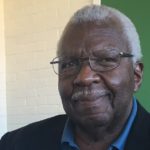
Interviewee: Carl Jackson, Jr.
Interviewer: Lee Hunt
Date: October 26, 2017
Accession# EDLP 014
Length of Recording (min/sec): 49:37
Sound Recording
Summary
Carl Jackson, Jr. was born in Winnsboro, South Carolina, and attended Gordon Elementary school and later Fairfield High School, prior to integration. After graduation from high school Carl joined the Air Force, earned a teaching degree from Benedict College, and got married. He then taught at both his alma mater, and was principal of several schools, including being the first black principal of Mt. Zion School, just prior to and during the integration of South Carolina public schools. Most recently, he was the principal of Gordon Odyssey Academy, and is now vice chair on the Fairfield County School Board.
This oral history interview with Carl Jackson, Jr. on October 26, 2017 includes discussion of growing up in Winnsboro, South Carolina, attending Fairfield County Schools, memories of his family and grandparents, working in the textile mill in Winnsboro, joining the Air Force, Benedict College, becoming a teacher and working during integration of Fairfield County Schools, local legends and civil rights leaders in Fairfield County, registering to vote, attending the University of South Carolina (USC) shortly after integration, teaching at Winnsboro High School, becoming the assistant principal of Winnsboro High School, working in the Fairfield County School District Office, then as principal of Gordon Odyssey Academy, being the vice chairman of the Fairfield County School Board, the Civil Rights movement, Martin Luther King, Jr., the ACLU, a change–or loss- in black culture through the years, returning to USC to obtain his masters degree, and race relations in Fairfield County.
Transcript
Carl Jackson, Jr. : So are you going to start by who, telling who you are first?
Lee Hunt: I will sir. My name is Lee Hunt. I’m a student at the University of South Carolina and we are conducting this interview as a part of a class project at that school. And so we’ve already filled-out the permission form, and took our photo, and wrote our name on the paper. So what we’re going to do is using this microphone that I’ve got between us, we’re going to just start talking about Mr. Jackson here. So would you introduce yourself, sir?
CJ: Okay, I’m Carl E. Jackson, Jr. I am a minister, and I born here in Fairfield County. I grew up between Cemetery Street and this very place, Zion Hill. As a matter of fact, I lived right around the road there, not very far from here on Green Street. That’s where I was living when I went to school here. And actually I grew up here at this school here as well because I went to school here twelve years.
LH: Wow.
CJ: Well, actually kindergarten and every–my whole school experience was here. As a matter of fact, the year that I left I think was the year they opened Gordon up down the street. So anyway…
LH: Was that Fairfield?
CJ: Fairfield.
LH: Was it called that then?
CJ: Yeah it was Fairfield County Training School at the time and, I think they changed the name to Fairfield High School about the time I was graduating. Okay, so…
LH: Tell me about your childhood. I know you grew up close by. What are your memories of your family and grandparents and…
CJ: We walked to school. I remember the winters being a whole lot colder than they are now, and the summer being a lot warmer than they are now. But then those memories are tainted by age and all that. So I can’t say that for sure. But it seems to me that it used to be, to get a whole lot colder around here than it does now. And when I was in school here, I was president of all my classes except I had a hiatus in the tenth grade–I think in the tenth grade I kind of started going over what I call “Fool’s Hill”, because I started doing some crazy things. I had some people who were not interested in school–as they should be– and they challenged me that if I sit where they were sitting, they would make me fail. So I sat where they were sitting, and I got my first bad grade in Algebra. And I moved up two seats from them. So I kept one eye on them and one eye on the teacher. And I passed, and I waved them goodbye. But that’s just, and you know, that what was the only year I wasn’t President of the Student Council too. Now that was the year I just had a hiatus that year, I don’t know what happened–maybe I had my growing pains. But these were all, all my so-called friends who lived here on Zion Hill. Of course, you know, I wanted to belong and after a while, I had to get back to reality and realize…at that time, I wanted to be a doctor, and Mr. Green, our principal, asked Dr. Ross–who grew up in this community and was practicing some place else–to come back and talk with us. And when I talked with him, I discovered that what I really needed in background, that the school didn’t even offer.
LH: Oh wow.
CJ: So I had to kind of change my plans about being a doctor. Always wanted to work with people, so I had decided I would go a different route and got into the social studies realm. But anyway, when I finished school here, I went into the Air Force and I stayed there for well, four years with them–actually three years, eight months, and eleven days. So when I came back, I went to Benedict, and got married. I went to Benedict from eight to twelve, and worked in the mill from three to eleven. So after finishing Benedict, one of the girls that used to ride to school with me had finished in December and–well no, she finished at the regular time, but I had taken some time off because of an illness that I had. So I was like a semester short, and so I didn’t finish until the following semester. But she went to Elizabeth Heights in Great Falls and started to work there. Well her husband that was a guy that was–that she married–was still in school just like I was. And when we finished in, at Christmas time–they got married and moved to New Jersey. And so the principal that was at Elizabeth Heights in Great Falls knew us. He lived right down the road there, and I had gone to school with his children and so forth. He used a substitute until I finished school, and then I took that position. So I stayed up there the rest of the year, and then the next year they offered me the fifth grade class, and I didn’t want to teach elementary. So Mr. Brown, out at McCrory Liston, offered me a high school job, so I went out there. And then the next year, I moved up here with Mr. Green. And then the next year, we integrated. So we were moved into Winnsboro High School, and I remember that quite well because I asked–we had like an interview like we having now–and asked us our preference of courses to teach. And being in social studies, I told them I’d like to have history or government. Well, I didn’t want, what I didn’t want, I didn’t want civics. And I got over to Winnsboro High School, and I had six classes of civics.
LH: Six!
CJ: Yeah. And no books. And so we started teaching with–city government–and I went downtown and got a brochure on the city government, and we started teaching about the types of city government and so forth, until the books came in. And so when the books came in, I went to that chapter and continued and went on back and did what I had to do. But anyway, while we were on that subject, the kids were getting confused when I was talking about the council manager government and the mayor council. And they were getting it confused, so the book called the mayor council the “Strong Mayor Type” and then, the council manager the “Weak Mayor Type”.
LH: Ohhh!
CJ: So I asked, since they were getting it confused, I said, “Well I don’t want to be teaching you the wrong thing. Why don’t you call your legislators, here in the county, and find out and just ask them, say ‘What are we supposed to ask them?'” They was getting it all confused. I said, “Just ask them, ‘Do we have a weak mayor type or a strong mayor type of government.” And they hit the roof! When, when they call them, somebody ask me, “Can I call the Mayor?” I said, “Yeah” and that girl’s picture is upstairs. I’m not going to share her name right now. But she called the Mayor asked him if he was a strong mayor or a weak mayor and he had a fit!
LH: Oh, I bet
CJ: And they wrote a letter to the school on fourteen–eleven by fourteen–he was criticizing me for teaching politics in the classroom, and that was not what I was doing.
LH: Right, right!
CJ: The principal called me in, and wanted to know what was going on, and I read the letter, and I guess steam was coming out of my ears, then he was looking at me and then when I through reading he said, “Before you say anything, I just want to know what’s going on.” So I explained all of that to him that I just told you, and he said, “Go on, teach your class. I’ll take care of this.” And I said, “Can I go see the mayor?” “No, you go teach your class” Ok. So the books came in, in the meantime. And so we went to that particular portion of the book and–so there came a point where we could invite the mayor to our class. And so I asked permission to go see him. This was like few weeks later, and he said it was OK ’cause I told him what I was trying to do. So I went to see the Mayor, and the Mayor, “Oh, yeah. That’s the way you’re supposed to do. That’s great. You’re supposed to teach like that.” And “I be glad to come to your class.” So I said, “OK.” I went back to my class, and I told my students, I say, “The mayor is a politician like everybody else, and they like to talk.” I said, “What, all I wanted you to do, you’ve given me a list of questions.” They had a list of, I think, twenty-five questions that they wanted to ask. I put one girl here and one boy there. I sat in the back of the class and they start asking the mayor questions. He wanted to talk politics and so forth, and they would let him, they would–I told them to be nice, and they were nice. They kept him on task. And when that bell rang, I had to run from the back of the class out in the hall to say, “Thank you for coming Your Honor!” because–I mean he was on his way down the hall, just as fast as he could. So I never had no more trouble out of that, and my classes did–there was a Mai Lai Massacre…I don’t know if you remember that…back in Vietnam and see, I had just come from the service and I didn’t go to Vietnam because they didn’t send me there. So–
LH: You were in the Air Force.
CJ: I was in the Air Force, and they, I just–that’s where they put me. And so, we wrote the Senator and the Representative, asking them about them charging this fellow, for following orders. And both of them wrote us a letter back and we put it on the board. We were so proud. We got letters back from the Senator, you know. And so, then we had the actual General Assembly stuff in the classroom. We had the kids to come together and do all the stuff now, and I thought about that thing. I said, ‘now, I told them I didn’t want this’, I said, ‘But now I’m having the chance to really do something with it! (laughter) So that was the government class and…
LH: So there, they were white and black students in your class?
CJ: Yeah, I had a white fellow and a black girl asking the questions when the mayor came.
LH: Really?
CJ: Yeah. So it was really interesting… Now that was my teaching experience. Now there was some other experiences. I’m talking about between teacher and student–
LH: Right–
CJ: –I enjoyed all of that. I didn’t have a whole lot of difficulty teaching students because, you know, I was one of those teachers who didn’t sit behind the desk. I walked around the room and they didn’t have time to get complacent because they was watching me, you know. And so that was my style–
LH: Yeah, that’s what I do, too…
CJ: –Yeah, and one of the other things that I used to do, I used to stare at the kids, you know, to make them do right…When we were growing up, if we went to church and we were doing something that wasn’t right, you see my Mama would give you like a quarter stare, and if you got that, you were alright. And then if you started back again, she’d give you like a half stare. And if you got that, you was alright. But if she ever gave you that full stare–it was something on. It was coming on!–and she wasn’t waiting ‘til you get home. You was going outside, and you was getting it then. So I used those tactics in the classroom. It worked well for me. I’d raise my voice and kids would settle down. There was all that I had to do. But if that didn’t work, I had a strap…and later on when I was principal, we had a wooden paddle. So you know, so… I was made assistant principal after that–I think it was my second year there–they made me assistant principal–at Winnsboro High–and I think it was in ’73… So we integrated in ’70, and in ’73, I went to Gordon as principal.
LH: Oh my!
CJ: And I stayed there until ’82. In ’82, I went to Mount Zion as principal. I stayed there two years, and then I went out to McCrory Liston High School. And I closed the high school–McCrory Liston High School–and they had three principals. Mr. Brown opened it, Bill King came after him, and I went out there and closed it. Alright, so when I left there, I went down to Everett, and I closed Everett. And went back to Mount Zion–I was supposed to close Mount Zion and open up Fairfield Intermediate, which is now Fairfield Magnet School.
LH: OK
CJ: Now I was instrumental in helping them to plan for that school because they had planned for it to be like the school down here in Columbia…oh shoot…the name is escaping me right now–but it’s going down Clemson–Killian Road, right there on the left on the hill up there. They’ve got pods—learning pods–you know, where you go in there–and I went to visit the school because that was what they were planning to build here. And I was really knocked off my feet when I went in and saw how you got–it was like a maze, you know. And so I asked a couple of the kids running around there, I say, “How long did it take y’all to get acclimated to the buildings?” They said, “What you mean?” I say, “How long did it take y’all to get used to this building?” They said, “About 30 minutes!” (laughter) I asked the teachers and they said took them two or three weeks! You know what I mean?
LH: But the kids loved it
CJ: Yeah, the kids loved it and I came back and told them, I said, “That’s an administrator’s nightmare, because you don’t know what’s going on around the corner and all that kind of stuff.” But you know and I said, “Give me some straight halls that I could see down,” you know. And so, they, they built the school like that. So…
LH: So you must have been a pioneer…
CJ: Well, I’m into a lot of things; so my experience is unique from what the rest of these interviews will probably be because I had so many different roles.
LH: Were you the first black principal of these schools?
CJ: Well, I want to tell you something that may be I was holding in reserve. But since you asked that question…
LH: Well I am sorry. I…(laughter)
CJ: Yeah, when I was here at Fairfield as a student, we received the second hand materials, and Mount Zion over there got all of the new stuff. OK, and the books–when we got them, they were already, the covers were already coming off them and so forth. Do you see what I’m saying?
LH: Yeah, yeah
CJ: And we didn’t have school buses and they’d, they’d be riding along in school buses throwing stuff out the window and calling us names and so forth. And when we did get school buses, they were the old raggedy ones that, that wouldn’t hardly run. The same thing was true with the football. We got all the old raggedy equipment that they, that they didn’t want. And finally, we quit with the football. I think it was, I want to say it like ’56 or ’57 something like that.
LH: What school was this?
CJ: This was here
LH: This was here, OK. OK.
CJ: And so I went up to old Fair–went up to Mount Zion there–that’s the school right behind the post office–and I went up there to watch the football game. Mount Zion students was playing a game, and I went, I was going to watch from the street there. A lot of people did that, and that particular day, nobody was out there but me. But I went out there to watch, and this police officer came out of there with his hand on his pistol and called me some not-so-nice names, you know, the “N” word.
LH: Yeah, mmm
CJ: And told me, “Get away from here,” and “You can’t watch no football game over here” and you know I said, “I’m just trying to watch from the street…” He said, “I say get away from here!” And I say, “I’m goin’…” and I left. And I don’t care for football too much even today.
LH: I don’t blame you
CJ: You know and…Then I became the first black principal of that school. The, the superintendent asked me, “You want me to go over there and show you around?” And I said, “No, just give me the key.” And I walked in that building and I said to the top of my voice, “You didn’t want me to watch a football game! Now I’m the principal over here!” (laughter) And I’m talking to the walls…
LH: Yeah, well, good for you! Good for you!
CJ: Well anyway…when they wrote the history, they didn’t put my name on it at all. You know, it was just like I was never there, but anyway. That’s neither here nor there. And…then I left there, like I said, and went to McCrory Liston. Went there and closed it and then I went back to Mount Zion. I was supposed to close it and open that new school. But they put me in the district office as the Attendance Coordinator. I stayed there ten years, and then they brought me back here to that building right there, as the principal of the alternative school. I stayed there two years.
LH: Now what made it “alternative”?
CJ: It’s–well what we got now is Gordon Odyssey Academy down the street. And what that’s in lieu of suspension. Instead of putting the kids out, you put them in a different facility and deal with them there and try to, you know, get them to see the error of their ways and so forth. And people used to say it was the last chance, and when I became the principal, I told them, “No, it’s not the last chance. This is another chance for you.” Anyway, that was the way I was looking at it, and so. After that, I was, I went to Fairfield Central as assistant principal for one year, and then I went home. So that pretty much sums up my experience and when–actually when I went home, I kind of had a bad taste in my mouth because there was several openings for principalships, and I wasn’t even granted an interview. So I didn’t like that, and…
LH: When was this as far as time?
CJ: This was like in 2000.
LH: Okay.
CJ: Ok, so anyway. I went home in 2001, no 2002, and I was away from the school district all that time. They tried to get me to run for the school board, and I wouldn’t do it. But finally, four years ago, well three years ago, this is my fourth year, I ran for the school board and was elected then. Now I’m the vice chair. So that’s my experience here with, with, with all that.
Now there were some…(sigh)….acts right here, besides the school thing…What do you remember about the Civil Rights movement? Before I finished Benedict, Dr. King and the ACLU came through here, was Freedom Riders and so forth, and they were into the lunch counter stuff and all of that and marching, and King’s vision for the march was that you march non-violently. No matter what happened, you be non-violent. And I told them, “I can’t march. I can’t do that.” I said, “Because if somebody spit on me, it’s on.” You know, I said, “I’m just not going to participate in that.” I said, “But I will participate in the voter registration. And I’ll take people to knock on doors, to get people to register to vote.” So I did that. And I do remember once incident, right there on Main Street. There was a big monument in Main, in the middle of town had a big picture of–I mean a big statue of Robert E. Lee, standing up on there, pointing north. And when we were coming along there, I was in my car, and one of these people that was in the Freedom March thing was a white girl–she was sitting next to me, and there was a black boy sitting next to her–and this guy come along and his–you’re driving a taxi, and you local white fellow–he almost ran into the monument because he saw that girl sitting next to me…and I never have forgotten that, because I thought that was rather…unique that he was so–out of it to–see a white girl sitting next to me that he almost wrecked his car. And now, they moved that monument up out of the way. That statue’s sitting over there at Mount Zion now.
LH: Oh is it?
CJ: Yeah,
LH: Yeah I’ve never seen it
CJ: It’s probably going be moved, though…
LH: Yeah, yeah,
CJ: Because like the Confederate flag and all a that…those things need to be put somewhere, in one special place. Not to be there, you know, out in the public like that for everybody to see. We don’t live in the past like that anymore, and people need to understand that. And I don’t care what they say about the Confederate flag: it’s a ‘battle flag’, and they thinking about their ancestors and all that…Well, I think about my ancestors too! And I don’t see the same side of it that you see. So I prefer not to see it, just being (unintelligible 24:07) in my face. Now if you want to keep it at your house, that’s your business. You know, I got nothing to do with that. But it shouldn’t be in the public place where everybody is supposed to be privy to: like on the State House grounds and stuff like that. You know, so I have to be very careful when I talk about things like that because folks say I’m–I sound like I’m racist and all that. But that’s not what it is. I’m just a black man, who remembers my experience just like they remember their experience. Their experience was one way; mine was a different way, you know. So they see it one way, I see it different way. So, since this divisive, it shouldn’t be there. You know, because to you it brings out glory. To me, it brings out persecution, you see.
LH: Not to me, so…
CJ: Yeah…
LH: Well, so tell me about your parents, your grandparents. Do you remember much about them?
CJ: My, my mother always told me, “You can do anything you want to as long as you prepare yourself.” And our teachers always told us that we had to be better than the next man and to succeed in this society because we grew up in a segregated thing. This used to be the cafeteria right here, and we’d have the little dances and stuff right in here and I remember all of that, of course, and…every time I come by this school, you know, it brings all kind of memories because you–I taught here, and I went to school here for twelve years, you know. There were two other buildings. One was in intermediate building and the other one was over there–they called it “The Elementary Building”. Mr. Manning who had on the bow tie upstairs–he and I taught in that building because they used to call it “Vietnam”. When the kids wanted to fight, they’d run over there to that building, you know. And so, they put Manning on one corner and me on the other corner. They came in the back door, Manning had them. They came in the front door, I had them. And we had a long strap, and we broke that up. They didn’t come over there to fight no more. We broke that up. So we had some good memories, and it’s some sad ones too. So I mean you know, you don’t want to digging up old stuff. But… I’m just rambling on here…
LH: No, this is good! You just, you share what you wanna share. So do you remember anything about your grandparents at all?
CJ: Yeah, well my Mother’s mother was, she lived on Cemetery Street. We lived with her for a while. Whenever I say I grew up between Cemetery Street and here–and my Dad’s parents lived out where the underpass is, an–I’m talking local talk now, you may not know what I’m talking about…But anyway, we’d go out there to see them doing the sawing, and I had a brother who lived with them because he was…well, it was kind of better for him to do that because there were influences that were trying to put him in all kinds of trouble and stuff. And he ended up being the policeman of the family.
LH: Well isn’t that funny…
CJ: So now, his son is a policeman, and so anyway… They all would tell, would tell us, said you know, you just have to do your best, and you can be anything you want to be. So we were given encouragement from all these, from my family. And I think that most of the kids–most of the people upstairs would probably have similar experiences. Our parents always told us, “We want you to be better than we are.” And the teachers that we had told us that too, “We want you to be better than we are.” Nowadays I don’t know if they’re doing that, but that’s what we used to tell–And when I was teaching, I used to tell the students the same thing. But I do remember telling a group here before we went to Fairfield–I mean before we went to Winnsboro High–that last year we were here, I remember telling the kids, I say, “Everybody is chomping at the bits for integration.” I said, “But if you’re not careful, if you don’t pay attention to who you are and where you came from, in ten years, you won’t know who you are.” You know so, I used to tell them that and I used, we had a weekly reader, I don’t know if y’all had those when you were in school. You probably did.
LH: Um-hmm
CJ: And I remember one incident, one, there was something like a jumpsuit that was in there that was being featured in there. They called it, “The Unisex”. And I said, “You see this?” I say, “After a while,” I said, “people are gonna be wearing stuff like this and you ain’t gonna be able to tell boys from girls.” And I didn’t know what I was predicting, you know. But it all came to pass. And now sometimes, you, you still…you can’t tell a man from a woman, in some instances. You know, so, you know, it is what it is, you know…
LH: This is something that actually came up with the other individuals that we interviewed this morning at, and it is interesting you said like this. Do you feel like some of the black culture in this area has gone away because of integration?
CJ: (Sighs) …Among the young people, I do.
LH: Okay.
CJ: I do. I do feel like it has but I think that they are at the point now where they are listening and they want, the want to hear about it. You know, they want to go back.
LH: What parts have, have been lost? What are or got lost for now
CJ: That pride, that pride of being black has been lost. In my opinion, now that’s just my opinion. You know, James Brown came up with that song, “I’m Black and I’m Proud,” you know, to try to remind us that you ought to be who you are. You know it doesn’t matter what your skin color is or any, where you came from or you know, what railroad tracks you’re on, it shouldn’t make a difference, you know in who you are. I mean you are who are and you oughta be, you oughta be proud of that and not ashamed of it. And you shouldn’t ever let anybody make you ashamed of who you are. You know, and that’s how I feel, and then that’s what I try to teach every time, every chance I get. Now there are some, (reading from the list of questions on the table) “If went to college after graduation, what was your decision about selecting school to attend” and all that. I went to Benedict. I…after finishing Benedict like I told you, I was working up there, and I told you how I got into the school system. When I went to Gordon as Principal, our superintendent said that you’ve got to get certified as a principal. Now you could either take the NTE (National Teacher Examination), that portion of it, and pass the test and get certified that way. Or go take some courses. And he said, I prefer it, that you take the courses. I say, “I prefer to take the courses too,” I said, “because you don’t ever know how a test is gonna come out.”
LH: Right.
CJ: And so, I went to USC, took nine hours, and was full-time principal. So I was a full-time student and a full-time principal.
LH: Oh my goodness!
CJ: At the same time.
LH: Wow!
CJ: And I had some experiences at USC too, now. I mean that this, this…
LH: Well tell me about those! Yeah, tell me about those!
CJ: (laughter) This may not come across so good…
LH: That’s OK
CJ: You know I told you I’ve got some unique experiences…
LH: And that’s what we’re here to hear. That’s fine. You just lay it on us!
CJ: I was there in my first class, at USC. They allowed me to take a class that I needed two prerequisites for, and they had four books in the class. I had three of the books, and all the tests came out of the fourth book. I got a D in that class, and they told me–all they did was call me and told me: “You can’t make but one D. After that, we’re gonna kick you out of school.” That’s what I was told at USC. I went in there after Jim Luck. Jim Luck was the first black to go there. Jim Luck went in there, his head looked like this when he came out: it looked like mine. And that’s the truth.
LH: Really…
CJ: That’s the truth.
LH: After what, three years?
CJ: I was the second, I was in their second group that went in after him and I said to myself, “OK.” I thought about what my parents told me, “You can do anything you want to do if you prepare yourself.” At the same time, I was at the mill and there were a lot of things going on. There were people there that wanted to move to different departments and all that kind of stuff. They’d been there a long time. I went in on the ground floor, so-to-speak, you know, and…So one wanted to move up to another place and so they put me in his position. So I was doing a real good job in that position. But then he didn’t like his new position and wanted to come back to the old position.
LH: What was the position?
CJ: Well it was, it’s kind of hard to explain to you because…they call them “a picking machine”…
LH: Okay, so it wasn’t in the office. It was out…
CJ: No it was out there on the floor, you know, where you brought in the bails of fiber. This old machine would like comb it down and roll it out flat and it, it eventually ended up being a roll like this that they could make cloth out of and so forth, so…When he decided he didn’t want the job out there, instead of them telling me I could go back to my old job, they told me, “You got two choices. Go out there and take the one he had or go home.” And I said, “I can do anything if you show me what to do,” you know. So I went out there and they put me with this little short guy who just didn’t have time for me. And every time they’d ask him what I was doing, he’d tell them I wasn’t doing nothing. Well he was right because he wouldn’t let me do nothing! And so another guy was there and he said, “You want to learn how to run these machines?” I said, “Yes,” and he said, “Come on and go with me.” So I left the guy that was supposed to be training me and went with the other guy. He was the best in the mill, and I got to the place where I could beat my trainer, you know, running the machine. One of the guys told me, he say, “You see this water fountain?” I said, “Yeah.” He said, “If you ever drink out of this water fountain, you gonna be in the mill forty years!” I said, “I ain’t being in nobody’s job forty years!” I had one guy, he told me, he said, “Don’t listen to what they sayin’. They just playing with you. They just messin’ with you.” He said, “You go on to school. You might teach one of my grandchildren!” I finished school and taught two of his daughters! (laughter) Sure did! And so I have all kind of unique experiences, and I don’t want to just ramble on and on, telling you all of my stuff. But what else do you want to ask me?
LH: What do you remember about black and white relations here in Fairfield?
CJ: There were just like they were anywhere else.
LH: Okay…
CJ: You had good and you had bad. You had some people who were really good no matter what color they were. And you had some folk who were hateful, don’t care what color they were. And they showed it
LH: Yeah
CJ: You know and that’s just the way it was. Like I told you, the guy with the gun telling me, you know, “You can’t stay here and he used the “N” word, and of course, there wadn’t nothing I could do about that, you know, and I remember walking through my other grandparents out there. That’s kinda across from where the elementary school is now–Fairfield Elementary. Across in there, if you go across the street and my grandparents lived the whole way back down in there a good little ways. And we used to cut through there. And this guy came out there threatening to shoot me because I hit his boxer bull who had his mouth on my leg. I could feel the dog’s breath on my leg, and there was a wet spot on my leg where the dog was trying to bite me. And I hit him with a half brick and knocked him down. And he came out there with his hand in his hip pocket, told me he was going to shoot me if I didn’t run. I didn’t run, but I left. But I’ve never forgotten that experience. I could tell you a name but I’m not going to do that. So those are the kinds of experiences we had. We had people like that. Then we had other people who tried to treat everybody right. So that’s the way the experiences were, jus like it was everywhere else.
LH: Were there any leaders, any civil rights leaders like local legends here in town that you always heard about?
CJ: Yeah, we had people like the girl upstairs who says her name is Mary Stocks. Her father Bill Stocks, the Manigaults, who ran the funeral home…you had the Trezevants (sp)…a lot of people like that who were always into some things and doing some things to give us–the Rosses and so forth were pioneers and leaders, to give us inspiration to do what we needed to do. I was always taught to speak what is right and stand up for what’s right, but do it the right way. You know what I mean. You can’t–you can disagree without being disagreeable, you know…and that kind of got me in trouble some….When I was principal, that got me in trouble some, because at Gordon for example, I had an experience down there. I was told that I didn’t know how to talk to white people, and I told the superintendent, “I talk to people. If you come in here a reasonable, rational human being, you’re gonna find a reasonable, rational human being across the desk from you.” I said, “Well if you come in here a fool, you’re gonna find a fool,” you know. And that’s pretty much the way I operate, and that’s the kind of experiences I had with them. I had a guy come in one time with his shoe–his boots unlaced, and he had on fatigue pants and told me, “We’ll go to fist city. You understand?” So I stood up from my desk, and I said, “Yeah, I understand what you mean.” He had this big old guy standing behind him, you know, and just me in there, and just them two. And I stood up, and I told him, “Yeah, I understand exactly what you mean.” I said, “Well now, let me explain to you what took place.” Now you know, “and then we’ll deal with the rest of that.” And so, after I explained to them what happened, he kind of calmed down a little bit. See what happened was his, his granddaughter or daughter, whatever it was, tried to kick me between my legs, and so I spanked her. She went home, told them that I spanked her, and they came back. They wanted to take me to court and all that stuff, talking about how I put marks on the girl. And then somebody else–who was white–told me, “You spanked the girl the wrong day.” I said, “What you mean by that?” You know what I mean?
LH: The wrong day?
CJ: The wrong day. Which means that somebody had spanked her at home, and they were going to make me pay for it. So that was the kind of experiences I had. You know, I’m not gonna call no names, nothing like that. …With this memory, I don’t remember the names! Don’t even remember the child’s name. You know what I mean? She could walk in here right now, I wouldn’t know who she was. And the guys, if they’re still living, could walk in here, I wouldn’t know them either because, I put things behind me, you know. I deal with it and I move on. You ask me what I paid for this jacket, I can’t tell you. My wife can, but I can’t tell you. I pay for it. I put it on. I’m through with it. You know what I mean? I move on. And that’s the way I operate. So all these experiences, I remember the experiences. Some faces I might remember. Some names I might remember, but we’re just talking about experiences. So I’m not gonna call no names, you know. Some of these people still around, so you know, I don’t want to cause no friction about anything. So I did, I did–I got my Masters from Benedict–I mean from USC, Masters plus thirty. I went to the seminary, I went to that school down there and–
LH: In Columbia?
CJ: Yeah at USC. I was, was actually going to go there and get a Masters from there. But I was told, “You know, we got people with PhD’s that can’t get into our school.” And so I just didn’t pursue it; I didn’t feel like I needed to go through all that. I was already a sitting principal–I mean pastor. I was already pastoring at the time. And I said, “Now I don’t need this.” I’ve been through enough, and as a pastor, I’m going through what you go through as a pastor. And so I took that one course there and I didn’t go back. You know, that’s neither here nor there. I could tell you some stuff about my Masters degree too but I’m not. I’m going to leave that alone.
LH: [laughing in the background] Okay…
CJ: I’m gonna leave that alone. All that with USC, I don’t to have no hard feelings with them because I consider myself a Gamecock.
LH: Oh, well that’s good, good. It’s amazing after all that
CJ: I still consider myself a Gamecock and a Tiger because I went to Benedict! So I’m both.
LH: So OK, so we’re almost, almost done. I think we get, they’re making us leave at 11:45. So I just wanted to wrap up by asking you is there anything that you wanted to say today that you haven’t said yet. What is the most important thing for me to know about, about this?
LH: About your experience
CJ: Well, my experience through all of this has always been, as I told you, I’ve always wanted to work with people and now children are my passion. And I’ve always wanted to work with children which is the reason why I held out as long as I could. They kept asking me to run for the school board, and I finally gave in and ran. But I was still pastoring at the time. I prayed and asked the Lord, I say, “If You want me to do this, let me get enough names on this, on this petition so I can get my name on the ballot. That happened, and I ran unopposed. Got more votes than anybody, and that said to me that God wanted me to do this. And so now here I am as Vice Chair of the Board, and our chairperson just died. So that puts me in a kind of unique position. I don’t know if I’m going to be the actual chair. I’m serving in that capacity right now until our next meeting, and then we’ll elect officers and if, at that time, they want me to serve in that capacity, I will. But, I’m saying all that to say, I’m on the board and my passion is for children, and I want to make sure that we do what we need to do for children. We got a cracker jack superintendent. I’m so proud of the fact that we were able to get him. We’ve got, our students, I think we’ve got ten students that are going to finish this year an associate’s degree when they finish high school.
LH: At Midlands, right?
CJ: Yeah, they’re going to have an Associate degree when they finish and it didn’t cost them a dime.
LH: Amazing!
CJ: You see what I’m saying? And we’re going to have people who are going to finish Fairfield Central and go right into firefighting. They’re going to be certified. We have folk who can go to wherever they want to go and get a job welding because they’re going to be certified. You see what I’m saying? And I’m just excited as I can be about that, you know. And I’m just happy to be still able, at my age now to, to still be a viable part of the education of our children here in Fairfield County. I am still passionate about seeing what, you know, that, that we do what we need to do for children. That’s my passion, you know. And you know, if I’ve got to make a choice, I watch the (unintelligible 46:00) thing on TV and one of the guys that run one of those shops say, “If they have to choose between you and your car, I’m going to choose your car.” You know what I mean? And so I’m saying that if I got to choose between helping kids and helping adults, I’m gonna help kids. You know what I mean?
LH: Yeah!
CJ: And if adults get upset about that, I’ll take the flack for the sake of the kids, you see. And that’s what I’m all about. I’m all about helping kids–that’s me. That’s my passion. So, that being said, is there anything else that maybe I don’t know if I left out, skipped over some stuff trying to remember…
LH: No, it’s been wonderful! Absolutely wonderful! I couldn’t, I couldn’t ask for more. So thank you so much, sir!
CJ: Ok,
LH: I appreciate it, Mr. Jackson, and–
CJ: Well, I’m candid now. I’m quite candid!
LH: That’s what we wanted. Absolutely!
CJ: You know I just–you ask me a question, and I’m going to tell you like I feel it.
LH: That’s great!
CJ: Some of things I said might be offensive to some. Somebody might dispute some of the stuff I’ve said. But I went through it. I know what happened. And of course, if you said something to the powers that be about that incident with the football and so forth, of course, they would say they don’t know nothing about it–and they’d be telling the truth, because I didn’t tell them…I didn’t tell nobody nothing. But, I knew it wasn’t going to do any good.
LH: Right
CJ: You know, there wadn’t no need in me telling them. I could tell you stories about how I got the– my voter registration and all of that. But I, that’s– you know how that was. Just like– it was same way here as it was every place else. People tried best they could to keep from giving it to you. You know, they made me recite the Preamble to the Constitution.
LH: To be able to vote?
CJ: To be able to vote. And I recited it because I knew it. And I said to myself, ‘now this lady that’s telling me, if I take away that page in front of her, she probably don’t know it’.
LH: Right
CJ: You know what I mean? But I didn’t say nothing.
LH: Of course, you didn’t. You can’t say that.
CJ: No, can’t say that… And the lady that was the person that was in charge of registration–when you was 18, you had to register. And if–my birthday is on March 15–if my birthday came on Wednesday, and I came up there Thursday, she wanted to put me in the service because I’m late. And I had to help her after she did me like that. Before she died, I had to help her. Sure did. And I ain’t calling her name because that did happen. She came to me for help because she had, she was not in her heyday anymore. She got in bad health and so forth, and I did what I could for her. So you know, that’s the way that goes. Maybe I shouldn’t even said that, but that’s
LH: That’s part of it
CJ: And that’s what it is.
LH: Part of your experience
CJ: Yeah.
LH: No, there’s no judgment here. We just wanted to hear those stories that said you hadn’t shared. Those are important. That’s why we wanted to do this. That because they haven’t been shared, they’re still important.
CJ: Absolutely.
LH: They still happened. So yes! So we’re finishing up!
CJ: Yeah, because I got to be some place at twelve.
LH: Well that’s fine! We’ll just finish. We’ll just end right here, and just wanted to say thank you so much for sharing all this with us. It’s been a joy–an honor.
CJ: Okay, I appreciate the opportunity, and I hope that I haven’t done something that you didn’t want me to do.
LH: No, it was wonderful.
CJ: Okay.
LH: Wonderful. Thank you, thank you, thank you!
End of Interview