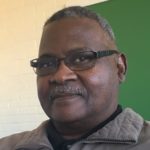
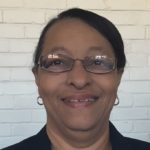
Name of Interviewee: Jerome & Nadine Boyd
Interviewee: Lee Hunt
Date: October 26, 2017
Accession# EDLP 003
Length of Recording (min/sec): 42:53
Sound recording
Summary
Jerome and Nadine Boyd,both natives of Fairfield County, South Carolina, grew up in Winnsboro and Ridgeway, respectively. They attended Fairfield High School, Jerome graduating in 1969 and Nadine in 1971. Jerome became one of the first African-American real estate broker in Fairfield County, in 1978. Nadine pursued a career in nursing. This oral history interview includes discussion of growing up in Winnsboro and Ridgeway, South Carolina, recollections of Fairfield High School, segregation, teacher support following school integration, cultural differences during integration, differences in student treatment due to race, Richard Winn Academy, their respective jobs after high school and college, their experiences with higher education, African-American business people in Fairfield County, and Nadine Boyd’s experiences in nursing school.
Transcript
Lee Hunt: Hello, my name is Lee Hunt. We are conducting this interview as a part of a class project, as part of the doctoral program in Educational Administration at the University of South Carolina in Columbia. We’ve already asked permission, we already took photos and wrote our name on a piece of paper. So we just going to skip that part, but we’ve already done that. I’ve put this microphone here, so that we can hear you as you share your perspectives with us. So we will be moving forward and just asking those questions that you’ve seen there. So why don’t you, Mr. and Mrs. Boyd, tell us what your full names are.
Jerome Boyd: My full name is Jerome Boyd, and I am of the Class of 1969 at Winnsboro High School.
Nadine Boyd: And I’m Nadine Boyd, and I’m the Class of 1971; Winnsboro High School. I spent four years at this school where we are now, and in my junior year, they closed my school. So my senior year, I went to Winnsboro High School which was supposed to be an integrated school. So my whole senior year, I was there but the rest of the time, I attended Geiger Elementary School in Ridgeway, which is my hometown. I grew up there. My first introduction to school was when I was six years old. They didn’t have the kindergarten at that time. So I went to school at six and I just loved it. I got a chance to see some people I’d never seen before. (laughter) Everybody was right there in the neighborhood and people I knew. Then I went to school that, and I’d never seen that many people before. But it was a great experience. I remember the teachers actually knowing who parents were, who grandparents were, and when kids were disobedient or acting crazy, what we called in that day, they would remember ‘who’s your mama’, ‘who’s your daddy’. They wanted to know, so they could report to them how we were conducting ourselves. And I think in that there was a caring about people and about students and it wasn’t like, “I’m here to teach, get a paycheck. I’m here to take care of these children that eight hours that they’re not home. They’re with us. So that was, that was a really, really good experience. I remember my grandmama spoiled us, so she didn’t whip us. But my first grade teacher was the first good whipping I got, from was from my first grade teacher. Absolutely, I’ll never forget it. (laughter) That’s terrible to say, but it was!
LH: What is it about first grade teachers? Mine too! That’s great, well that’s wonderful. We’re off to the races already. Where were you born? Where you born?
NB: I was actually born in Ridgeway.
LH: OK.
NB: You probably don’t know that there was no hospital in Ridgeway. It was an elementary school. They had two elementary schools there. So I was born at home with a midwife.
LH: OK.
NB: Yeah.
LH: And Mr. Boyd, where were you born?
JB: I was born in Winnsboro, a community called Greenbrier and I did my elementary school at Kelley Miller, which was about three miles from my house. I’m not a product of Fairfield High School. I actually went from Kelley Miller Elementary to McCrory Liston, because that was the school that our part of town attended. So when they announced that there would be integration in 1965, my father would not allow us to go back to McCrory Liston because it was thirty miles away, and we were only eight miles from Winnsboro High. So he said, you know, you’re not going to go thirty miles when there’s a school eight miles. So I came to Winnsboro High School the first year of integration in 19–, fall of 1965.
LH: OK….OK….so did you ride a bus to get there or did you…
JB: We did.
LH: OK
JB: We rode a bus. Matter of fact, it was unusual because most of the children in our community, because we were kind of a close knit community. We rode the bus. They had a bus for us that only black children rode.
LH: Really.
JB: Going to an integration now. Only black children rode. The Caucasian and the white children in that area rode a different bus. [laughter] And later in high school years, I drove a bus…I never drove white children. I only picked up the black children. Going to the integration school.
LH: Did you have to skip over white houses to get to the black–
JB: Yeah!
LH: That is so crazy.
JB: Yeah.
LH:: Wow. OK, well thank you. That was great! [laughing]. So tell me about growing up and your family. You know like, early memories of your childhood, what’s stands out. You know: early memories of you childhood…your visions and memories of your family.
NB: Well, we had a blended family, I guess you would call it a blended family. I grew up in a home with my grandmother and my grandfather and my father. My mother died when I was nine so I’m just putting all those, since it was so early, all of us together. But at one time in a home that I grew up in, there were like fifteen, sixteen people, yeah, in a little house. My grandmother was…she was awesome…But anyway, [laughter] she kept us together, and we–so many of us–she worked as a maid in a house. So far as clothes is concerned, the people that she worked with would share their hand-me-downs, and she would come home with these bags of clothes and we were so happy because they had shared them and then when we got through, something that we couldn’t wear, we would pass it on to somebody who we thought was less fortunate than we, all of us was poor. But we pass it on but those things that I remember losing my hair in the fourth grade. This is a time when things were not, we was not popular. So one of her people that she worked with found a wig for me to wear. But it was good times. We didn’t think it was so until now. We see what a blessing it was. We had everything that we needed, all the food, all the clothes that we needed. We walked to school, in elementary school. Later on, down the years–it was like a mile and in the winter, it was so cold…
LH: Yeah.
NB: It was so cold. If you would–you know how when it gets cold and your tears go down your eyes. It felt like our tears were drying and turn into ice–But we knew when we got to school that there would be heat, food, friendship, teaching–good old teaching…
LH: In that wonderful school that you–
NB: Yes, Geiger Elementary; it’s still there in Ridgeway–which is in Fairfield County–and it’s still there. Now I passed by it yesterday.
LH: How do you spell that—‘Geiger’
NB: G-e-i-g-e-r
LH: Ok, alright, Ok.
NB: Uh- hmmm. My principal is our neighbor now [laughter] yeah, he’s our neighbor now! Yeah,
LH: That’s wonderful.
NB: Just umm, pleasant memories. Some people that I met then you know, we still contact each other. Some friendships that I developed there, we still have them. It’s a different kind of relationship now, but uh–hmmm
LH: That’s wonderful. Thank you. So Mr. Boyd, tell me about–
JB: Yes, m’am…
LH: Tell me about your childhood.
JB: Wowww
LH: Your memories, good and bad. Family, friends, what was it like?
JB: I grew up in a household of a nine. It was seven–seven of us children and mother and my father. We were…we were, we farmed. We farmed. My father worked a full-time job and we, we farmed. Some folks said we had gardens, but no. We farmed. We would plant major crops, two, three acres of corn, acre of potatoes. We would plant peanuts, we would plant cotton, we raised cows. We raised hogs. We farmed and…
NB: (whispering)The mule…
JB: Huh?
NB: (whispering) That mule…
JB: Oh, yeah, don’t forget the mule that we worked–plowed the field with, so…
LH: What about that mule. There seems to be a story there.
JB: That mule’s name was Mary.
LH: I can tell there’s a story there because she’s laughing. And so I just have to ask…
JB: …it was a, it was a, an ornery mule…When it didn’t want to work, it would run away. And the only person who could catch it was my mother….
LH: Really?!
JB: She would go out there, and the mule’d [sic] be running all over the countryside. My mother would go out there and she was the only one that could walk up to that mule. But…we farmed. We– he would leave home early in the morning, give us our assignments for the day, when school was out. When he come home, he expected that we had done what he assigned us to do. He was an unusual man. Wasn’t a big man. Probably five-nine, one hundred forty pounds. But when he spoke, he never raised his voice. He never repeated himself. And so when he said something, everybody was coming to hear because he wasn’t going to say it twice. He was not the disciplinarian, but everybody thought he was. But it was, it was a fun time. We lived, we lived in what I call “a shotgun house”. You look in the front and you look straight through to the back. It was four rooms and it was nine of us. And then in the early of the middle sixties, around sixty-two, sixty-three, we had a major event in our household. We moved on the road. (laughter) We moved in a house with indoor plumbing.
LH: Oh my!
JB: So that was a major thing for us and so it was a good time. We had a good time. I thought we were poor, until I actually got grown and went into the military and I realized we had it well off. Our first major appliance after electricity–see I go back that far–was a freezer. And we would work all year to fill the freezer, and during the winter, that’s how we ate. That’s how we lived. We counted the chickens through the floor. We counted the stars through the roof. But we had a, we had a great time. A great time.
LH: So why did you get to move? What made you move?
JB: Daddy bought a larger house. The house we lived in was actually one that was used back in the day. Oh no, they built that house but it was a small house. It wasn’t insulated. It was not. He just bought a better house, and so we moved. Had indoor plumbing. Didn’t have to go outside to the bathroom.
LH: That’s nice in the winter!
JB: Didn’t have to take a bath in the, in the washtub… We moved.
LH: So that’s wonderful. So I think Mrs. Boyd, you’ve told us about Geiger School where you first went to school. [Turning to Mr. Boyd] Where did you first go to school?
JB: Kelly Miller Elementary School
LH: Kelly Miller. That’s right.
JB: …Which is still in existence, still teaching children. One of the better elementary schools. (laughter) She was arguing that Geiger is better, but they’re still in existence.
NB: Our grandchildren go there now so…
JB: Our grandchildren go to Kelley Miller.
NB: Um-hmm.
JB: It was a–they knew everybody. Like she said, they reported. If you didn’t do what you were supposed to do, they knew your mother. They knew your father, and the word got beat you home. And if you got a whipping at the school, that wasn’t the end of it. When you got home, you got another one. Not only did they do it in school but the neighbors–you know, we had to walk about a quarter of a mile to the bus stop, but even in walking back and forth from home to school, to the bus stop and back–you were watched. …When you didn’t know you were watched. You did anything wrong, and most the time, it beat you to the house. It was a close-knit community. Everybody knew everybody, and everybody watched out for everybody. Yep.
LH: That’s wonderful. Thank you so–We’re going to move into just talking about your schools. How were the facilities at your, at your elementary schools or any schools, really, high school?…
NB: Well the facilities at my school–I’m just thinking now, maybe that’s why I loved it so much, is because we didn’t have the indoor plumbing at that time–so when we went to school, we had–you know we grew up with the wood heater, and had to go out there and get the wood and put it in the stove. But at school, we had bathrooms, we had warmth–the heaters and everything–and it was a nice clean facility. Actually my uncle was a janitor at one time at our school. We had the school dances, even at the elementary school. We had the little school dances… I remember where nobody had to supervise anybody. It was just good time dancing, and having fun, and eating. But the facilities were warm. It may–if we didn’t have any heat at school, they would close the school. You didn’t go to school. The heat is off or the water is off, you’re home. So they wanted it to be comfortable for us. And I went there for six years.
LH: And where did you go after that?
NB: After that, I went to high school.
LH: OK
NB: Graduated sixth grade and went to high school in the seventh grade and I came here to Fairfield, Fairfield High School. And then I got to see people from, by this was being a high school, people who lived here in Winnsboro, that I didn’t know. Some people lived up, way up north, almost to Chester County…some of them came here. So it was just like a big group of different people from different areas in Fairfield County. I think we pretty much shared the same thing but it was, it was different. I always said, always thought–I guess everybody think that their hometown is the best hometown in all the whole world–so I thought Ridgeway, where I grew up, was the best and I would never move to Winnsboro, even when I was in high school, I would never live in Winnsboro. But guess where I’m living? Winnsboro. Mmm-hmm.
JB: The schools we attended during that time were relatively clean, new construction in the late 50’s and early 60’s. Those schools were built so we didn’t attend the one room with the pot belly stove. We didn’t walk eight miles, ten miles. We were just beyond that generation of school. And so we had relatively new buildings. Like I said with indoor plumbing, heat and all the, we thought, were all the amenities at that time. We had a good time. We went to school. I remember my first day at elementary school, I wanted to establish myself and so I found the smallest guy in the school who I knew, and I was going to beat him up to establish myself.
Well when he let go of me, I was glad to get loose because he had tore [sic] my overalls off of me. He beat me that bad under the buses on the other side of the buses. So I picked on the wrong smallest guy. (laughter) But we became great friends, but it was a community school. We mostly knew everybody, not like you said. We were introduced to new people that were in the general area that we had never met before that we didn’t see in church or that we didn’t in the county. We had a great time. That school, Kelley Miller, was from first to seventh and after the seventh grade, we transferred to McCrory Liston which was on the western side of Fairfield County where this was eastern side where blacks attended. McCrory Liston was on the western side where blacks attended. Winnsboro High was in the middle and so we went to McCrory Liston. I went for one year in the eighth grade and when I graduated in the eighth grade, that’s the year–the fall of ’65–that we came to Winnsboro High School.
LH: And so that was when they started integrating here and that’s–so that’s how that worked. OK.
JB: She came to Winnsboro because they closed Fairfield.
NB: They closed my school. That’s why I had to come.
JB: I came to Winnsboro from McCrory Liston because my Father said, “You’re going to Winnsboro High School.” But that was the first year of integration and it wa… not pleasant.
LH: What was that like? Tell me about that.
NB: He’ll have to tell you about that…We had an option with my house, the option of staying–when they first opened when he went–staying in our own community school, or the option of coming to Winnsboro High School.
LH: Because you were in Ridgeway
NB: Right. Well it was the same county but I’m saying in my home. He didn’t have that option…Dad–but anyway, we going to let him tell that.
LH: OK
NB: We had an option before, when it first opened up for integration, to come and we decided to stay where we were until they tore the school down, we didn’t have a choice.
LH: OK, OK
NB: Yeah
LH: So tell me about your experience. You said it was not pleasant. I think that’s what you said.
JB: Not pleasant. I left McCrory Liston in the eighth grade. I was an honor roll student. When I got to Winnsboro High School in the ninth grade, I failed. Getting off the bus that first day at that school, it wasn’t many of us that went during that time. I forget the number of that first year. I think it was in the forties or the sixties number category. But it wasn’t a lot of us that went to Winnsboro High School. And getting off that bus, and walking down that hall for the first time, and people staring at you, and rubbing up against you and say and making comments about, “I can’t touch you, it might rub off on me.” You know, it was not pleasant…
And going into the classrooms, thinking that you’re a good student and failing the first year because you got no help from the teachers. Either you knew it, or you didn’t know it. And they didn’t offer to assist in any way. So I wind up going to summer school the first year I went to Winnsboro High just so I could catch my grade back up. And so it was, it wasn’t pleasant. We had to fight–literally–fight to survive in that school. Matter of fact, me and Mr. Ergle (sp)–who was a member of this school–were laughing how that, during times of exams when we were allowed to, exam you could leave the campus. Well we’d never heard of that before. You could leave the campus, go where you want long as you were back for your next exam, and so that was a great time of–we did a lot of fighting during that time. And they even followed us. We were, because we were outnumbered but we would come over to Fairfield, and they would follow us over here. It was a, it was a pretty rough, ruckus time. But we got through it. We got through it. A lot of changes…Things we were not used to. And I often question the thing about integration/desegregation: which is it, and what’s the difference? Because ‘desegregation’ says to me, ‘you have the same opportunity that I have, no matter what you are’. ‘Integration’ means I’m integrated into your society, your experiences. I’m coming into that, I’m being integrated. And we lost–the culture was different. Different cultures. And nobody bothered to teach us about each other’s culture.
LH: Right, they just expected you to…
JB: Expect us to–and it didn’t work that well. Now, I believe teachers, a lot of teachers–or not a lot, but some teachers–are employed to get a check. There’s not the care that my wife talked about, about the students. During that time, not only was there not the care, there was–we had the belief that they just didn’t want us there. And so no, no help. No help. You’re on your own. Testing time came and you were unfamiliar with the material because the books we were studying from are often times five, ten years behind the books they’re studying from, and so, we just couldn’t…couldn’t keep up. Yeah…
NB: And then after when I came in my senior year, because of all the work that they had done, the fighting and, I guess, finally coming to grips that we weren’t going anywhere, it wasn’t as bad when I came here my senior year. I don’t remember the fights. I don’t remember us being close like– we saying I’m sitting here talking to you now, I don’t remember having good conversations with white folks, as we would today. But we were there and we didn’t have the fights and everything, but it was still separate. I think I enjoyed my senior year because it was my senior year and I had expectations of getting out of school and moving on. So they pretty much paved the way. I feel like that the things were not as violent as they were when we got there because they had paved the way for us. And I appreciate that so much.
JB: You’re quite welcome!
(laughter)
LH: Oh my goodness. So I wanted to, kind of follow-up on something you said, that you were, it was almost like you were together but separate. You said something about you were still separate though.
JB: Well during that time, when we got to Winnsboro High School, because it was not well-received–even in the community as a whole–even though it was the majority of Caucasians–white folks (unintelligible 24:43) or at Winnsboro High School, because it was not received, something took place in this county called Richard Winn Academy.
NB: A private school.
JB: Private school which was opened, because Fair–Winnsboro was integrated. And so some people took their children–a lot of people took their children out of Winnsboro–and they opened Richard Winn Academy. So that they wouldn’t have to be in the same school. It was a–we grew accustomed to one another–but I don’t think we ever became comfortable with one another, which has not changed to this day. (laughter)
LH: Let’s see. So, oh!– when you were in school, what were your ambitions? Like when you were growing up, what did you want to be when you grew up?
NB: Well, I always wanted to be a nurse. I actually wanted to be an Army Nurse, a Navy Nurse was my expectations and I got, when I got to high school and they presented that, they gave us paperwork if you wanted to go in the Armed Forces and I filled it out and I took it to the house for my grandmother because she had to sign it. She tore it to pieces. She said, “No lady is going into the Service,” and that was what I wanted. I ended up being a nurse anyway. But it wasn’t an Army Nurse or a Navy Nurse, because she had spoken, and that was the way it was going to be! But yeah, that was mine. Between teaching and nursing, that’s what I wanted to do. And I ended up being a nurse. Yeah…
LH: What about you, Mr. Boyd?
JB: Well…what I wanted to be growing up?
LH: Umm-hmm.
JB: Not a farmer! (laughter)
LH: Anything but a farmer?! (laughter) I do not blame you sir!
JB: I laugh with my father. I actually went into the military, which was not my plan. But Vietnam was pretty, pretty strong during that time and her principal, who was our neighbor, served on—which, at that time was called the Draft Board…I don’t know if you remember that…
LH: I have heard of that, yeah, yeah.
JB: Yeah, and he came home one evening and because we were next door neighbors, we lived right beside him. He said to me, “Jerome, your name came up.” I got really nervous, and I had taken the test in high school for the Air Force, and I had passed the test. And so when he told me that, the next day I went down because I did not want to go to Vietnam. I did not want to. I didn’t know those folks. They had done nothing to me, and so I volunteered for the Air Force. And so that’s where I spent my next four years; in the Air Force. So I don’t know what I wanted to be. I just didn’t want to be a farmer. (laughter) I hated that mule.
LH: Mary! Mary the mule!
JB: I laughed with my father for years after that, because when I came home after my first, after basic, after what we called “tech school”; I came home and I was telling the church: when I came home, I saw a brand new Ford tractor sitting in the yard. And I asked my father, I said, “Dad, what–why you get–you know…something wrong with this picture!…Now you get a tractor?” He said, “Aw, before, I had you, I didn’t need one.” [laughter] So we, we, we laughed. We got a tractor, and the mule got shot. Somebody shot the mule, so he went and got him a tractor. And so, I came out–I wanted to take accounting…To let me know how things had not changed, I went to the University of South Carolina to enroll, and my counselor told me my best course, or my best avenue, was to become a mechanic.
LH: Oh my. Why did he–
JB: It was a she. Yeah. …My best avenue was to become a mechanic…
LH: Really.
JB: Yeah. I didn’t like that.
LH: No.
JB: And so, I went to Midlands Tech, and I took accounting, and I graduated with honors.
LH: Excellent.
JB: And I never went back to USC.
LH: Good for you.
NB: But you did become a mechanic in the Air Force.
JB: That was my choice!
NB: Right!
JB: That was my choice. Don’t limit me. Don’t tell me what I’m limited to.
NB: Yes.
JB: No I did, I was an aircraft maintenance specialist. I was not a mechanic.
NB Oh, oh OK. Maintenance Specialist! OK!
JB: And my specialty was jet aircrafts so I crew chief–I was a crew chief in the Air Force. Crew Chief on jets….When I got out, I went to school. So that’s what I’ve been doing.
LH: So are you an accountant now?
JB: I’m retired. (laughter)
LH: Oh, oh, excuse me! So what did you end up doing? Did you become an accountant?
JB: I started out…where did I start out? I started out…
NB: …At the Federal Reserve? Is that it?…
JB: I worked at the bank. I worked at Old South Carolina National Bank. I don’t know if you, you don’t remember that, you’re from Tennessee… And, I left there and I went to the Federal Reserve Bank, and I worked there for some years as a computer operator. And then I…
LH: Where was that?
JB: Huh?
LH: Where was the Federal–is that near?
JB: They had a branch in Columbia.
LH: Did they really?
JB: Yeah…
LH: Oh!
JB: We were just a processing center. We didn’t handle money.
LH: Right, right.
JB: But we did, we processed checks. Everything would come in, we would process it, send them out to the different banks, and take their checks that they got, and send them to the right bank. So we were a processing center. But I worked there, and then I went into real estate (laughter). But I’ve been connected to real estate for thirty, forty years. I was one of the first licensed brokers in Fairfield County–black, licensed brokers. Nobody knows that, but I received the broker’s license in 1978. After, after one year of being licensed, I decided I wanted to take, and my managing broker said, “You can’t take that test. You can’t pass that test.” Well, that, that was always a challenge. Don’t tell me what I can’t do…
NB: Hmm, mmm.
JB: Yeah, so I took that test in ’78 or ’79–one of those years–and I became a licensed broker. But nobody–very few people in Fairfield County knows that.
LH: Hmm, and you’ve been doing real estate ever since then…
JB: Off and on…
LH: Until you retired…
JB: I’m a pastor.
LH: Oh!
JB: That’s, that’s what I do. That’s, that’s what I do. That’s who I am.
LH: That’s wonderful. So going back to your families and how you grew up, how do, what did your families teach you about race relations when you were growing up? Or did they even talk about it? What did they teach you?
NB: We did. My grandmother, she was well-known in the community and people had a great respect for her.
JB: Yeah, yeah
NB: And because of her, we had favor. She would always, you know, tell us the manners, “Yes Sir, No Sir” That kind of a thing. But if it’s something that she needed and she didn’t have the money to buy it, there were people that she could go to that would help her because of her, who she was. But she taught us to respect anybody…I know now, how so much is in the news about animal rights and all that. But even back then, she said, “Be nice to a dog! You know, treat them right!” So we had a–I guess–a relationship because of her, to respect others, including white people…So I would say that the relationship was good–not because of me, but because of my grandmother that–I remember when there was a gas shortage, I think it was, you remember?–there was some people that she could go to–some white people. And we could get gas, or if we needed to get something from the store that we needed, we could go and say her name…We’re her descendants or whatever–but she taught us to respect all people. So, if there was some disrespect, it didn’t come from her.
JB: Huh. I remember I was dating my wife at the time, and I went to Ridgeway and I think I was–I didn’t have gas in my car. And she said to me, her grandmother said to me, “Go to so-and-so house. They got a gas tank. Tell them I said, ‘put some gas in your car’.” So I drove this winding road and I got to this house, and I said, “Uh, “Lizaiah (sp) told me to come over here and get some gas.” He said, “Pull your car up here.” I pulled the car up. He filled my car up.
LH: He filled it up?
JB: He filled me car up. And said, “Ok”
LH: Wow.
JB: He didn’t ask me. That’s the kind of influence she had…and my father was also a… man of influence. He taught us to have respect and be a person of your word. If you give your word, then you honor your word. And so that’s how, that’s how he, he was in the community. He greatly respected–he taught us to respect and to honor others, and honor your word. So that’s how we grew up. If you said you’s going to do something, do it at, at your hurt. Don’t let your word go down and so, that’s how, that’s how we grew up. I remember seeing him going to the bank and needing some money. And he would go up there and he would tell the banker, “I got a cow and I need to borrow some money,” and the banker would loan him what he needed, on his word, that he would designate this cow as collateral.
LH: Was this a white bank?
JB: Yeah, it was the bank in Winnsboro… and they knew him, and the way that we moved into the house we moved into, which was not for sale to people of color, was because he had favor.
NB: Mmm-hmm…
JB: Now he was not a pushover, but he had favor and the young–the man that sold us that property, sold him that property; I remember an incidence where I would work for him, and he would–he was a farmer also. He had a lot of acreage. He had cows and during the summer sometimes I would work for him. And one day my father came home and he had purchased a new car. We didn’t know he was going to get a car. He brought the car home. That same man came by and he pulled up in the yard as he would do sometimes, and he made a comment about my father buying a new car, and it was not a pleasant comment. So even though he was a man of great respect, he said to him, “Listen, I work every day.” And so that was the end of that conversation and later I took that. He worked me one day, and he gave me two dollars for all day of work and said he would come back and get me the next morning. I took my father’s lead, and I said, “No sir. Don’t come back and get me. You can’t work me all day for two dollars.” (laughter) And so I told my father, and he just looked at me…(laughter) That’s, that’s the kind–we had respect, but he was not–he was a, he was a firm man. He believed in doing right. He didn’t take. He didn’t allow you to disrespect him or his name. And so he was a firm man. If you needed something, and he had it, you could get it. You could get it. Yeah.
LH: Well I hate to say this, but I want to get y’all out of here on time, so I’ve got to bring this to a close.
JB: Wow!
LH: This has been such a joy. I have to thank you so much. So is there anything you want to make sure we know about your experience and the whole integration process of schools here? Or you feel like you’ve shared what you wanted to say?
JB: As painful as some of it was, I don’t think I would be the man that I am now if I had not faced some of the challenges of that time.
LH: Wow.
JB: Some of those challenges made me a better man.
NB: Yeah because I say that too because my, most of my experiences was probably beyond the school with working with people of different colors
LH: As a nurse?
NB: As a nurse and actually I worked in Ridgeway. I started off. We didn’t have the money for me to go to college so I worked four years in Charm Corporation which was a manufacturing company. It made house coats for women. I went there and worked four years and then, I went to nursing school. But even…
JB: That’s where you met me! (laughter)
NB: The Good Lord brought me–brought him there for three months. He saw me. I saw him—(audio interference) I don’t even think he saw me, but anyway, I went there and worked first and worked my way through nursing school and I remember even when I went to South Carolina Baptist Hospital School of Nursing, no longer in existence. But when I went there in ’75–
JB: That’s right!
NB: They had, actually had a dormitory for pastoral care, radiologists, surgical tech, licensed practical nursing but anyway, I remember the house mother there saying, she looked at me. She said, “You know, we just don’t let anybody here.” …..”O…K…” What she was saying is, at that time, they was very selective in who they took into the school of nursing. And it was, it was good because I, I actually got to live in a dorm with white people! And I, that was my closest encounter that I had had with them. We fought until we understood–not physical
LH: Right, ok…
NB: Until we understood who each other was. But I’m grateful for that but it was still a lot. That was in, I graduated in ’76, and people would look at me even around the bus station. Black people, they would say, “Did they let you come in that hospital?” And I was surprised because it was known as “The White People Hospital” and Richland was known as “The Black People Hospital” where poor people would go or black people. Hmm–mmm. This was a hospital now–
LH: In the seventies?
JB: Mmmm-hmm.
NB And it was in the heart of Columbia, South Carolina.
JB: Mmmm-hmmm.
NB: Yeah.
JB: Capital city.
LH: Yeah! Where they told you, you needed to be a mechanic.
JB: I needed to be a mechanic.
LH: I’m so glad you didn’t listen. (laughter)
JB: I don’t know. Mechanics make pretty good money! (laughter)
LH: Well they do actually, I have to say! That’s true! (laughter) But you seem pretty happy with the route you took.
JB: Yeah….yeah….yeah.
LH: Good for you. Alright, well we’ve gone over and I’m so sorry. But thank you. So much.
JB: Thank you! Alright!
LH: This has been such a joy! Thank you so much for sharing.
JB: Thank you!
NB: I had no idea we would talk this long!
End of Interview