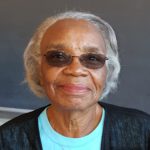
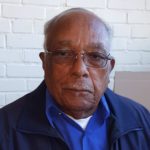
Interviewee: Leola Gripper and Weldon Haire
Interviewer: Andrea L’Hommedieu
Date: October 26, 2017
Accession# EDLP 010
Length of Recording (min/sec): 60:23
Sound Recording
Summary
Leola (Ashford) Gripper was born in Simpson, South Carolina in June 1935. Her father was a sharecropper and her mother was a homemaker and seamstress. She received her early education in church schools, and later at Fairfield County Training School (later Fairfield High School), in Winnsboro, South Carolina. After marrying, she and her family moved to Illinois, where she attended nursing school and worked as a nurse for 30-plus years. After retirement, she and her husband moved back to Fairfield County, South Carolina.
Weldon Haire was born in Winnsboro, South Carolina in October 1935, one of ten children. His father, Isaiah Haire, was a sharecropper and later a mechanic, a skill which he taught his sons. His mother, Ella Mae (Weldon) Haire, was a homemaker. Weldon received his early education in church schools, and later Fairfield County Training School (later Fairfield High School). After graduation he joined the military, then became a woodworker and electrician.
This oral history interview with Leola Gripper and Weldon Haire on October 26, 2017 includes discussion of growing up in Fairfield County, South Carolina, attending segregated schools, integration, African-American education in the rural south, sharecropping, agriculture in South Carolina, railroads in Fairfield County, The Fairfield County Training School, Mount Zion School, Benedict College, the NAACP, segregated hospitals, and religion.
Transcript
(Revision of and omissions/changes of verbiage in the interview done as per interviewee request.)
Andrea L’Hommedieu: The date is October 26, 2017. This is Andrea L’Hommedieu and today I’m in Winnsboro, South Carolina with a class, Higher Education class, studying Fairfield County and experiences with education in black schools and then to some degree, the era of integration. And I want to start with you, Leola, and ask you to give me your full name, including your maiden name.
Leola Gripper: My name is Leola, maiden name was Ashford; Gripper, my married name.
AL: And where and when were you born?
LG: I was born in, well really the Simpson community, but now it’s Ridgeway– incorporated into Ridgeway– but it’s still Simpson Community–but I was born in Simpson.
AL: And when were you born?
LG: June 7, 1935.
AL: And were you born at a hospital or at home?
LG: At home. My mom and dad lived on a plantation. Here in the Simpson area.
AL: And did they farm?
LG: Dad was a sharecropper. My mom was fifteen years old when she and daddy got married; daddy was twenty-two.
AL: Wow. And did they both come from this area?
LG: Yes, they both grew up in the Simpson community.
AL: So you have a lot of roots in this area.
LG: My mom was from a large family. She had thirteen sisters and brothers. My dad was the oldest [and the only brother], he had four sisters. And his mom died when he was a teenager. And so, you know, his sisters were very young.
AL: Yeah. So, and how many brothers and sisters did you have?
LG: I had two sisters and one brother. I’m the second oldest. My oldest sister graduated from [Fairfield County Training School] also.
AL: So growing up you were in a farm environment.
LG: [Yes my dad] sharecropped, and we moved about for better opportunities. [Most of the children families lived on farms. Many of the children from farm families didn’t get to attend school in the fall until all the crops were gathered. My dad had to drop out of school. I think he attended for 2 years (second grade), but he wanted to make sure he got an education. Most of the children from farm families didn’t go to school until October or November, depending on when the cotton was gathered.
AL: Do you have a sense of how your parents knew that they wanted to be sure you got an education? Was that talked about?
LG: Yes, my mom, I think finished the sixth grade. When she finished sixth grade that was at that time like high school. She could’ve at that time could have been a teacher. My dad was uneducated, he loved educated people and wanted his children to have better opportunities than he had.
AL: Did he ever talk about anyone that he looked up to?
LG: [At that time,] my dad was [very proud]. He looked up to Franklin D. Roosevelt, because [he was the president that] really [seemed to be interested in better lives for colored people], here in South Carolina [and in the entire United States]. South Carolina was so racially segregated.
AL: Yeah. And so you started school in Winnsboro?
LG: No, I started school in Ridgeway, even though we lived in the Simpson area, all black churches had schools in Simpson. St. Mark Baptist church had a school, but we went to Lebanon Presbyterian Church School in Ridgeway.
AL: And what grades were that?
LG: First through eight. I went from first through sixth. My older sister went from first through eighth. In seventh grade we moved closer to St. Mark Baptist church in Simpson, and I attended seventh and eight. Then I started attending here.
AL: Attending here. And it was called Winnsboro High School?
LG: No, Fairfield County Training School. I guess the white community thought the black people had to be trained, so they called it the Fairfield County Training School. The children now don’t even know anything about Fairfield County Training School.
Weldon Haire: She was right after, around the sixties I think it was they switch it to Fairfield High.
AL: Okay.
WH: Fairfield Elementary, something. They did away with the Training School after our time.
AL: Okay. And I forgot to ask you, did you know any of your grandparents?
LG: I didn’t know my grandparents on my mom’s side of the family. My mom’s mother died when mom was 14. My mom was the oldest child at home when her mom died. My mom got married when she was 15. Her dad got very upset, because she was the housekeeper and cook. My grandmother, on my dad’s side, died when dad was a teenager. I knew my dad’s father, his name was Preston Ashford.
AL: And did he farm as well?
LG: No, he was working on the railroad. That was hard labor. [My grandfather on dad’s side remarried]. Dad’s mom was only twenty- something when she died. [Maybe in her late twenties.]
AL: Yeah. And to talk just one more minute about sharecropping. Did your dad talk to you about some of, maybe the injustices of it? It was hard work. I’m interested in knowing a little bit more.
LG: [Yes,] It was hard work. [The family that he sharecropped for was the Kennedy family. They didn’t get paid any money until the crops were gathered (cotton), and the Kennedy family were part owners of a general store in Ridgeway, the name was Wray and Company. During the farming season the sharecroppers could go to the general store and charge anything they needed to live on during the growing season off the cotton, and after the cotton was picked and taken to the gin to be baled and sold, then the owners of the farm would give the sharecropper whats his share of the amount of the cotton minus what was owed to the store for food and clothing that was purchased during the growing season. That was called the “settled up amount.” Of course dad had to take their word for it. And I don’t know whether that was equal or not because sometimes dad would say, the owner would say to him “if you had made another bale you would’ve came out even. You would have gotten a little extra money”. But it seem like, it never came out even.]
[My mom was a seamstress and, of course, the General Store they sold, you know, cloth. And the sister to one of the owners of the store, would bring the remnants and mom would make our dresses. We were always well-dressed, because mom could sew really well. She used fertilizer sacks. She would wash them and bleach them out. They would look like linen. She would sometimes make us coat dresses, she would trim them with rick-rack and use colorful buttons. One of the teachers that we rode with one day asked if we knew where our mom bought the material from. Of course we told her “This is from the fertilizer sacks”, we told mom what the teacher, Mrs. Green, had asked. And she told us that “you don’t have to go to school and tell everything you know.”] (laughter) Yeah, we were always well dressed.
[But this one particular thing that really sticks out in my mind: we weren’t able to get winter coats or anything new until after the crops were gathered, because dad didn’t have any money, and one year before the crops were gathered it got cold. We had to wear our old coats that was really worn and tethered. The children at school were calling us ragamuffins, because our coats were raggedy, but they were clean. When we got home we told mom and dad that the kids were making fun of our coats; there were three older girls that made the kids quit calling us ragamuffins. Their names were Eleanor and Sadie Shannon and Thelma Johnson. We told mom and dad about what the children called us and mom set me on one knee and my sister on the other knee. She said, “I just want you both to know that you are clean, and I want you to think about what the most important thing in your life is. The most important thing is love. Me and your dad love you girls more than anything. Don’t make any difference what people call you, just know that mom and daddy love you.” And that has kind of stuck with me throughout my life. And I’m not a ‘thing’ person. I don’t have to have a lot of stuff that has really influenced my life throughout.]
AL: Thank you. I wanna turn to you now and ask you to say your full name.
WH: My name is Weldon Haire.
AL: And where and when were you born?
WH: I was born in October 9, 1935.
AL: 1935, and in Winnsboro or an outlying town?
WH: In Shady Grove Community. That’s about five miles out.
AL: Okay. And so it was very rural.
WH: Yeah, oh yeah. Farmland.
AL: And how many brothers and sisters did you have?
WH: Five sisters and four brothers.
AL: So there were 10 of you.
WH: That’s right. (laughter)
AL: And your parents, what were their names?
WH: My mother was named Ella Mae Weldon, that’s her maiden name was Weldon, but she, the guy she married was a Haire. Then my father’s name was Isaiah Haire.
AL: And were they from this area?
WH: My dad was out of Virginia.
AL: Out of where?
WH: Virginia. And that’s where his family was. And my mother her family was out of Ridgeway, because the Belkses [sic] of Ridgeway were related to us. And so– but somehow or another they moved in that area out there and that’s where we were born and raised at, out at Shady Grove Community.
And my dad, my dad he was a, what they call a Jack-of-all-trade. He could do a lot of different things. Yes, we did, we sharecropped, like you say it, but my dad was always doing brakes and he would always do carpenter work and so forth. And what he did, he taught each and every one of us to do the same thing that he did, you know. And they were very proud people, they loved the Lord. They stayed in church and so they instill in us that, what God wanted us to do.
And so, then as she said all schools at the time was church schools, it wasn’t no school like it is here. So we went to school there for, till the seventh grade. From the seventh grade then we came here to Fairfield County Training School. And like I said, I think it was in, we lived there on the farm until—hmm… until 1950, when we moved here in Winnsboro– my dad bought property here and he built a house here in Winnsboro. So that means that when I was raised up [unintelligible 13:12] living here my dad was working for the veneer company down in Winnsboro. And I worked for a Dr. Buchanan the whole time I was in school. I would go there and clean up his office and so forth. And that way I was independent from my mom and dad having to buy clothes and things for me. I was able to do those things myself. And also help my brothers and so forth.
AL: And where were you within the children? Were you one of the older?
WH: I was number five.
AL: You were right in the middle.
WH: Yeah (laughter), right in the middle, number five.
AL: And so I wanna go back a little further, did you know any of your grandparents?
WH: Yes.
AL: Can you talk to me about them?
WH: I know, my grandmother, I didn’t have no grandfather–neither one of them– but my grandmother she always lived right here in Winnsboro. And –
AL: Your dad’s or your mom’s?
WH: My mother. And my dad’s mother was in Richmond, Virginia; that’s where he was from. And we would commute back and forth to see them, you know, that was a big thing for when– fill up a bus and went. (laughter)
AL: So you would make trips back to Virginia.
WH: Oh yeah.
AL: And see your family.
WH: We went to see her, yeah.
AL: What was that experience like? Because you lived here– a very rural South Carolina [town]–and was the place in Virginia pretty rural farming community as well, or was it?
WH: They lived in the city area there. But it was congested to me, you know, I never did like to be in crowds, and I still don’t (laughter) don’t like a whole lot of crowds. But it was congested there to me. And it never dawned on me to go back there to live and get a job or anything. So when I got out of high school and so forth I stayed in this area here until I was drafted in the military. I went in the military, spent my time there and I came out of the military. Then I’m in a position to know what I wanted to do then. So I started out with a woodwork–doing cabinets, building cabinets and so forth. And it was too confined for me. So in ’71 I become an electrician and that’s what I did the rest of my life, basic electrician, you know. And I didn’t go to a school or building like that, but we did all manufacturers and so forth. You know, like mold company and Westinghouse down on Bluff Road, all those places; that’s where I spent all my time, you know. It was a good life, I enjoyed it (laughter), you know.
AL: Well talk to me– because you are graduating from high school in about 1953?
WH: Four.
AL: ’54. And so I imagine your service would’ve been during the Korean War.
WH: No. Between wars. Between Vietnam and Korea.
AL: Okay. Okay. So you didn’t see –
WH: No, no combat.
AL: Yeah. And what branch of the service?
WH: I was in the Army, but I spent my time in Europe; in Germany. The two years I had, I spent them in Germany. So I got out of Germany and so forth, it was Cuban Crisis. And then we go back again (laughter). So you know, every way you come out of military, they always keep you in Reserve for four or five years. So when all this happened and so forth, so they needed my services a little bit more. So we had to spend a little time but then nothing come of it, so I thanked God it didn’t and I’m here now (laughter), because of He.
AL: Yeah. Now I wanna talk about your experiences at this high school. So you both, you’re just two years apart in graduating.
LG: I graduated in [1952 from this high school. Started in 9th grade. There were 29 students in our class. We were from different communities in Fairfield County: White Oak , Blackstock, Shady Grove, Simpson, Ridgeway, and Winnsboro. It was a different experience. My sister and I lived with my mom’s aunt for the first two years, because we didn’t have school buses at that time. We had a homeroom teacher, and we changed classes for our different subjects. We had a different teacher for each subject, and that was very exciting. My high school experience was a major learning environment for me.
WH: Yes, it is. (laughter)
AL: You walked that whole way?
WH: Yeah.
LG: [My elementary school experience we walked to school, because there were no school buses. My sister and I walked to school from “Cooks Corner” (which was never the Simpson community) to Lebanon Presbyterian School in Ridgeway, about 5 to 6 miles, even though it was very cold during the winter months. While walking home, we walked through the town of Ridgeway. Sometimes while we were walking, we would be harassed by the white children. They would join hands across the sidewalk, and we would have to walk on the grass or out on the street. Some of the children that lived in Ridgeway would be walking with us. So one day, we decided we would not move over to let the white children pass, and we were reported to the principle of the white school, and he talked to the principle of Lebanon and told him if we continue to do that, we would go to jail. When we told our parents, they were very upset. We never did that again.]
AL: What year would that have been?
LG: I must’ve been in about third or fourth grade.
AL: So we’re talking forties…
LG: – yeah, in the forties.
AL: And so there’s some resistance going on.
LG: Oh yeah, I was – and then, you know, we, our school was—were–the castoffs, they books were all written on and some of the pages was torn out, so they just gave us their discarded textbooks.
AL: Yeah. And did you all, now you say the churches were with–I mean the schools were within the churches– were they actually in the building or was there a building beside it?
LG: No, they had their own building, our church had their own.
WH: No, we didn’t. We had –
LG: You had it in church?
WH: – in church, yes.
AL: Yeah, I wondered because– and I know that some, there were about 500 Rosenwald Schools built in South Carolina and those were built with the Rosenwald Fund but they were also built with funds from community members. And they were often built on church land. So I wondered if any –
WH: Well, the one, they did build a school out there in Shady Grove, but it was built afterwards, something like, you know, after the war was over, in that time. And I think the one in Ridgeway there too –
LG: That was, yeah I had graduated from, I was out of high school though when they built that school.
WH: But just like we sayin’ that we had, we all had to walk to school regardless of whether it was in a school building or what, it wasn’t no buses or nothing to carry us, but the white kids had buses. Like she said they had, they would ride by us and –
LG: Whistle at you– holler at us–
WH: (laughter)
LG: –Yell at us.
WH: And, but then when we came here to school, we still didn’t have no buses, and I think y’all did.
LG: We did, we had a bus.
WH: But we didn’t have no buses but we rode the Trailway Bus, they would give us tickets over at the bus station for five days, and it’d be 10 tickets. And we would ride– me and my sister would ride backwards and forth– until we moved in this area. And the people at White Oak, in that area and so forth from, like (unintelligible 23:03).
LG: (unintelligible 23:04).
WH: Yeah, and they rode the Greyhound buses, they would give them tickets and so forth, you know. And it begin to change– and just like she say– during President Roosevelt time, things began to change, you know. After that when we came here and so forth, when we had football games and football equipment and all that equipment, and books and so forth, it came from Winnsboro High.
LG: Mt. Zion then.
WH: Yeah, Mt. Zion. And we, well they been done cleaned it [sic] but we had it and so forth. And then they began to build this building here. Was it here when you came here?
LG: Hum-um. No, it wasn’t here– it was two other buildings there.
WH: Yeah, it was over there.
LG: I was a junior in high school when [the new building was completed.]
WH: Yeah, they built this building, yeah it was in the fifties.
LG: Yeah, right.
WH: Because, like I say, when we come in the ninth grade we was in this building right here. It was our homeroom right here. In tenth grade, we were still in this one here because we just changed teachers. And from there they began to– and they built the gym right there–
LG: The gym wasn’t here when I graduated.
WH: That’s right, y’all– our class was the first one to march in the gym right there and so forth. You know, when we would have physical ed and so forth it was right there behind that building right there. That’s where we played at, out there; and the football field was red mud (laughter).
LG: [The basketball court was mud. Lebanon Presbyterian Church School was better. That’s why mom and dad wanted us to go there. They had breakfast in the kitchen upstairs. Mrs. Plummie Gadson [sp.] was the cook. We would always have oatmeal and orange juice; the juice was thick. I now know it was concentrated, and enough water wasn’t added. When we arrived at school we were cold and hungry. The classrooms were heated by big heaters. When we walked to school our legs was cold, they felt like we were frozen. We wore heavy cord stockings, my older sister was proud. She would take off her stockings as soon as we were out of sight of our house, she would put them in her pockets before we returned home. The teacher would sometime ask her why she didn’t have on socks. She’d say “mom didn’t give me any socks.” As stated before, we went to Lebanon because they had more advantages: we got breakfast and they had four rooms, two classes to each room.]
AL: Right. And so the high school, when you got here was there lunch served?
LG: Not when we started, no. When we started the high school we didn’t have a bus, and the people that didn’t have family members or no way to get to school then they had to drop out, but my mom had an aunt that lived right around the corner from here and we– my sister and I– stayed with her. And the school district charged–the first year we came–they charged dad tuition for us, so he had to pay tuition for us to come. And that was when the NAACP was just getting started, and I don’t know how come my dad didn’t get killed because he really spoke up for us. Now [that] I think about [it], he wasn’t – but anyway [the] NAACP was just getting started, and dad had to pay– I think it was forty dollars [for our tuition], that was a lot of money– for each one of us for the school year.
AL: That is a lot of money.
LG: [Mr. Lonnie Taylor was the superintendent of schools. He lived in the Simpson community. Daddy went to his house to talk to him about having to pay tuition for us to attend high school. He said: “We’re paying taxes just like you guys are. I don’t know why I have to pay for my children to go to school when they don’t have another high school in the county.” Dad paid the money, it was a struggle. The next year, he went to talk to Mr. Taylor again, and he stated, “People are saying I really shouldn’t be paying for my children to go to school, but what I’m going to tell you is I’m going to give you 50 cents now, and I’ll give you another 50 cents when I get it, until I get it paid.”] (laughter)
[Kennedy’s store was the place where men hung out on Saturdays, and dad was at the store. Mr. Taylor saw him and called him to his car, and got into the conversation about the NAACP and the right for blacks, and Mr. Taylor said “We decided to do you a favor. We’re not gonna charge you for your children this year for going to school.” That was our second year. And the next year, my junior year, the white school in Ridgeway gave the black children a bus. It was an old castoff bus. The children now have to be seated while riding the bus. The bus was packed with children from the Ridgeway, Simpson, and the Rockton area. We didn’t have to stay with our aunt for my junior and senior year. My sister only rode the bus her senior year. She graduated my junior and went to Benedict College. Riding the bus was better, because we didn’t know any better.]
[For all of us it instilled in us, that we had to get an education or get a job and to do better for ourselves. I graduated from high school when I was sixteen, would be seventeen shortly after graduation. A classmate and I went off to business school in Nashville, Tennessee. I had never been away from home. I was really homesick and returned home. Mom and dad had scrapped money together to pay my tuition. After returning home, I decided I wanted to be a nurse, and I put my application in at the Columbia hospital,] It was a black hospital.
WH: Waverly.
LG: Waverly. [It was in Columbia. Then I started dating, and had fallen in love. Then nurses couldn’t be married, teachers also wasn’t allowed to be married years before. Got engaged and my mom tried to tell me to wait and get married, but I didn’t want to wait. We got married in 1954 and in 1957 we moved away. We moved to Springfield, Illinois. Our first child was born in 1955, she was 2 years old when we moved.]
And of course, even though Illinois was supposed to be the “land of Lincoln”, I had some business knowledge, and I would apply for secretarial jobs and they would just flat out tell me, “You know, you pass all the tests and stuff but we just have never hired a black. It may be bad for business.” So I had to do day work; my husband was doing yardwork and I was cleaning house. And then I decided I wanted to go back to school, so I went back and applied for nursing and the director said to me, “We give all the applicants an opportunity to write about why you wanted to be a nurse.” So I thought, well I had done day work and I had saved up a little money. I was making eight dollars [a day]– I was making a dollar an hour doing housework–that was forty dollars a week, I couldn’t even spend all that money. (laughter) And so I had saved money to go to school and my husband was still doing yardwork. And she said, “Why don’t you write an essay about why you wanted to be a nurse?” I said, “Well, I’ve already saved money.” She said, “Well, just do it anyway.” So about six weeks later I got a letter in the mail saying my tuition was paid, all I had to do was buy my uniforms. So I knew that God had really smiled on me. I worked thirty-one years in a big medical center.
AL: Oh, wow.
LG: I retired twenty-three years ago. We moved back to South Carolina [in 1997].
AL: And so what made you go to Illinois?
LG: My mom and dad — daddy stopped sharecropping and he was [working in] pulpwood and– when it would rain, he couldn’t work. He had a cousin that lived in Springfield, Illinois– they were real close– they grew up together, and she and her husband was living there, and they encouraged my mom and dad to move to Illinois, so they moved to Illinois. And my husband– his uncle owned a sawmill– so he was sawmilling, that was hard work. And when it would rain, he couldn’t work– mom and dad was sending money to help us. So they said, “Why don’t you come to Illinois?” And we went. And of course I did work, he did yardwork, but then I went back to school, he got a job with Illinois Bell, we did well. Eventually we bought two house, and then after we retired we moved back to South Carolina. Our kids have all done well.
AL: Yeah. And so tell me about your experiences in high school.
WH: The first, when I first went to school, first day at the school– what they taught us, first thing they would – they wanted to make sure that we learned how to spell, do mathematics, and read. And so this is the first– this is our 1st grade classes and so forth—so whenever you started, they always taught us that if you can spell, you can read. You can’t spell you don’t know the words. So. Mathematics they made us–gave us these time tables and we had to learn them by heart, you know. So ‘one times one is one’ and so forth and so on. But what I’m saying is: this is really what attracted me. So I got pretty good in mathematics, so from that day on, when I came to high school here, we had really good teachers here who knew how to teach; Ms. Jones and Ms. (unintelligible 35:08) was the library teacher but she also did math. (unintelligible 35:12) she was a good English teacher and she could help us, so we enjoyed, I really enjoyed high school. But my dad was always particular about it because he didn’t wanna see us get hurt and so forth, and I loved football, I was just rough as the rest of the boys but he say, ‘No’. And whatever mom and dad told us they meant that. We couldn’t do like kids today. So those are the good things about high school and so forth.
And after high school, if you paid attention to what the teacher was teaching you, you knowed how to live when you got out in life and so… And this is what I tried to teach my children; be obedient to your teachers just as well as your parents. If you do those things and so forth, high school is good. Life is good. But if you don’t raise a child nowadays– you know what the world is like (laughter) so… But the basis start right here: right here in school. And we had good foundation here. Because these teachers here, at the time when we were going to school and so forth, if you didn’t do right here in this class they’d take you to the principal’s office. You know, when you came back you was obedient. (laughter) And you really, really– I enjoyed it all when we was in school and so forth. Unfortunately, I didn’t have no mind of going to college when I got out, none whatsoever. Only thing I wanted to do is go in the military. So I did join the military but I wouldn’t go. I said, “No, I’m not gonna do this, I’m gonna get me a job and I’m gonna do somethin’ different.” And so forth. So I began to work—woodwork, building houses and so forth.
AL: Now you both were out of school by the time that integration occurred in the schools here. But did you hear about it and know about it? I’m interested to know what your thoughts are, what your experiences are, any of that.
WH: What you are asking here, our children was involved in it. They was involved in the integration when–from right here, to Winnsboro High. See, when they first start integrating and so forth it was a thing, you know, volunteer. They lied to, to – if you wanted to you could move from here over there. I think the first couple two or three years they did, it was a volunteer thing. And then it was, well most of the children didn’t wanna go there because they didn’t know what it was gonna be like when they got into the school of integration and so forth. And I find out in my lifetime, too, that when I went out in the workplace it was the same thing as it was in school and so forth. They looked at you as a black man, and this is not the job for you, so (laughter) if you got on that job that your work was gonna be different and hard. But you had to learn to survive. And I was the type person I wouldn’t let nobody outdo me. No matter how you tried somehow or another I’m gonna come out on top there. (laughter)
So when I first went out to work, for electrician, they told me that I had to take tests. Okay, no problem. And I went over and spent three days over at the university, and I was doing mathematics, doing math. So I came out from down there, they–everything was good, right?– I go out and apply for a job and so forth, they tell me I wasn’t qualified. That was kind disheartening, but you can’t quit. (laughter) So –
AL: Did you find a company that was willing to –
WH: Of course I did. Let me tell you about it. You know, Gregory Electric Company down there, they had, was doin’ the Governor’s job.
AL: Can you say that again? I didn’t catch the –
WH: Gregory Electric, it’s over in Columbia, big company. And they was doing federal jobs and different things and so forth; so the federal building says you had to have us on the job, right? So it was three of us they hired, it was three guys, three black guys among 300. Okay. And so when we got there they wanted to find out what we could do and so forth. So only thing I always wanted was an opportunity. I can show you what I do. And so this is what I did there and I just went from a laborer out on that job, to supervisor in the company and so forth, before I left. So I had no problem with the ones they understand that I was meaning business just as well as they did. I had no problem at all. From that time on I can carry guys, I got quite a few guys that I carried in there and they hired, and they put me in the training part of it to train the kids that they was hiring for future electrician, you know, so I had a good thing with that. So I taught in classrooms just like you.
AL: Yeah. So did your children, did they have experiences?
WH: Yeah, they did. They did. The oldest two anyway. But like I said, when they, they started out at Gordon Elementary right there. But they moved to Winnsboro High, the class up there. And so when they went there and so forth, it was pretty well together then when, they got there and so they had no problem going through school and so forth…not that I know of anyway. So my thing is, I knew it wasn’t good time but it was– you had to take it and adapt to the situation, so when you did that you got yourself involved in it so you make the best of it. So this is what I always taught them, look, don’t let nobody keep you down from what you want to do. And I say that today. If a person want to be– he can be anything he want to be today, if he want to be. But he got to walk in some sand.
LG: But it’s always, it seemed like always we have to work a little bit harder.
WH: Oh yeah, of course.
LG: And I know in my position I was in, they always gave me, the worst patients and this was what they said, “Because you done such a good job.” You know, everybody should do a good job. I was good at what I did but everybody should be responsible for doing a good job.
WH: You got to be dedicated whatever you want to accomplish in life, you know. If I wanted to fly a plane there wouldn’t be nothing to stop me if I wanted to do this, you know? I know how to go out there and get myself prepared to do those things and so forth. But this is what – and you getting to the modern times – this is what we must teach our children and so forth. And I’m good at doing this; I was at a meeting the other day about this–about the kids: why’re they so far behind and why things are like they is, because we not doing our job.
LG: Their parents.
WH: It’s not the children fault. It’s our fault, you know. I’m glad I came up through the –
LG: I am, too.
WH: – at the time I did. I’m glad I came through all of this and so forth because now I know what life was about and what it wasn’t about and so forth. See, if I sit here and talk to you and tell you about how my life was back in segregation and so forth, then you ain’t gonna understand because you wasn’t there. But you can only really get your full understanding of it when you was involved in it and so forth. Yeah, we had bad times, we had–we didn’t have good times, we were turned down for things that we, had to do. I remember when I was working for Dr. Buchanan– like I told you I worked in the afternoon–he would send me across the street over there to get soda for him, and his nurse, from the fountain, right? They wouldn’t sell me one.
LG: But you could get it for him.
WH: I could get it for him and so forth. So guess what I done? I start getting a fourth one. And (laughter) she called, the nurse called (unintelligible 43:42) say, “Why he getting four sodas? There nothin’ but three of you.” He say, “Are you paying for them?” (laughter) So if you wasn’t stealing them, you let him have them. (laughter) But see what I’m saying to you, you had to learn.
LG: Live in the system. You had to live and survive in the system and that’s really –
WH: (laughter) That’s exactly right. So when we were coming up and so forth, like I say, everybody should’ve had a little part of what we lived.
LG: Everybody, and they would be better today. I think our kids have, you know, they have too many advantages that they don’t even take advantage of, I think. And I think it made us, in real hard times, it made us better people.
WH: It did. Now I know I ain’t saying what you want me to say. (laughter)
AL: No, no, no, I want you to say, you know, what it’s like. Because, and for a lot of, like the graduate students here today learning, the only chance they have of understanding the experiences is to hear these stories, and to write about them, and to share them so that others and the younger generations can know, if they don’t know.
LG: But racism is alive and well everywhere you go. I mean, there’s a stigma if you’re a different color, you know, with things going on in the United States now you know that’s the truth. The schools were all integrated when we lived in Illinois– but she was in 1st grade and they– the theatre guild–they were going through the school communities, getting children of all nation, and she came home crying one day. There was a little girl– she was bi-racial, in her 1st grade class. And I never will forget her 1st grade teacher; she came home crying and said, “I don’t want to be colored” –“ I don’t wanna be colored anymore.” I said, “Why?” She said, “Because I did well when they did the tryouts but Ms. Neal said that because I was dark that I didn’t blend in as well for children of all nations.” And Kitty– the by-racial girl– she got the part. This is what I said to her, I said, “Do you want me and your dad to be your parents?” “Yeah.” I said, “So if you were any other color,” I said, “we couldn’t be your parents.” I wanted to say something to the teacher but, then that would’ve probably made it worse for her. But, so I thought, ‘here she comes home not wanting to be the color she was because they had slighted her. And so I mean, when you living in a world and, you know, the world has been segregated and it’s different– it still rears its head.
WH: Well you have to, like I say it in the beginning, you got to live through it to know what –
LG: To know, yeah.
WH: I could tell you all experiences I went through, and the hurts I had, and the problems I ran into and so forth. But you would never know what I was saying unless you was there and had a part of that. I had gone to jobs and so forth, and applied for jobs, and they told me I was over- qualified. And I couldn’t figure this out, “Now what in the world do they mean, ‘over-qualified’”? So I find out they saying the pay that I deserve, I couldn’t have that kind of pay for the job that I – they didn’t pay that much. And so they knew if they would hire me then I– they’d have to– I was going to leave soon as I found out. And so on. It’s a whole lot of things that I went through, too.
LG: Oh yeah, unless you’ve lived that experience, you can’t imagine what… what being young people, and wanting the same thing that other races of people had, you can’t even begin to know how bad it makes you feel. And then, you know, especially that’s why, you know, you have to train up your children to be able to, live in a world where you are going to be favored, I mean, discriminated against. Um-hum.
AL: Well, I was just gonna say that– thinking out loud– that you must’ve had lots of conversations in the family about processing, about how to stay safe in the white community?
WH: Oh yeah, of course.
LG: Oh, um-hum.
WH: Of course you do, you did have to do those things.
AL: What did you do?
LG: My grandson he went to a private school– it was only three blacks in the school that he went to. I would tell him, you know, “You got all your white friends and stuff.” But then he came home crying one day, “Tommy”– he was playing high school baseball and– “I didn’t make as many errors as Tommy did and the coach took me out but they didn’t take Tommy out. And he made about five errors and I only made two.” And I said, “Christian, you know, you’re gonna have to realize that it doesn’t make any difference where you are– when you’re in a white community– you’re gonna always be black.” It was three blacks in the school– and one kid was African. And he came home one day and he said, “Grandma, I think you’re right.” He said, “They even treat Anyou (sp) better than they treat me.” Because he was African and his folk worked at the Pentagon so they treated him better. I said, “Well they don’t consider Anyou (sp) as being a black American. He’s African.” So I said, “You know, just remember that.” You know, so, you know, “You got friends and you love them.” And you know, “When you know the higher ups and stuff . . .” I said, “. . . you just have to be careful and,’ you know, ‘you have to have a thick skin, you just have to go on and do what you need to do and do it the right way.” And of course God has a lot to do with [it].
WH: God has everything–
LG: – to do with what happens in your life and how you tolerate it.
WH: Yes, see, the first thing you got to learn; once you learn God’s way, you be patient.
LG: Yeah, right.
WH: And this is what I teach my children, all the time, I say, “Look here,” I say, “Let us pray about it, let us read about it, let us do these things. Here in the end you’ll see the way it end.” Because He opens ways for you; He shows you the way. But this is the key, this is the key of the world today: we don’t pray about things, we don’t talk to God about our problems and so forth, we let the problem talk to us.
LG: It can get you down.
WH: And call us to do things. You know, if somebody do you wrong you ain’t supposed to hate that person.
LG: Right.
WH: You supposed to show love to that person.
AL: And forgiveness.
WH: Yeah.
LG: Yeah, and forgiveness.
WH: If you do those things and so forth you forget about the- what he said or done. And you know, and believe it or not during integration and so forth, just think about how many military serving our country and so forth, when I go down to Alabama I can’t even get into a lunchroom down there, you know. (unintelligible 51:19) but that little restroom over there that belong to the white. But we were there, you know, gonna lose our life out there for these people and so forth. But you know, you can’t let that bother you. You got to put that behind you and continue and look, this is the way America, so we got to live in it and so we got to do what’s asked of us. And that’s how I made it in life, knowing that I had to do what (unintelligible 51:46), brother and whoever, you know. We kept it going that way.
LG: Yeah, we did. We had to. We had to, in order to have any real progress.
WH: We must teach our children this right now. We can’t– although they come through integration and segregation and all this and so forth, but they still got to remember it’s not about us.
LG: Not about us at all.
WH: Ain’t about us. It’s about what God want and have and so forth. And I’m a firm believer if you talk with Him He’ll give you your desire. He told, He promise you that, give you the desires of your heart.
LG: And let me tell you and God will speak clearly. And you’ll know it’s Him that’s speaking to you because nobody else could do it but Him. I know that.
WH: What else you like to know about?
AL: Well, I think I’m near the end of my questions but I did wanna ask sort of a broad question, is there anything that I haven’t asked you, that you think I’ve missed that’s important to add before we end?
WH: Well, I made it before, and like I say, you know, my thing, my mind, what are you looking for? What you want to know about that I can help you with, you know, about integration and segregation and so forth? See, I been through both of them. I went through the integration part of it and, but I lived in the segregation part of it. And like I say, jobs and things wasn’t part of life back then. Education wasn’t for the black man at that time. And they gave us education, but we didn’t get the quality education. We got an education and we made do with what we got, and just like she said a minute ago that we didn’t get new books we got hand me down. And see our life always been under that, you know, but, taking the crumbs what the–what fall off the master’s table– you know. So, but now it’s a different story. Since it’s over with and, I mean, integration now instead of segregation, you got opportunity to receive the same as everybody else. You know, like I said if you want to be a doctor, ain’t no problem. You want to fly a plane, it’s no problem. Everything out there for you but you got to want it, too. Now they not going to– they’ll give it to you– but they not going to make you, you got to come out there and get it, you got to ask for it. Just like we ask God for what we want we got to ask.
AL: And how far have we come in this country? I mean, where do we need to go?
LG: I mean, all you have to do is just think about how you would like to be treated. [We’re all God’s children.]
WH: You remember, it’s something John F. Kennedy asked: it’s not what we can do for our country but what we can do for our country. [sic] And this is the key: what do they want, what can I do for the American people? What can I make this better here? What can I do for a child to make him better in life and so forth? Those are the things that we think we could run it through education and so forth, but he can get all the education he can, but if he can’t find a job he in trouble.
LG: Um-hum, that’s true. And also I really give the teachers that we’ve had, they were really sincere about preparing us to go into the world, and do whatever we needed to do.
WH: Yeah, they gave us- exactly –
LG: They were more concerned about the kids, because they–before us they had had hard times. And you know, I know my cousin Amelia, she said that when she started teaching she was only making five dollars a month. She was teaching in a little school somewhere out in Jenkinsville, and she graduated from college in 1939, so I was four years old when she graduated from college. And she wasn’t making any money at all, and of course, but the teachers they knew that we needed to be prepared and they instilled in us to do our best. And most of us did –we had some children that kind of fell behind– but it wasn’t because of the teachers.
WH: Now we need to answer her question, now I know you got the questions you’d like to ask.
AL: Well, you know, my question was really kind of broad, just about – I guess my last question is about the state of race relations in the country today, I mean, have you seen things go up and down in terms –
LG: It’s up and down, but it’s still there. It’s not as prevalent, it’s not as open, but it is still there. And you know, communities, they have to do a lot, we have a lot [to do] in the communities and stuff. We can’t look at the national level, because [it starts in your own community.]
WH: Well, you know, it always been my – if I want my child to be good, guess who got to teach him?
LG: Right. We have to do that.
WH: See parents – and once we get together and we do what we have to do for our families and so forth then that gonna make a big difference when they go out in –
LG: When they go out [into the world].
WH: But there’s too many times that we won’t do– come together ourselves and– so our children will be better, so that just the same it was when we integrated and so forth. You put your children out there together and so forth, but you didn’t come… See, we should’ve led them instead of them leading us. So, what they was saying, putting the cart before the wagon or horses or whatever?…
LG: The horse before the cart?
AL: The horse before the cart.
WH: So, so this is the– what we failing at. But. And like I say, you know, if we would just do what we must do we can still get it right, it ain’t– the end time ain’t here yet– so it just beginning. So we got plenty of time to get it right, so…
LG: I was reading that this morning. And I always do my quiet time in the morning before I get – and it was, the scriptures were talking about all the things that were gonna happen; earthquakes and –
WH: Yeah.
LG: – all kinds of stuff. But you know, it’s not the end time but it’s nearing. And I do believe that. And I believe we as a nation, we’re gonna have to be more fervent in prayer.
WH: Oh yeah.
LG: And love for one another.
WH: But you know, if you leave the Lord out then, what you got? Oh, I look at it this way, when I woke up this morning and so forth, I didn’t wake up on my own, the Good Lord woke me up. When I breathe this morning I ain’t breathing on my own, I’m breathing the air that the Lord give. And I look outside and see sunshine, that ain’t my sun, it’s God’s sun.
LG: We didn’t have anything to do with it. (laughter)
WH: So every day– now answer this question for me: what can we do on this earth without God holding us? And if He don’t hold us where we at? And God’ll drop us (unintelligible 59:27] you lay there, don’t ever move again. (laughter) Until you do this. So this is where we at, we better see it, too. Because He’s– I think He’s pretty tired of our ways, the way the world is as a whole and so forth. We can’t, we got to L-O-V-E.
LG: Yeah, and it was instilled in us by our parents. [We know that they had to depend on God.]
WH: Of course they did.
LG: Because how could they have, how could we have progressed at all?
WH: We couldn’t survive.
LG: Because we didn’t have anything. We didn’t own anything. And just through God and His grace and His mercy, you know, [to] just depend on God for everything. I do, I depend on Him for everything. And every day I get up, I feel blessed.
AL: Great. Thank you so much. Thank you both.
End of Interview.