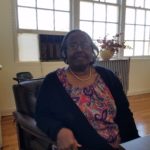
Interviewee: Margaret Holmes
Interviewer: Mary Alexander
Date: October 26, 2017
Accession# EDLP 012
Length of Recording (min/sec): 1:03:46
Sound Recording
Summary
Margaret Holmes was born in Winnsboro, South Carolina, spent several years in Maryland where her parents moved the family due to better job opportunities as well as to escape the kind of racism they faced in the segregated south. When Margaret was seven years old, the family moved back to Fairfield County, where the children attended public schools, including Fairfield High School. Margaret remembers with great fondness, her teachers at the school, and her classmates. She is involved in the preservation efforts for the building that housed her former high school.
This oral history interview with Margaret Holmes on October 26, 2017 includes discussion of growing up in Winnsboro, South Carolina, attending Fairfield High School, segregation as a child, Mt. Zion School in Winnsboro, integration of Fairfield County Schools, becoming the first black secretary at Fairfield High School, growing up in a close-knit community, the teachers at Fairfield High School, stories of ancestors who could ‘pass’ in white society, the family dynamic in her home while she was growing up, her parents’ education and stories of their growing up in Fairfield County, jobs her parents held while she was growing up, the differences in segregation in rural vs urban settings (Winnsboro v. Columbia, South Carolina), the over-crowding of schools leading to half-days for African American students, the Summer Community Organization for Political Education project (SCOPE), moving to Washington D.C., her son’s experiences with education in Washington D.C., her job opportunities and employment in the D.C. area in government and education, the differences in Winnsboro from the time she left for D.C. to the time she returned, the driving force behind the success of her and her classmates, andher thoughts on moving forward with race relations in the future.
Transcript
Mary Alexander: My name is Mary Alexander, and I’m a student at the University of South Carolina in the PhD program. I am here to interview you on your views of how it was in growing up in Fairfield as far as segregation and what it was like to be in the schools. Can you give me your name and where you are from?
Margaret Holmes: My name is Margaret Holmes. I was Margaret Paulen before when I was attending Fairfield. I was born in Fairfield County, Winnsboro, South Carolina and I moved to– my parents moved to Baltimore before I started school. Yeah. So, I went to Baltimore, I don’t know what year it was but, anyway, so I started going to school in Baltimore. My mother had to move back here to take care of her mother because she was sick. So, then we moved back here. When I moved back here I was placed in the second grade and they did some kind of test and they were going to move me to third grade, but my parents let it be my choice and I did not want to move so I stayed in second grade because I made friends, you know. So I stayed in second grade. So, it was highly segregated schools because we didn’t have a gymnasium or anything like that, but we did have very good teachers. During that time, we had a little store across the street from this building and that was our entertainment. Like, the kids when they got to school in the morning, if they got there early they went across the street to buy goodies or to dance. They had a piccolo in there…. that is what it was called in those days. They had two stores as a matter of fact. One was right there and the other was next to it.
MA: What did they sell there? Cookies and candy…
MH: Candies, and cookies, and hot dogs–they sold some of everything. It was a variety store and they would play a piccolo and dance until you heard the bell ring and you had to be across the street. The teachers knew everyone, they knew your parents, you had to make it to school on time and if you didn’t, you would really get a whooping for getting into class late–or they would lock you out. Anyway, and that was–I started the school here in 2nd grade and then this building here was put up before I graduated–I don’t know what year it was–but when I graduated I was in this building….And we had a library but our library was in the school. That was the only library we could go to. They had a public library that–every parent, everybody had to pay taxes, but we weren’t allowed to go there…We could not go to the public library. Right now it is where the women’s club is. Right now if you want to use the women’s club, you have to pay for it because I don’t know who bought it or who it belong to. But, we had good times because we didn’t know anything but that. Then after growing up, getting older, we realized how unfair those things were. We had a movie, had two theaters, but we couldn’t go … we had to go which was nowadays, if you are sitting up high, you are sitting in the expensive seats, but we couldn’t sit down low; if we came in the movie we had to go sit up high. That is how backwards stuff were to me.
MA: How did you feel about that, I mean when you would walk into the stores or the movie theater and you weren’t allowed to do those things. How did you feel about that? What did you think about that when you were a kid?
MH: Well, when I was a kid, parents–to me–really accepted a lot. They talked to their kids to tell them don’t upset things. I remember going to–they had a hotel, right up under where the theater was–and they had a little restaurant in there but we couldn’t go inside the restaurant, but they had a side one that you could go to. I went there one day and a fella said, “What do you two little chocolate drops want?” And me being young–I think I may have been in the second or third grade–I said “I want some chocolate ice cream” (laughter). And I went home and told my parents this. They were highly upset. They said, “You don’t go up there! Just don’t go up there and get no chocolate ice cream!”. “Okay! Okay!!” I thought it was cute, he was calling us ‘little chocolate drops’, you know. It went on and on and then after we got older, even the kids from Mt. Zion used to want to come over and play ball with our—because we had a good basketball and football team–with the guys, and they wanted to come over and practice. But they wouldn’t allow. It wasn’t the kids that didn’t want to mingle, it was the older parents.
MA: Was Mt. Zion the white school?
MH: Mt. Zion was the white school and that was also where the superintendent’s office. I thought they had his picture up there somewhere. He was the superintendent when I was in high school and… Mr. T.E. Greene was my principal over there on that picture. That is the same time, his last name was Williams, the superintendent… I don’t remember his first name was. We did have a picture of him somewhere. Oh there he is right under administration. He was the superintendent. All principals have to turn in different reports. When we had to turn in a report, this was after I graduated, I became the first black secretary here in Fairfield County for the high school because we didn’t have one prior to that. The principals didn’t have a secretary. I don’t know whether… I know my principal could type with these two fingers, he probably didn’t need one, but they made due with what they have. Anyway they must have approved for the principals to get secretaries the year after I graduated, because a girlfriend of mine she became the secretary at the elementary school which was Gordon Elementary and I became secretary for Fairfield High. Anyway, well, I was saying all that to say: if he had to turn in a report that required filling it out–we didn’t have computers then but we had typewriters—but if it required fourteen by whatever–the long legal sheet–if it required being on that sheet, filling out, I had to go over to Mt. Zion, to use their long carriage machine because the schools–the black schools—did not have one. But they were required to complete the form. Me being the person just under Mr. Greene, he accepted–well he had to accept it if he wanted a job–but and not only if you went over there it wasn’t like they would say, ‘okay, as long as you got over you could’–I had to wait until no one was on it, then I was able to complete the form and bring it back you know, for Mr. Greene to submit it to the superintendent’s office.
That’s basically…. I felt … I felt privilege really–not privilege because of the way we’re treated, but by the way I grew up. I used to tell my parents all the time I didn’t even think we were poor. I know we were considered as poor but we had food; my father did not allow us to go to the stores and get stuff on credit, where a lot of people they would go get stuff until pay day and then .. And all the whites owned the businesses, and so they were able to go up there and when they would get their check, most of them worked for the mill. My dad worked at the mill and my mom worked at the dry cleaners, laundry and dry cleaners. Any way but most of them when they got paid on Thursday they would have to go back and clear up their bill with the white folk, before they could get more grocery and stuff like that. My dad would not allow us to go up there and get nothing on nobody’s bill. We went up there and ordered grocery. As a matter fact, we would write the grocery list. He didn’t get everything we had on there…because.one time, we put a ‘bicycle’ on the list. (laughter) He didn’t bring that home. When he finally got us one, when he bought one–he bought a bicycle for the three of us… one boy and two girls–but he bought a boy’s bicycle. It was hard to learn to ride that bike. (laughter)
Anyway, I was saying that I felt privileged because of my parents, and the way they were with us but I was never–I say this all the time–I was never encouraged to go to college. I did very well in high school. As a matter of fact, I graduated as the valedictorian in class, but that was because Ms. Queen–she’s Queen Davis now–she was in my class but she dropped out and then she came back. Had she stayed there, she would have been valedictorian and I would have been salutatorian. I tell her that all the time. I call her genius. When the other kids were cutting up for recess and playing, I would go sit down with Queen so I could study with her, because we started taking short hand in the 11th grade I believe, it may have been tenth grade. Anyway, she picked up on it just like it was regular readin’–so quickly. So then I started studying with her. I say that to say she would have been valedictorian and I would have been the salutatorian but since she dropped out, I became the valedictorian and a friend of mine, Theodore Patrick (sp), he became the salutatorian.
MA: So, in school, did they teach you the regular classes… history, math, English…?
MH: Oh yes, we had history, math…as a matter of fact we even had music… do you see that short lady right there along with the tall one? That was Ms. Manigault–Dorothy Manigault–she was the music teacher, and she was the homeroom teacher, and she was the English teacher. I remember taking music lessons up under her. My parents couldn’t afford the fancy piano, and when we went shopping for a piano this thing that they were getting ready to get me I said, “oh no!”, so I never did. I took it enough to learn the certain notes and the signs like the clef and the staff and all that, but the only thing I learned to play was Should We Go Up the Road to the Birthday Party. Other than that I didn’t learn to play anything other than that. We did have music, we had biology, they had French, they had all the…. We had very, very good teachers because most of the kids–I didn’t go to college, I took some advanced courses after I moved to DC because I moved to DC and started working as a–I went into the federal government as a management analyst–but most of the kids, they graduated from here, went on to college and are doing very well. We have some principals, we have some you name it, and they done very well.[sic]
MA: What do you think the driving force was for them to do so well in school?
MH: I really think it had a lot to do with the teachers. Because some of the teachers that came–that we–that were over me had just come out of college. I remember I used to tell one–she is dead and gone now—‘you just beating on people’s children because you just got out of college’. (laughter) I had a lot of lip but did well in school…But anyway I think it had a lot to do with the teachers and the parents too wanting their kids to do better than they did.
And then finally they started with the integration and it just kind of … to me it went kind of smoothly. I remember when we couldn’t go in the drug store, they sold pimento cheese sandwiches and stuff like that. You could place an order but you couldn’t sit down there and eat it. So we didn’t go in. And that may have had a lot to do with it too.
Now, we never had buses, we had one cab. One black cab and then he passed on, and then we didn’t have a cab. So, but, the community kind of stuck together. I remember my dad used to take–after he retired–he retired off so many jobs…he retired from the mill, then he used to work as a…cleanup person from the telephone company, he retired from that… just a whole lot of different little jobs. He used to take older people—that were much older than he was—if they needed to get to the store, or something like that, he would pick them up and take then to the store. Because they didn’t have any other way to get there. As long as I can remember, we had a car. Well, when we first moved from Baltimore I don’t think we had a car then; but right after that he bought a car, and we moved into our hou–there was a landlord, and actually, he was white, they owned these little… not a house…it was a three rooms. I remember they had the big room, that was also the living room–and we had a room that was our bedroom, which was two girls and one boy. They had two beds in there. And the kitchen. They did not have running water at the time but something happened, and the county made them put in running water. When I was first moved back here, they didn’t have indoor bathrooms. They had the outdoor … and… they were… then they made the landlords put indoor plumbing in the houses. To me, knowing what I know now about health issues and stuff, they didn’t require that–they put that commode right in the bedroom with nothing around it. And it was approved!…I guess it was approved, since they put them in there…
MA: So you had no privacy?
MH: Uh-uh…It wasn’t nothing but the commode in there….Then my dad built a house in the Middlesix area. They built a –it was three bedrooms, living room, kitchen, dining room, bathroom – full bathroom, and a porch and all this kind of stuff. But, before that …was I?… I was in high school then when he built that. But when I was in elementary school–as a matter of fact, the house I was living in, that I was talking about, that they made them put a bathroom and stuff in it, it was the house that my grandmother was living in when we moved back here to take care of her. When she died we moved out of the house we were living in, and we moved over in the house that she was living in because it was bigger. Although it wasn’t but three rooms, it was bigger than the one we were living in, until he built a house.
MA: Did your parents ever talk about the difference that they saw here in Fairfield and what they saw in Baltimore and then coming back. Was there a difference in the way they were treated?
MH: They never talked about it to me. But, I could see that my dad made more money when he was working up there, but he had a different type of job too. The houses were different; because they were larger and they had indoor everything… plumbing…We had a back yard and everything else, but I preferred to live in South Carolina than in Baltimore because when I was living in Baltimore I was afraid the whole time I was up there because there was always something going on. Like, you hear somebody broke in somebody’s house, or somebody killed someone. As a child, I kept hearing this kind of stuff, and in South Carolina we used to go to bed and leave the doors open. Well, you can’t do that kind of stuff now, but as I was coming up, we didn’t have to worry about locking the doors and stuff, or making sure the windows were locked. It was just open.
MA: How were the schools in Baltimore versus down here? It sounds like they were a little further ahead?
MH: I think so because when they tested me… unless it was just me (laughter), it could have been that.
MA: I bet it was …. How about your sister and brother, did they have the same experience?
MH: My sister didn’t do that well, but she did pretty good. She was a little more outspoken than I was, and wasn’t as studious as I was. My brother–my girlfriend showed me a picture of him when we were getting these rooms together. She said, ‘I had a picture of James Robert’s class, and guess who was an honor student’? I started naming everybody and she said ‘no’. I said, ‘well who’? She said, ‘James Robert’. I said, ‘what??’ I said, ‘that must be a misprint’, but it wasn’t. He was very good in math, but I never knew that he did well in other stuff. I guess I was too focused on what I was going to get. I remember one time I had an F in conduct and I thought, ‘that’s a joke!…How could I have all A’s and an F?’ And I thought, ‘my parents wouldn’t think nothing of that’ … but they did. (laughter) I said, ‘that is a dumb teacher that will give me an F in conduct and I’m making all A’s’. Anyway, I didn’t do that again. Anyway, but, all the kids right now they respected teachers. Ms. Martin—that’s in there– she never taught me, but I knew she was a teacher–the lady that was sitting out there. I had some other friends that are much younger than I am… I think she taught at the Winnsboro High when they closed this one down and started integrating the schools. She was at that school because I know of her. A white friend of mine, he said she was his teacher and so… it’s just…kudos to all of the teachers that were here because they were something else…
MA: What did you think about integration? Were you excited about it? Were you nervous about it?
MH: You know what? It never even bothered me at all… because I mean I didn’t feel–I left here in .. I graduated in ’56, and I moved to DC in ‘59 and…. I started working in DC… I moved there in ‘59 I must have started working in maybe in probably 1961 maybe. During that time, I had a hard supervisor, because I worked at the department store. When I left there, I went into the federal government. Then I had a supervisor, a white supervisor, when I was working with whites and blacks. Everybody was just like…I never even gave it any thought as to whether that person was white, black, green…whatever color they were. I had white friends and black friends. Matter of fact, I had more white friends than black friends. It never even… everybody was just…they were really nice.
Now some of the people, I worked at the equal employment opportunity commission that was the first government job I had; it was the only government job I had. Some of the people there were still prejudiced. I don’t mean only whites, it was some blacks. They used to have some type of black history program every year. And I remember this very good friend of mine, her name was Gail, she and I joined the Glee Club because they had a choir that was going to sing in the building. They wanted to know, “and who is she?” Because, this girl was white… “What is she going to be up there for?” So, I talked to whoever was over the program about it and they nipped that in the bud right away because that wasn’t cool for them to even be… because everybody was included in this thing. And then they wanted to know “and who is this Margaret…” –my name, at that time, was Margaret Ulmer, because I was married to an Ulmer–“and where’d did she get that name? I thought you was black”. So I say that to say that even the people up there in the federal government were prejudiced. So it is not always on the other foot that are prejudice. A lot of times it’s both of us.
MA: So when you moved back down here…why did you move down here?
MH: I retired and I married a man. I was divorced from my other husband, and my new husband liked it down here. He was born and raised in the District of Columbia, but we came down and visited my folks. He really liked it. When we retired he said, “Do you want to find a house down there?” and that was right on for me, because I loved it here. So we moved back down here in ’86. …Was it ‘86?… No, it was 2008…we moved back down here. Uh huh. We found a house and the rest is history. Then we got involved in a whole lot of different stuff. When I was up there, I was a number, really… I had a special church I went to, but as far as participating in civic things, I didn’t…When I moved back down here, I got involved with the Red Cross, and then we got involved with the NAACP, then my husband became the Democratic Party chair person. He was the chairman of Fairfield County. I was appointed as the commissioner for Midlands Tech.
MA: That’s impressive!
MH: I think so. We just have a lot going on now. I’m enjoying being here and working… I work in my church and he works in his–we go to different churches. We work together too.
MA: Do you know your history? Were you able to get any stories from your grandparents, and what it was like to live in Fairfield? What it was like for them growing up?
MH: No, because… now, my maternal grandmother, they were Paulens, so there’s a lot of Paulens here. A lot of them work for the county but as far as how they made out…. I know that this is just from hearing them say that a lot of times they put, they were all light because I think I don’t know maybe the father was Caucasian, I don’t know. Anyway, I have heard stories that a lot of times when they had to fill out a form they would be Caucasian on there and got accepted better than putting black on there.
MA: Were they treated differently because they were lighter?
MH: Yeah, I’m sure they were…Because even like… I hear older people talk about like, even up in Washington, different colleges, where the kids were treated different when they…are lighter and going to school. Now, I don’t think I was treated any different being the color I was in school. As a matter of fact, I know I wasn’t because I advanced just like… there were some really ones that didn’t know a lot, and couldn’t catch on a lot and they were light. They weren’t able to move just because they were light.
MA: How about your paternal grandfather did you know him?
MH: No, um hm. Maternal is the mother’s father. I’ve seen him but I didn’t really know him, but paternal, I didn’t know him at all. I did know my paternal grandmother but I was young when she passed, but I knew her because they call me–they have nicknames–and they used to call me “Daught” because her name was “Daught”. I don’t know if that was short for ‘daughter’ or what. They used to call me that until I put a stop to it. I said, ‘that is no longer my nickname; that is not my name. My name is Margaret. You will call me Margaret, or I won’t give you a response’. So they stopped calling me that–except one of my aunts; his sister… she called me that even until she passed, she would always call me “Daught”.
MA: Did you remind them of her?
MH: Yes, I think so because she was dark, and she had real keen features, but she was skinny. (laughter)] And all the rest of her kids’ fathers, they were almost white. So, I was the darker child, so that may have been why they called me “Daught”. My dad was a twin. He died when I was 5 months old. Then–the one that I talk about–my mother married him later, and that is the one that raised me. He couldn’t have been a better father than the one that passed.
MA: Then you mom’s parents. Did you know them?
MH: Yes, I knew her mother and I’ve seen her dad, but he never was around because her mother married again too, and so… and I knew this mother’s husband. He was a pretty good grandfather. He was silly. (laughter) He kept, you know, she didn’t have to work or anything… she waited on him like hand and foot because she would fix–he would come home for lunch, and she would have his iced tea and everything right there like he’s a prince or something like that. And my dad, he worked in the evening. And my mother worked in the day time, so I wasn’t used to no woman waiting on a man hand and foot. My dad fixed our food for us and all this kind of stuff. He helped mother in the house too, and so…I wasn’t used to nobody….He sitting there–come home for lunch–and she bring everything out to him and he sit there… I don’t even remember whether he said ‘thank you’ or not…he probably did. (laughter)
MA: Did they have an education?
MH: No. They probably went to like, the fifth or sixth grade or something like that. Because my mother could read and write, and so could my dad, but they didn’t graduate from high school. I don’t even know if they had a school to go to because–they had one to go to but they didn’t have one to go to twelfth grade. Even this place started going to twelfth after so many years… it went to twelfth way before I graduated but…even for all these classes that are up here…the next door one is the first class, I believe…which is ’47, and they went to twelfth grade.
MA: Did they have any stories about them growing up in Fairfield County back then… your parents?
MH: None except that game they played because they didn’t have a football team or stuff like that. Back in those days they used to play–I don’t know if you know about it or not, but they used to have peanuts in their hand, and the kid would hit whatever hand you think the peanut was in, and if they guess the hand they would get them, or something like that… I don’t know what that was called but I know we used to play it…it was some game they taught us… As far as…they didn’t have a sports team.
MA: What would they do? Did they work? After fifth or sixth grade? Did they go to work?
MH: I don’t know…No; I don’t know… Because I don’t know whether the… I know my mother’s mother used to cook for some people. A lot—because, she even had some aunts, used to live on the property, and she did all the cooking for this family. But they even had a house for her on the property. This was her father’s sister; but as far as my mother’s mother, I believe–but I’m not sure–that she used to go and cook for this family. I know my neighbor–my mother’s neighbor–used to cook for some people too. She walked to work because they had a deuce and a quarter–that Buick–and she didn’t want to drive over to they [sic] house because they would probably fire her if they knew she had a car. Now what kind of foolishness is that?
MA: Do you think they would have?
MH: Probably…
MA: Really?…Why would they have fired her because she had a car?…
MH: Because they don’t want you to have anything. I know she would walk to work. Now, my mother only worked at the laundry and places like that; she worked for the industries, rather than… I don’t ever remember her working at anybody’s… Although she did say—maybe she was a teenager, coming up–she don’t like salmon croquettes because, she say, [sic] these people she used to work for used to have her fix stuff like that for their cats. She would fix it for us because we like salmon, but she would say, “I don’t eat nothing like that…cat food!” (laughter) But, anyway, evidentially she worked for someone before she had us, and stuff like that, but… from my recollection, as we became older, the only time I remember her working was when she worked for industries, like she worked at the laundry, and the she worked at Charmed down there–there used to be a place called Charmed in Ridgeway. She worked at Manhattan… and Dad always, he always, worked at the mill after he moved to Winnsboro–moved back to Winnsboro. Well he did have–he had a lot of land too, and he planted cotton one year. And he said, if we picked it, and he sold it, we would get the bicycle. That’s how that bicycle came in. So, he did that.
MA: He sounds like he was industrious….to be able to build a house…
MH: Uh-huh…He built the house on–his dad had land. His mom had land, and the land that his mom had…he paid the taxes on it all the time because she moved, and it became his. The land where he built the house: his dad had given each one of the children some land; and that’s where he built the house. He had it built, as a matter of fact.
MA: Did you know about the group that started called SCOPE that started picketing and had sit-ins so that they can start voter registration for the blacks? Did you hear about that?
MH: No, in Fairfield County? SCOPE, what was the acronym stand for?
MA: Hazel didn’t know what it stood for; she couldn’t remember.
MH: I never heard …
MA: It was a group of about ten men that got together, and did sit-ins and that type of thing so that they could get more rights. And that’s how they… had—everybody could use the same room to go into the doctor’s offices, sit at the counter…
MH: And Hazel is much younger than I am… So no, I guess I had moved away by then. Because, I remember where Hoots is now, that is where the drug store was where they used to sell sandwiches and you could not go in there and eat them. You had to go in and buy them. Later on, you were able to go in there. When I was pregnant with my son, 1959–he was born in 1959–he was born May of 1959… so it was ’58–we stopped by there because my cousin was going up here as a veteran. And I was riding with him, and he had stopped by there to get me a sandwich, but you couldn’t go in there and eat. At that time, I was going to get back anyway because I was working at the school at that time. …no, I don’t remember that…
MA: What did you think about having to go to different restaurants, or not getting served at a restaurant? When you were a kid growing up, what did you think about that?
MH: Well, then it didn’t matter because we had a car. So, we went to Columbia a lot and when you went to Columbia you could go in there.
MA: So it was different in the other areas?
MH: Um-hmm, at least from what I could remember. When we would go to Columbia, we could go in to Morrison’s, and different restaurants and sit down and eat. During that time up here, you didn’t go a lot of going out noway,[sic] to eat. Your parents would cook and you would eat at home. After I became older, I would have liked to sit down…but–it didn’t bother me because, what I couldn’t understand is that they didn’t want you to sit in there and eat, and yet they would let you come into their kitchen and cook for them. And then wouldn’t want you use their bathroom, in the house, and yet you would cook for them. (laughter) That’s nasty too! Anyway, because I remember my sister–because I never did work for any of them when I was coming up—but my sister did have a job keeping… as a matter of fact it was my landlord’s grandchild that she was keeping. He had asked Daddy about one of us working and Dad was saying that ‘you all need to learn to do…work, blah-blah-blah’… so, I don’t know why Luella was the one that got the job–I didn’t even apply… (laughter). She was working for them and so she would take the child for walks, and when she’d take her for walks, she’d come over to our house because we lived on this side of the track and they lived on the other side of the track. So, she would bring the child down there, or they would go for a walk down Main Street. During that time, we had stores–all of the little stores was open… I saw Luella walking and the child way behind or in front of her. I said “Luella, you better be careful with that…” So I told daddy, “Daddy, I think you better make Luella come home from that job, because that little child will get hurt, and ya’ll gonna be in a world of trouble. Becasue Luella is not the one to be keeping that child.” Because she wasn’t being attentive to this little girl. Anyway, the lady told her, “Luella, when you use the bathroom, let the top up because Beth may go in there and use it and put her hands on there”. Now, Luella’s s’post to let it up, you know how it is when you let it up and there is no rim for you to set your butt down. “Luella told her, “Oh, I don’t use your bathroom at all”. Those were the things that it is hard to even imagine now-a-days, but those were some of the stories that I have heard. I know this one was true because, when Luella told me that… The little girl’s name was Beth. We had friends during that time–our schools were so crowded, we couldn’t go the whole day. This is when I was younger, like in the fourth grade. So, we went a half a day. Some kids went from eight o’clock to twelve o’clock, and the others went twelve o’clock to three o’clock; and so, we had a lot of friends that babysat during those mornings when they didn’t have to go to school until twelve o’clock, and they were able to …
Oh, that is another thing!–They had a playground at the library…we couldn’t go to the playground neither. But, you could take their little kids to the playground…So, one day–every day, matter of fact–we would get up in the morning, and we would be making our rounds to the playground with our friends because they would keep these little white kids. So, we would go play along with the white kids that they were babysitting. And one day my mom got off work early before twelve o’clock, and came around to that playground. They had a truck at the time…. “If y’all don’t come around from there! You are going to drop one of them!”.–I had a little girl in my arms–I was so glad to have someone to play with… “Put that…down! And c’mon over here!…If I ever catch you around here again!–You gonna drop some of those white folks’ babies, and we’ll be in trouble for life. You don’t work here, you got no business around here!” So, that ended us going to the playground. We weren’t supposed to be there no way. Because the only people could go there is if they had the children around there, and if they were going to the library, so… But, we weren’t allowed to go to the library; and finally, we got a library now, and you can go to it.
MA: Were the books comparable?
MH: Oh yeah… Yes, a very nice library…
MA: What was school like for your son if he was born in ‘59? Was he born in Fairfield County?
MH: Oh, no, uh-uh– we were in DC. He was born in ‘59 and he started school up there when he was five years old.
MA: What was school like up in the DC area?
MH: Oh, he did fine. So is his daughter now—he has a daughter now, who has a four point two-five, and all this kind of stuff.
MA: They have your brains.
MH: Yep, she got a whole lot of them, because of her momma, her aunt, and her uncles… all of them into education… I tell her that all the time–she got them from me—but I know she didn’t… (laughter) She’s a good student, too….
MA: Did you son go to an all-black school or was it fully integrated?
MH: No, he was…up there it’s always been … when he first started going to school up there it was all mixed up there, because he started going to Catholic sch–he was first going to–predominately black, but they did have whites in there. And then, when he got into middle school, he called me and said, “Mom, I do not want to go to that middle school because I understand it’s not good.” So, he said, “And I went to a Catholic school to apply.” (laughter)
MA: He was in middle school when he did that?
MH: Um-hmm… “But they told me that I had to have a parent to do this.” I said, “Yes you do; because you have to pay.” (laughter) So, I checked on it and we got him into it. I think it was because at the time I was working at a nursery and one of my parents was something in the Catholic school. I think– I say to this day, she never told me but–when I went up there Monsignor–whatever you called the principals up there–she said they had one opening and after she interviewed him she would let me know. And she did and they accepted him. So then he went–he graduated from Catholic school middle school and then Catholic high school and graduated…It was always mixed. Then he left there and went to Atlanta but didn’t stay there that long. He came back and got in with the federal government.
MA: What did you want to do while you were growing up? What was your dream job?
MH: I kept saying I wanted to be a teacher because of that lady right there, Ms. Manigualt. I used to admire her, and how she dressed, and everything else. Then, after I moved up there, I first applied for a job–and up there when you want to work for the government you have to take exams. I took the exam for–I don’t even know what it was for, but I passed it—and when they called for me to come in for an interview, they said you had to be able to lift…seventy-five pounds or something like that. I said, ‘no, that’s not for me’. I didn’t even check on it to see. And I found out later that they tell you that, but there was always someone there–it was at the government printing office. They said there is always somebody there to do the lifting, but I didn’t know this, and I didn’t check on it, so I didn’t even accept…
Then I started working at a department store, in the cafeteria, and I said, ‘this is not for me’. So I went and I took the typing exam—well, I took the clerical position exam, and I passed the written part right away, but couldn’t pass the typing. You had to make forty-five words or something like that. I could type, but every time they come around me I would just freeze up. One time she even said, “I’ll tell you what, when they finish I’m gonna let you take it over”. That didn’t help me. Finally, she said, “well, since you passed part of it, we’ll send you out to see if you can get some interviews”. I went to the Equal Employment Opportunity Commission, and was interviewed…and…was I hired from that?…No… I went to the school system and I was working as an educational aide and every summer, you have to go see if the budget was going to be approved, working under the Title 1 Act or something, and you have to wait to see whether they would be funded for the next school year.
And so, that’s when I said, ‘I am so tired of this’, because every year you don’t know if you are going to be working the next year or not. My principal sent me over to the Right to Read program. The lady interviewed me and she had me type up the letter of acceptance, and had me to take it down to the education building where they were hiring, and said that she was accepting me as her employee. I started working there… I worked with her for years. After she retired, she sent me to the federal government, and that is when they hired me there without passing the typing–without making a higher grade on the typing test–it was to be a GS-4 I believe; maybe it was a three…but anyway, they hired me as a GS-2. In six months I was advanced to a GS-4. It kept going from there and when I retired, I was a GS-13. And when I left there, I didn’t do anything. I finally said, ‘I am tired of sitting around’, and that is when I went to the school and stopped in there and was hired as a substitute. From then on, when I was hired as a substitute, they start having me come in whether they needed me or not, and finally I went to this other school and that principal hired me as a full time media specialist and so I worked there until I moved back down here.
MA: Did you see a difference when you moved back here from before you left?
MH: Yeah, before I left we had stores and all that kind of stuff open. When I moved back here the main street looked like a ghost town. So, anyway, they are doing a lot of stuff trying to do something about that, but I don’t know if it will ever come back. This school here was closed, and Winnsboro High was no longer there. This school here, Fairfield Central, we started going to all the football games and all that kind of stuff. Now the schools have really advanced to me since, you know, they’re into all those sports and built the technology building. Everything has advanced, to me, in the schools because—well, everywhere… now-a-days when we were coming along there weren’t computers and all that kind of stuff.
MA: What made you love this school so much, coming back and trying to get it back? What was so wonderful about it?
MH: I think it was the people and see how far all of us have come. Just to see where we’ve come from because even in this room here … that was the office right next door. But, this, that is a partition that was put up there. Here on over to the next room, was really the typing and short hand room. That was not there. Over there, that was the French class… and the biology class was down there. I can just remember the things that we used to do, sitting in there and all. What a stern person Mr. Greene was when those boys would show off. I mean, he was a little guy, but during that time, it’s called corporal punishment now, but when he’d come down on your hand when they had no business doing what they were doing. I’ve seen a lot of them, since then, like Ms. Ross up there, she goes to my church. It is wonderful to see the people that knew you when you were a child coming up and stuff. When she would get up and talk about ‘Margaret so-and-so’ and ‘Margaret this-and-that—‘ … The girl right up there is my best girlfriend, Betty Jo McDowell…Anyway so…everybody–you know everybody…
MA: What did you and Betty Jo used to do back in the day?
MH: Betty Jo was a cheerleader and right now all of us…well she goes to the same church my husband goes to, but back in the day we would have our little club, where we would fix our tuna fish sandwiches and meet at different houses, and stuff like that… We always went to the games together. During that time, now they call them—when the kids are doing bad… having gangs…we didn’t have a gang, but we had certain little friends…I had a brother; so certain little girls we didn’t want him to fool with, so if he as messing with someone we didn’t want him to be with, we would always have something to say about it. Other than that, Betty Jo and all them, they were our close friends. There were about six of us that were buddy-buddies. A lot of the other kids came from Ridgeway, and they weren’t as close to the ones in Fairfield–although all of them were in Fairfield County–but some were from Ridgeway and we were from, what you call, Winnsboro.
MA: Were these classrooms packed with kids?
MH: Yeah, let me see… There were at least 25 in each class.
MA: Were they only your grade or did you have a mixture of…
MH: It was only your grade. Like if you were in the 9th grade, and your 9th grade had typing and short hand, they went at the same period. You changed classes almost like they do now. The French classes and the…Algebra…but you knew who the teachers were…When you got there you knew your teacher was going to be Ms. Jones is the Algebra teacher, or Mr. Witherspoon is the Algebra teacher… You knew your teacher.
MA: Was there ever any trouble in school since all of the grades were mixed together in this one building? Did the seniors ever pick on the freshman?
MH: No, because they were changing classes anyway. The sophomore, juniors and seniors came over here, but over in that other building is where the elementary–once upon a time. I was over there in the 7th grade in that building next door…. No, its not over there anymore…it’s gone. It was two building connected–not connected—but you had to walk out of here and go over there to that other building.
MA: So the 7th graders were over there…
MH: Um hm. When we got in high school, my homeroom class was Ms. Manigault’s class too–It that was the same class that was the English class. Just like, Ms. Brown, she was the typing and short hand teacher. She had a homeroom class too. They were both homeroom teachers when we went into the 12th grade. We had two homeroom teachers in the 12 grade.
MA: What do you think was the driving force for your class to do so much better? Growing up you had so many barriers put in your way. What made your class want to go to college, get further degrees, get a good job. What was the push?
MH: I think it was the teachers, I really do.
MA: They made a huge impact….
MH: Right, Um hmmm.
MA: All of your teachers were from Fairfield?
MH: No, some were from Columbia… but they moved to Fairfield–they stayed in Fairfield during the week, and then went to their houses sometime. Eventually a lot of them–like my teacher that I said just got out of college–they bought a house right down here behind the school. A lot of them bought houses after they moved here, because even Ms. Martin– not this Ms. Martin here, she was a teacher too– but she married a guy from this area and they bought a house here and lived right in this area. Ms. Jackson–she still lives right across the street. Her mom had the store that we used to go in there and dance.
MA: What do you want to see happen in the future to help us move forward? What do you have as a lesson learned that would help us? What would you say to someone 30 years from now?
MH: That will take some thinking, but I really think–if the town could do anything about just making sure everything is on equal grounds. Because, just say for this school here, we received this school–getting it approved rather–we got the school for five dollars. But, it was a stipulation that you had to do something with it, otherwise they would take it back. I understand the same thing happened with Mt. Zion; and you had so many years to do something. To date, they have not done anything, but I’ve been to several meetings where they have requested a grant to do something with their building. We never gotten dime, not a cent, but the community and the alumni’s went together out of their pockets, had fundraisers, gave donations, and all of this. Now to me, it would be unfair if they don’t eventually do something to help this cause, because it can be used for the whole community not just the alumni’s, not just the blacks, it can be used for all of us really. It’s just, everything would…get to be equal.
MA: It just reminds of a story—a book we were reading in class—of how, when blacks were first able to go to school, that they were not given the opportunity to have schools given to them; they had to build their own. They, among themselves, collected the money. Got the timber off of buildings—and literally built their schools by hand…Where white people were given the schools through taxes–
MH: That is the part that is not equal. I had to pay taxes. They had to pay taxes. Why can’t what my taxes come in for, why can’t we get some of it back. Just like they get some of my taxes, and theirs, back. Like these floors, these floors were nothing like this…We paid somebody to do this. The floors were there but … the hardwood …the hardwood may have been there…. I can’t remember. I’ve never seen a floor look like this except from home. Anyway, I do know that my husband–he didn’t graduate from here–but because of us, he came up here and painted the windows and all this kind of stuff. We hired someone else came in and cleaned around…where they painted the windows and stuff. There is so much that has been done….done by the alumni, their family, their friends, and people like that. (laughter)
End of Interview